13 Ways to Get More Views on YouTube in 2026 — Tried + Tested
If your goal in 2026 is to get more views on YouTube, the winning play is no longer just posting more often. A modern YouTube growth strategy has to combine topic selection, packaging, viewer retention, and distribution. That is the pattern

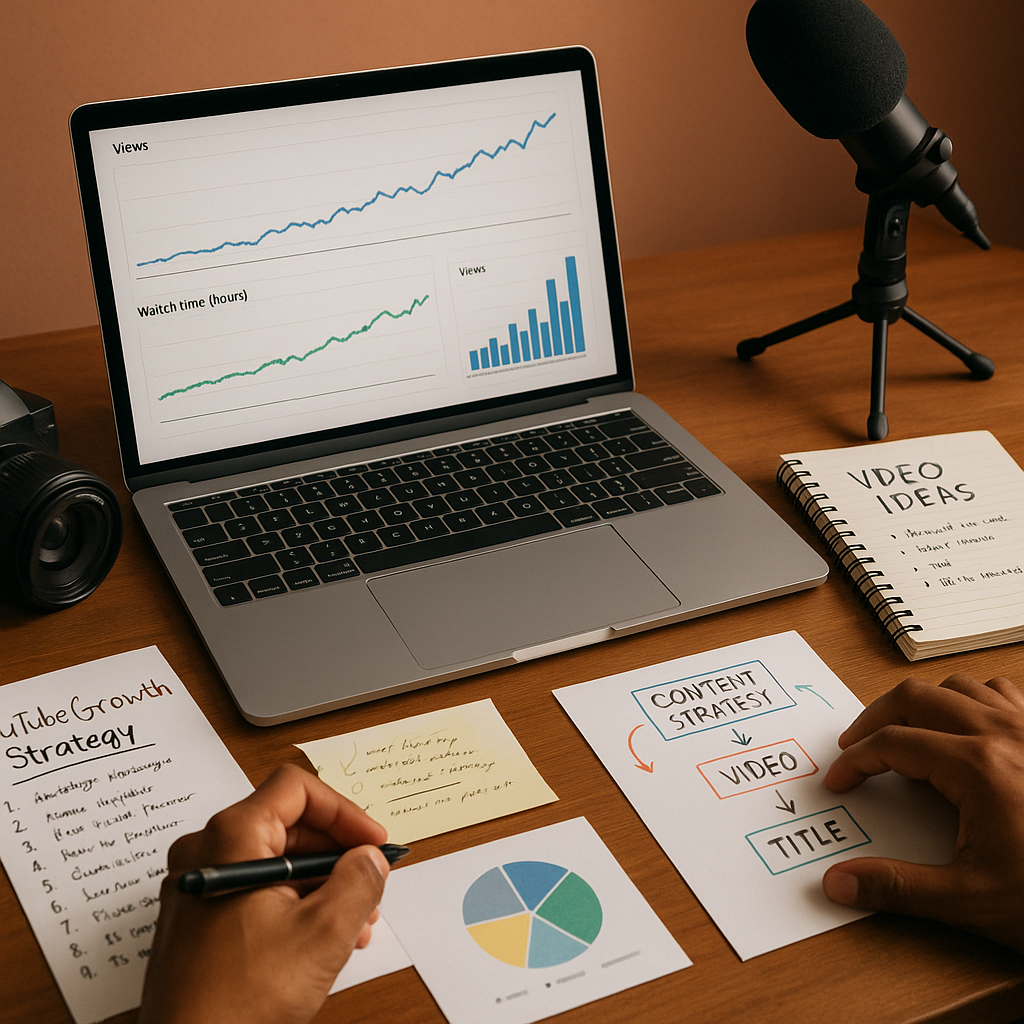
If your goal in 2026 is to get more views on YouTube, the winning play is no longer just posting more often. A modern YouTube growth strategy has to combine topic selection, packaging, viewer retention, and distribution. That is the pattern Buffer emphasizes in its latest guide, and it matches how YouTube’s own discovery guidance works today.
Key takeaway: In 2026, a strong YouTube growth strategy combines packaging, retention, and distribution—because more clicks only matter if viewers keep watching and the platform can confidently extend your reach.
YouTube still rewards relevance, but the platform is much better at reading audience satisfaction signals across search, browse, suggested, and Shorts. That means the fastest way to grow is to publish videos that clearly promise value, earn the click, and hold attention long enough to create the next recommendation. You can see that principle reflected in YouTube’s official guidance on search and discovery and in the way the YouTube Blog frames product changes around viewer behavior rather than vanity metrics.
What changed in YouTube discovery in 2026
In 2026, the best channels are not necessarily the ones with the biggest upload volume. They are the ones that can repeatedly produce videos with a clear promise, a sharp opening, and a strong match between the title, thumbnail, and the actual viewing experience. That is why a practical YouTube growth strategy starts with understanding what discovery systems can measure: clicks, watch time, retention curves, returning viewers, and satisfaction signals.
Buffer’s guide on getting more views points to the same reality: packaging gets the click, but audience behavior determines whether a video keeps spreading. For creators, that means the question is not, can YouTube find the video? The real question is, will viewers keep choosing it when the platform tests it across more surfaces?
One helpful way to think about 2026 discovery is that YouTube is less interested in broad topic coverage and more interested in repeated viewer trust. When your audience recognizes your format and gets what they expect quickly, your videos are easier to recommend. That is why consistency in topic lane, thumbnail style, and opening structure can outperform random experimentation.
13 ways to get more views on YouTube
The tactics below are adapted from Buffer’s current playbook and expanded into an execution checklist you can use immediately. If you want more views, use this as a working YouTube growth strategy rather than a one-time optimization pass.
- Choose one viewer promise per video. A video that tries to teach three different lessons usually earns fewer clicks and weaker retention. Make the promise specific enough that the right viewer knows why to stop scrolling.
- Target a clear search or browse intent. Before you script, decide whether the video is solving a problem, comparing options, or entertaining a niche audience. A vague topic makes metadata and retention harder to align.
- Write titles for curiosity plus clarity. The best titles do not rely on clickbait. They signal the outcome while leaving just enough tension to invite a click.
- Design thumbnails for instant contrast. Viewers skim quickly. Use clean composition, a limited focal point, and a visual idea that reinforces the title instead of repeating it word for word.
- Hook viewers in the first 15 seconds. Cut the intro, remove filler, and show the payoff early. If the opening feels slow, the algorithm often gets a weak retention signal before the video has a chance to recover.
- Trim dead air and repetitive beats. Faster pacing usually beats longer runtime when the topic is simple. Keep only the moments that move the story or teach the point.
- Use chapters and descriptions to add context. Chapters help viewers navigate, and descriptions help YouTube understand the content. They are not the primary driver of views, but they strengthen the video’s relevance.
- Build repeatable series, not isolated uploads. A series creates familiarity. When viewers know what your next video will feel like, they are more likely to return and binge.
- Turn Shorts into discovery trailers. A strong Short can act as an entry point for a longer video or a related playlist. Keep the message narrow and use it to spark a click into your core content.
- Optimize for suggested video pathways. Study which videos already send traffic to your top performers and build the next upload around adjacent intent, not unrelated topics.
- Push distribution in the first 24 hours. Post the video in relevant communities, pin a comment, share a community post, and repurpose a clip. Early engagement tells YouTube where the video belongs.
- Collaborate with adjacent creators. The goal is not just exposure. It is audience overlap. A good collaboration makes the next click feel natural for both communities.
- Refresh underperforming videos instead of abandoning them. New thumbnails, tighter titles, or a stronger opening can revive videos that did not land on the first pass. Treat packaging as editable.
If you want a quick workflow, start with the first five items and track the effect on click-through rate, average view duration, and returning viewers. That gives you a simple benchmark for whether your YouTube growth strategy is improving the right signals.
Packaging, retention, and why views compound
Packaging that earns the click
Thumbnail and title are a single system. The thumbnail creates the visual question; the title completes the thought. When they work together, the click feels obvious. When they fight each other, viewers hesitate. That is why metadata should be written last, after you know the exact promise of the video.
- Keep the thumbnail idea focused on one object, one outcome, or one contrast.
- Avoid cluttered text that repeats the full title.
- Match visual tone to audience expectation, especially for how-to, review, and commentary formats.
- Test new packaging on a small set of uploads before rolling it across the channel.
For creators who are still refining their click layer, it can help to pair organic testing with a controlled launch boost. That is where an internal support page like buy YouTube views can be useful as part of a broader promotion plan, especially when you are validating a new content format or a major series.
Retention that tells YouTube the video is worth more distribution
Views grow faster when retention is strong because the platform can confidently keep recommending the content. The biggest retention gains usually come from structure, not editing tricks. Open with the answer or the strongest proof point, then move into the explanation. If the video is educational, say what viewers will learn and when they will learn it.
Here is a simple retention checklist you can use on every upload:
- Start with the most valuable moment, not a long intro.
- Remove pauses, repeated sentences, and visual dead space.
- Use pattern breaks every 20 to 40 seconds if the format allows it.
- Point viewers to the next related video before the current one ends.
When these signals line up, a single upload can lead to another view, and then another, because the platform learns that your content is creating a satisfying session. That compounding effect is the real payoff of a good YouTube growth strategy.
Distribution and common mistakes that suppress growth
Turn one upload into a distribution loop
YouTube is the home base, but it should not be the only place you promote a video. A modern release workflow includes Shorts, community posts, email, embeds, and social sharing. The goal is not to force traffic from everywhere. The goal is to give the algorithm enough early signals to identify the right audience faster.
If you publish long-form content, pull two or three vertical clips from the same recording and use them as discovery assets. If a Short performs well, link it back to the long-form video and keep the narrative consistent. This creates a simple funnel where one piece of content introduces the idea and another delivers the full value.
For brands and creators that need to accelerate early visibility, a structured service layer such as YouTube growth services can complement organic distribution while you build recurring audience demand.
Mistakes that hold back views
Even strong videos can stall if a few basic mistakes are repeated. Avoid these common issues:
- Publishing with a vague topic that does not solve a clear viewer need.
- Using a thumbnail that looks generic or too similar to older uploads.
- Writing a title that is too broad for search and too flat for browse.
- Keeping a slow intro that loses viewers before the main point arrives.
- Ignoring analytics after publish and waiting for the algorithm to fix weak packaging.
A practical YouTube growth strategy is not about chasing every trend. It is about eliminating the friction that keeps good videos from getting a fair test. If your click-through rate is weak, fix packaging. If retention is weak, tighten the opening. If both are healthy but views still plateau, improve distribution and adjacent topic selection.
Sources
The tactics in this article are based on Buffer’s current roundup and cross-checked against YouTube’s own guidance. These are the most useful references if you want to go deeper.
- Buffer: 13 Ways to Get More Views on YouTube in 2026 — the primary source for this article’s tactic set.
- YouTube Blog — official updates on product changes, creator features, and platform direction.
- YouTube Help: Search and discovery — official explanation of how videos surface in search and recommendations.
Related Resources
If you are building a broader channel-growth workflow, these Crescitaly resources can help you plan promotion and visibility more systematically.
- Buy YouTube Views — useful when you want to support a launch, test packaging, or add momentum to a new upload.
- Buy YouTube Subscribers — useful for strengthening social proof as your channel starts converting viewers into regulars.
Share this article
Share on X · Share on LinkedIn · Share on Facebook · Send on WhatsApp · Send on Telegram · Email
FAQ
What is the fastest way to get more views on YouTube in 2026?
The fastest improvement usually comes from better packaging. Tighten the title, redesign the thumbnail, and fix the first 15 seconds of the video. That combination tends to improve both clicks and retention, which are the two signals most likely to move views.
Does YouTube SEO still matter?
Yes, but it is one part of a larger system. Keywords help YouTube understand the topic, but audience behavior decides whether the video keeps getting distributed. Good YouTube SEO should support a strong idea, not replace it.
How important are thumbnails compared with retention?
They are both important, but for different reasons. Thumbnails help earn the click, while retention helps earn more distribution after the click. If one is weak, growth slows.
Should I make Shorts or long-form videos for more views?
Use both if you can. Shorts are excellent for discovery and fast testing, while long-form videos are usually better for deeper watch time and stronger audience relationships. The best channels use Shorts to introduce ideas and long-form content to convert attention into loyalty.
How often should I publish to grow faster?
Consistency matters more than raw frequency. A realistic schedule that you can sustain for months is better than a burst of uploads followed by silence. Repetition helps the audience know what to expect and gives you more opportunities to refine your YouTube growth strategy.
Can older videos still get views in 2026?
Yes. Older videos can continue to gain views if the topic stays relevant, the packaging is strong, and the video keeps matching viewer intent. Updating the title, thumbnail, or description can sometimes revive a video without re-uploading it.