2026 LinkedIn Statistics for Social Media Marketers
LinkedIn has become one of the most operationally useful channels in a modern social media marketing strategy, especially for brands that need qualified attention rather than vanity reach. The latest 2026 LinkedIn statistics from Metricool

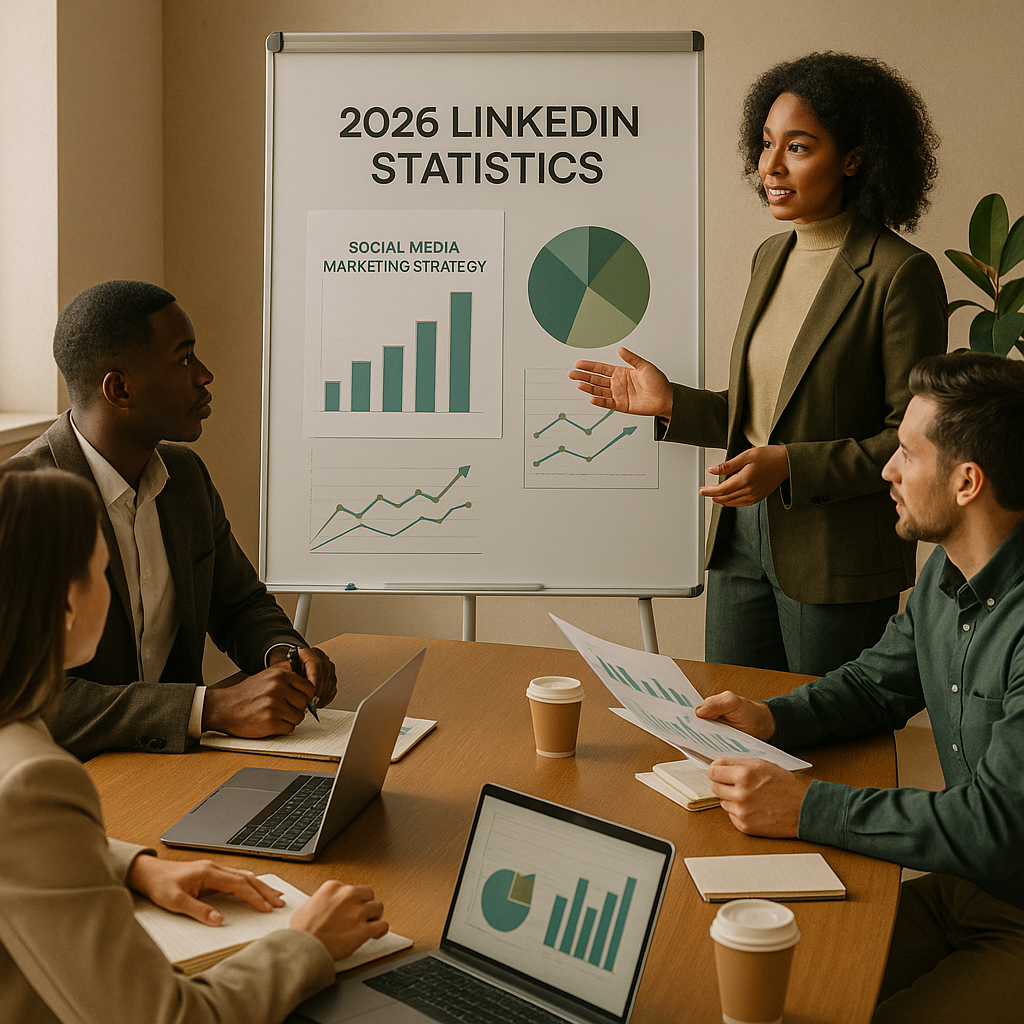
LinkedIn has become one of the most operationally useful channels in a modern social media marketing strategy, especially for brands that need qualified attention rather than vanity reach. The latest 2026 LinkedIn statistics from Metricool show that the platform continues to reward consistency, relevance, and content that keeps professionals engaged for longer than a quick scroll.
If you are planning budget, content, or reporting for 2026, LinkedIn deserves a clearer role in your channel mix. It is no longer just a place to post company updates; it is a distribution engine for expertise, proof, and demand capture. For a broader execution layer, many teams pair LinkedIn planning with Crescitaly services and workflow support from SMM panel services when they need coordinated publishing across channels.
Key takeaway: Use 2026 LinkedIn statistics to adjust your social media marketing strategy around depth, consistency, and audience quality instead of chasing short-lived spikes.
What changed in LinkedIn in 2026
The most important shift in 2026 is that LinkedIn behaves less like a static résumé network and more like a content distribution platform. The current data trend line in Metricool’s report points to steady audience growth, strong engagement potential for education-led posts, and improved performance for creators who publish consistently.
That matters because a social media marketing strategy only works when the channel’s mechanics match the business objective. On LinkedIn, the objective is often not instant conversion. It is usually trust building, repeated visibility, and qualified clicks from people who understand the category.
There is also a wider search and discovery implication. Google continues to emphasize helpful, people-first content in its SEO Starter Guide, and that same principle applies to LinkedIn: useful content earns more durable distribution than polished but empty promotion.
What the latest LinkedIn statistics mean for reach and engagement
The 2026 data shows why LinkedIn remains attractive for marketers who care about B2B attention. Posts that create time-on-content, comments, and saves tend to outperform content that only seeks a quick like. In practical terms, the algorithm is rewarding signals that indicate the audience found the post worth reading.
For marketers, this means your reporting should focus on a combination of reach, engagement rate, follower growth, profile visits, and downstream clicks. A healthy social media marketing strategy does not treat engagement as the final outcome; it treats engagement as proof that the message is relevant enough to move someone closer to action.
- Reach: useful for checking whether your content is breaking beyond current followers.
- Engagement rate: a better signal than raw likes when comparing formats.
- Profile visits: often an early indicator of purchase intent or partnership interest.
- Clicks: the clearest bridge between LinkedIn activity and site-level performance.
- Follower quality: more important than follower count if your market is niche or high-value.
If your audience includes creators, founders, or in-house experts, LinkedIn can also support discovery beyond your company page. A practical benchmark is to use platform-native data first, then layer in web analytics and CRM outcomes before deciding what belongs in the next sprint.
Which content formats deserve more budget
Metricool’s 2026 findings reinforce a familiar but important lesson: education-led posts are the safest investment, while overly promotional content often underperforms. This does not mean all posts should be long-form essays. It means the content should earn attention by being specific, useful, and easy to act on.
The strongest formats for a social media marketing strategy on LinkedIn tend to be:
- Carousels that teach one practical concept per slide.
- Text posts with a clear point of view and a single takeaway.
- Short native videos that explain a process, tool, or result.
- Case-study posts that show process, not just outcome.
- Polls used sparingly to collect market input, not inflate engagement.
Video deserves special attention in 2026, but the format must still be built for professional behavior. Keep it direct, captioned, and specific. If your message is better understood in motion, you can use guidance from YouTube’s official creator support to sharpen structure, hook, and retention before adapting the idea to LinkedIn native video.
One useful way to prioritize budget is to map each format to one job. Carousels can educate, video can demonstrate, and text posts can build authority. This keeps your social media marketing strategy from becoming a random content calendar.
How to apply LinkedIn data to your social media marketing strategy
Statistics only matter when they change decisions. The best way to use 2026 LinkedIn data is to turn it into a weekly operating system: publish, measure, refine, and repeat. Start with content pillars, then attach a KPI to each pillar so the team knows what success looks like before the post goes live.
Here is a simple execution sequence:
- Define the audience segment you want to influence.
- Choose one content pillar per segment, such as hiring, product education, or category insight.
- Match each pillar to the most suitable format.
- Track engagement quality, not just volume.
- Review which posts produce profile visits and qualified clicks.
- Double down on themes that repeatedly attract the right audience.
If you already use broader channel support, connect LinkedIn to your publishing system instead of treating it as an isolated platform. The team at Crescitaly services can help align channel execution, while SMM panel services can support recurring distribution tasks when you need consistency at scale.
For example, a software brand might use a weekly product insight post, a monthly customer story, and a short leadership comment on industry changes. A consulting brand might use a long-form educational post, a chart-based carousel, and a short video breakdown. In both cases, the social media marketing strategy is built around repeatable evidence, not one-off creative wins.
Use the statistics as a steering tool. If video is producing more qualified profile visits than static posts, shift the next content cycle. If thought-leadership posts generate comments but not clicks, tighten the CTA and make the next step clearer.
Mistakes marketers should avoid in 2026
The most common mistake is treating LinkedIn like every other social platform. That usually leads to content that is too broad, too casual, or too sales-heavy for the audience that actually uses the platform.
Another mistake is confusing platform engagement with business relevance. A post can perform well without moving pipeline, and a post can look modest while generating the right meetings. Your social media marketing strategy should connect LinkedIn activity to the metrics your business actually values.
Watch out for these errors:
- Posting only company news and product announcements.
- Using generic hooks that do not signal audience relevance.
- Ignoring the difference between reach and qualified reach.
- Measuring success with likes alone.
- Changing formats too often to build a reliable benchmark.
Older benchmark data can still help with trend comparison, but it should be labeled as historical, not current. In 2026, the better question is not what worked years ago; it is what the latest audience behavior suggests you should test next.
Sources, related resources, and next steps
The main source for this article is Metricool’s 2026 LinkedIn statistics report, which provides the current data set used to frame these recommendations. For search and content quality principles, Google’s SEO Starter Guide remains useful for keeping posts helpful and discoverable. For video structure, YouTube’s official creator support documentation is a solid reference point.
Related Crescitaly resources that can help you operationalize this playbook:
- Crescitaly services for broader channel execution and content support.
- SMM panel services for structured social delivery workflows.
If your team needs a practical way to keep LinkedIn publishing consistent while other channels are running, explore SMM panel services as part of a broader execution model. The goal is not more activity; it is better sequencing, steadier output, and cleaner performance tracking.
Share this article
Share on X · Share on LinkedIn · Share on Facebook · Send on WhatsApp · Send on Telegram · Email
FAQ
Why are LinkedIn statistics important for a social media marketing strategy?
LinkedIn statistics show how the platform is behaving right now, which helps you decide where to invest time and budget. They are especially useful for B2B teams because they reveal which formats drive attention, which topics create engagement, and which metrics are more likely to signal real intent.
What LinkedIn metrics should marketers watch first?
Start with reach, engagement rate, profile visits, clicks, and follower quality. Those metrics give a balanced view of visibility, resonance, and audience relevance. Likes alone are not enough to evaluate whether your social media marketing strategy is working on LinkedIn.
Are carousels still effective on LinkedIn in 2026?
Yes, carousels remain effective when they teach something specific and keep each slide focused. They work best when the first slide creates curiosity and the remaining slides deliver clear value without overloading the reader with too much information.
How often should brands post on LinkedIn?
Posting frequency should match your capacity to publish consistently with quality. For many brands, a few high-value posts per week are more effective than daily posting that lacks depth. Consistency matters because LinkedIn rewards sustained relevance over sporadic bursts.
Should LinkedIn be used for direct sales posts?
Direct sales posts can work occasionally, but they should not dominate the feed. LinkedIn performs better when the majority of content educates, demonstrates expertise, or builds trust. Sales posts are more effective when the audience already understands your value.
How can smaller teams use LinkedIn efficiently?
Smaller teams can focus on one or two content pillars, reuse ideas across formats, and track only the metrics that connect to business goals. A disciplined workflow matters more than volume, especially when the social media marketing strategy needs to stay lean and repeatable.
Related Resources
Explore more Crescitaly content and services to support execution across social channels. You can start with Crescitaly services for broader support, or review SMM panel services if you need a scalable distribution workflow.