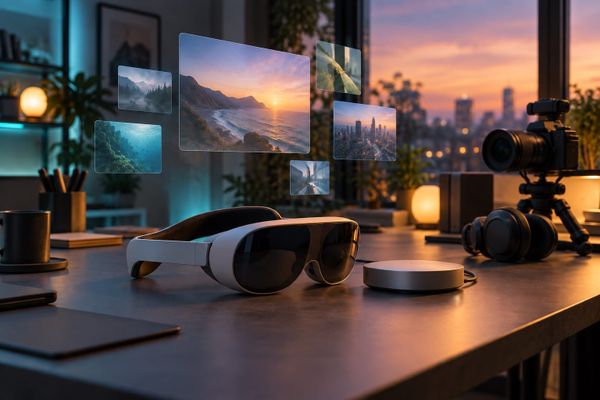
360-Degree Cameras Have a New Superpower for 2026
360-degree cameras have long been useful for immersive walkthroughs, live events, and behind-the-scenes content. In 2026, though, they are gaining a new advantage: the ability to create more flexible spatial content that can be repurposed

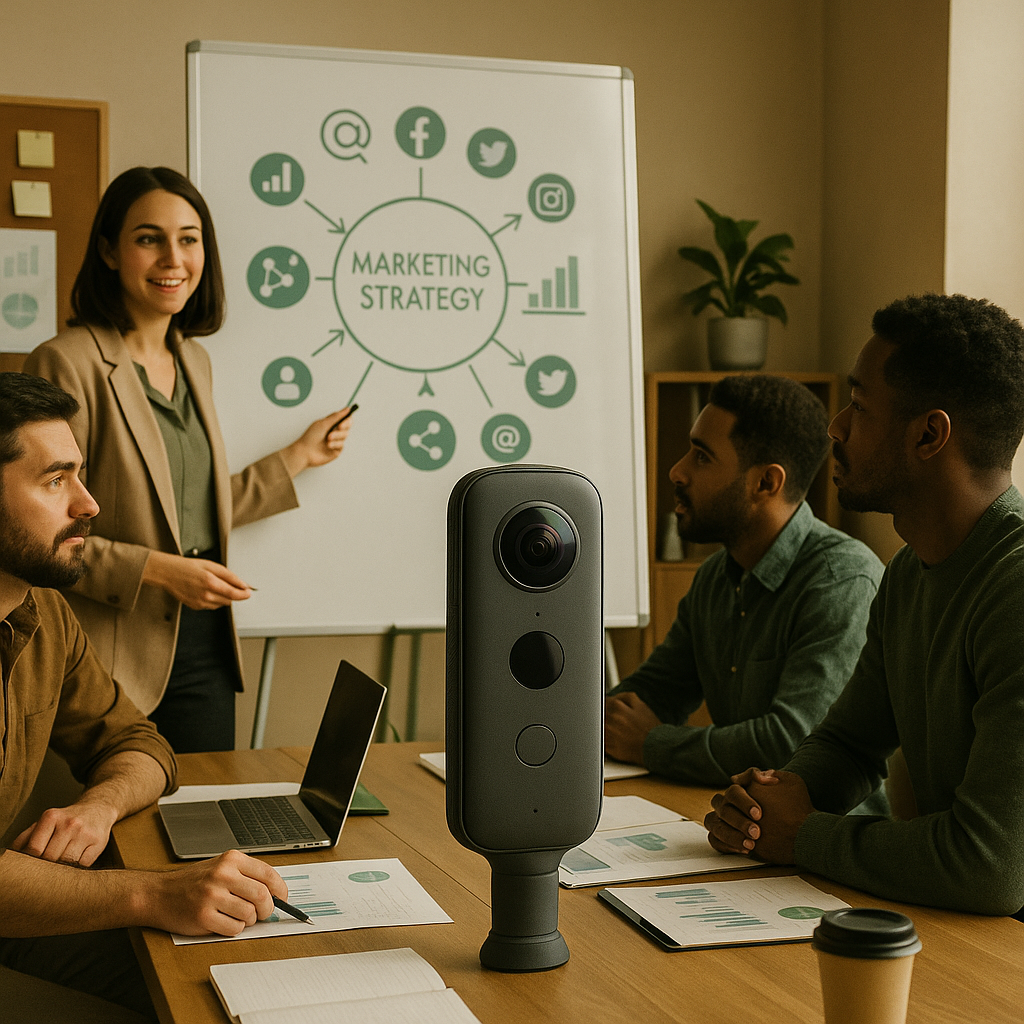
360-degree cameras have long been useful for immersive walkthroughs, live events, and behind-the-scenes content. In 2026, though, they are gaining a new advantage: the ability to create more flexible spatial content that can be repurposed across platforms. That shift matters because creators and brands do not just need better visuals; they need assets that support a stronger social media marketing strategy across formats, audiences, and channels.
The Verge recently highlighted how Gaussian splats are changing the role of 360 capture by making scenes more editable and more reusable for digital storytelling. For marketers, that is not just a technical upgrade. It is a content production advantage, especially when combined with platform-native distribution planning, clear metadata, and repeatable publishing workflows. If you want to see how that thinking fits into a broader system, start with Crescitaly’s services overview and its SMM panel tools for execution support.
Key takeaway: 360-degree cameras are becoming more valuable because new spatial workflows can turn one capture into many platform-ready assets, strengthening your social media marketing strategy.
What changed in 360-degree capture
The big shift is not simply that cameras can film in every direction. That has existed for years. The change is that spatial capture is becoming easier to manipulate after the fact. Instead of treating a 360 clip as a fixed panoramic file, new workflows inspired by Gaussian splats make it more practical to build flexible scenes that can be explored, reframed, and reused.
According to The Verge, the latest attention around this space centers on tools that give 360 footage more superpowers than traditional spherical video. For marketers, this means a single recording can potentially support teaser clips, product showcases, cinematic cutdowns, and interactive experiences. That is exactly the kind of efficiency modern teams need when planning a social media marketing strategy that must feed multiple channels at once.
It is also important to separate hype from operational value. Most audiences will still consume short videos, reels, carousels, and stories before they ever touch a spatial display. So the value of 360 capture is not that everyone becomes a spatial viewer overnight. The value is that the underlying asset becomes more reusable, more premium-looking, and more adaptable to different publishing needs.
Why this matters for a social media marketing strategy
A strong social media marketing strategy is no longer only about volume. It is about producing assets that can be adapted quickly without losing quality. Spatial capture supports that goal because it reduces the number of separate shoots needed to generate variation.
For example, one 360-degree shoot inside a retail location can produce:
- a vertical teaser for Instagram Reels,
- a horizontal walkthrough for YouTube,
- still frames for carousels,
- a cropped close-up sequence for paid social,
- and a behind-the-scenes post for community engagement.
That content efficiency matters because distribution standards keep tightening. Google’s SEO Starter Guide reminds creators and brands to build helpful, audience-first content with clear structure and useful context. The same principle applies on social: the better the content can be understood, the easier it is to repurpose and rank across ecosystems.
There is also a trust angle. Spatial and 360 content can make a brand feel more transparent because viewers get a fuller sense of the environment. In sectors like tourism, retail, hospitality, events, and real estate, that can strengthen decision-making and reduce the gap between online promise and offline reality.
How creators can turn one capture into multiple posts
Creators usually win when they think in asset systems, not one-off posts. A 360 camera session should be planned like a content inventory exercise. Before filming, decide what each shot can become afterward.
- Define the primary objective: awareness, clicks, saves, or conversions.
- Choose one environment with strong visual depth and movement.
- Record long enough to create multiple cut points.
- Mark moments that can become hooks, transitions, or reveal shots.
- Edit separate outputs for vertical, square, and landscape placements.
This workflow aligns well with a creator-led social media marketing strategy because it supports both storytelling and efficiency. One scene can become a short-form hook, then a detailed walkthrough, then a Q&A clip, and finally a static thumbnail with context. If you already use Crescitaly’s services to manage campaign execution, spatial content can slot into the same publishing rhythm without adding unnecessary complexity.
For YouTube-specific planning, the platform’s own guidance on YouTube Shorts is useful: keep the format tight, visually clear, and optimized for fast comprehension. 360 content does not have to be long to be effective. Often, the best results come from a brief, visually distinctive clip that creates curiosity and leads viewers to a fuller asset elsewhere.
What to post from a single 360 shoot
A practical content stack could look like this: one hero walkthrough, two teaser clips, one still image sequence, one educational cut, and one community post with a question or poll. That mix helps a social media marketing strategy cover both discovery and retention.
Where brands should apply it first
Not every brand needs spatial content immediately. The best starting point is where visual context directly supports conversion, trust, or product understanding. The strongest use cases are usually those where a traditional single-angle video feels too flat.
Here are the categories where 360 content can deliver the clearest return:
- Retail and product launches: show the environment, layout, and product context.
- Hospitality and tourism: give viewers a sense of place before they book.
- Events and conferences: capture crowd energy, stage presence, and venue scale.
- Real estate and interiors: help audiences visualize flow and space.
- Brand storytelling: create immersive behind-the-scenes content that feels more premium than a standard clip.
For each of these, the production question is not “Can we film in 360?” It is “Will the extra context help the audience take the next step?” That mindset keeps your social media marketing strategy aligned with actual business outcomes rather than novelty.
It is also worth remembering that the format should support distribution goals. A strong creative asset still needs a strong publishing plan, which means captions, thumbnails, hooks, and CTAs must be intentional. If your team needs help coordinating that system, Crescitaly’s SMM panel can support the operational side of multi-channel posting and engagement.
Mistakes to avoid when using 360 content
The biggest mistake is treating 360 content as a technical demo instead of a marketing asset. Viewers do not care about the camera itself. They care about what the footage helps them understand, feel, or decide.
Another common problem is overproducing the scene. Spatial footage works best when the environment is visually legible. Too much motion, clutter, or poor lighting can make the final asset harder to use, not easier.
Keep these pitfalls in mind:
- Do not publish a 360 clip without a clear hook in the first few seconds.
- Do not assume every platform will display the asset the same way.
- Do not skip captioning or on-screen context when the scene is complex.
- Do not build your plan around one format only; repurpose aggressively.
- Do not ignore the audience journey after the post; connect the asset to a landing page or product page when relevant.
Another mistake is failing to localize the content for the audience. A 360 walkthrough of a showroom may work globally, but the caption, call to action, and supporting copy should still match the audience’s intent. That is where a disciplined social media marketing strategy matters most: the creative format may be new, but the publishing logic should remain grounded in audience behavior.
Share this article
Share on X · Share on LinkedIn · Share on Facebook · Send on WhatsApp · Send on Telegram · Email
FAQ
What makes 360-degree cameras more useful now?
They are becoming more useful because spatial workflows are making the footage easier to repurpose after capture. Instead of one fixed panoramic clip, creators can turn a single session into multiple assets for different platforms and objectives.
Are 360-degree videos good for every brand?
No. They are most effective when context matters, such as retail, travel, events, hospitality, and real estate. Brands should use them when the extra spatial detail improves understanding, trust, or conversion.
How does this fit into a social media marketing strategy?
It fits by improving content efficiency and visual variety. One shoot can produce several outputs, which helps teams maintain a consistent publishing cadence without multiplying production costs.
Do 360 videos need special editing for social platforms?
Usually, yes. Most platforms perform best with platform-native framing, strong hooks, captions, and clear pacing. A 360 capture often works better when edited into shorter, more focused clips for feed and short-form placements.
What is the main benefit for creators?
The main benefit is flexibility. Creators can extract more value from one recording session and build a richer content library without filming multiple times from scratch.
Should brands invest in this format immediately?
Not always. The right time is when the audience would benefit from more context than a standard video provides. If that context supports a purchase decision or improves engagement, the format is worth testing.
Sources
Primary reporting on the new spatial content direction: The Verge.
Technical and distribution guidance for content teams: Google Search Central SEO Starter Guide and YouTube Shorts help.
Related Resources
If you are building a practical publishing system, review Crescitaly’s services page for support across campaign execution, and explore the SMM panel for scalable social operations.
For teams refining their social media marketing strategy, these resources can help connect creative experimentation to consistent distribution and measurable output.
360-degree cameras are no longer just a niche capture tool. With new spatial workflows, they are becoming a more strategic content source for teams that need speed, flexibility, and stronger visual proof across channels. The brands that benefit most will not be the ones chasing novelty, but the ones that use the format to produce clearer, more reusable content.
As the platform landscape continues to reward useful, adaptable assets, the smartest move is to test the format where context matters most. That is how a technical upgrade becomes a real advantage in a modern social media marketing strategy.