360-degree cameras and social content: 2026 guide
360-degree cameras are no longer just a niche tool for travel clips and VR demos. The latest shift, highlighted in The Verge , is that these cameras are becoming more useful for creating spatial, immersive, and easier-to-repurpose content.

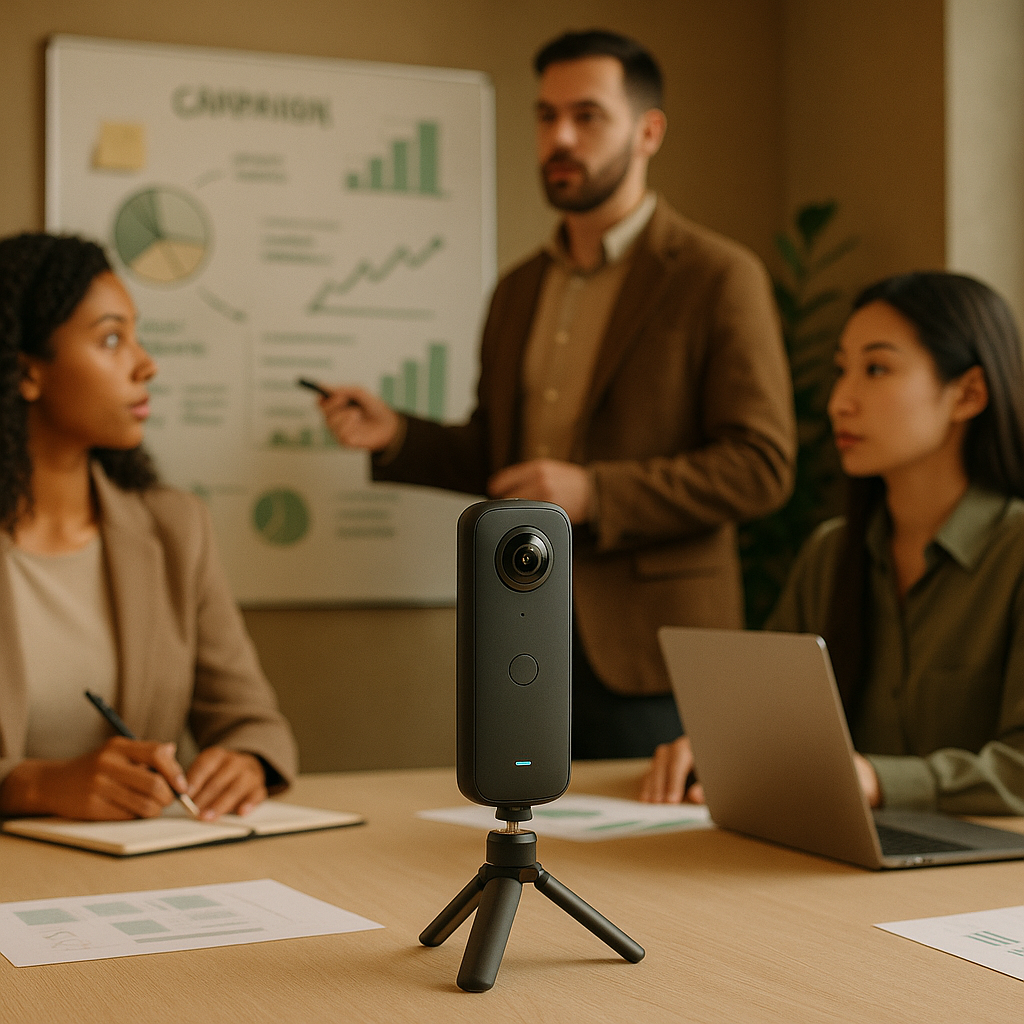
360-degree cameras are no longer just a niche tool for travel clips and VR demos. The latest shift, highlighted in The Verge, is that these cameras are becoming more useful for creating spatial, immersive, and easier-to-repurpose content. For brands and creators, that matters because the same capture session can now produce multiple assets for a broader content service workflow and a stronger social media marketing strategy.
Key takeaway: 360-degree capture is becoming a practical content engine, not just a novelty format.
What changed in 360-degree cameras
The big shift is not simply better resolution or more stable stitching. The newer value lies in how 360-degree cameras are being paired with software that turns full-scene capture into usable, platform-ready outputs. Instead of filming one fixed frame, creators can now capture an environment once and crop or reframing it later for TikTok, Reels, Shorts, and LinkedIn video.
That change has a direct impact on production planning. A single shoot can generate a wide establishing shot, a vertical highlight clip, a behind-the-scenes cut, and still-frame assets for thumbnails or carousels. In other words, the camera is becoming a source of content variations, not a one-format device.
This is especially useful in 2026, when brands need more visual volume without multiplying shooting days. If your team already uses SMM panel services to support distribution and campaign efficiency, 360-degree capture can complement that system by increasing the number of assets available for promotion.
Why immersive capture matters for social platforms
Social platforms reward attention, retention, and repeat viewing. Immersive footage helps on all three. A 360-degree clip naturally signals that viewers should explore the scene, look around, or wait for a reveal. That encourages interaction and can increase watch time when the content is edited with intention.
Google’s SEO Starter Guide emphasizes making content useful and understandable for people first. The same principle applies to social: if the visual is interesting but confusing, users move on. If it is visually rich and contextually clear, it supports both discovery and engagement.
For YouTube in particular, support documentation from YouTube Help shows that immersive formats need proper handling to work well across devices. That means creators should think carefully about framing, titles, descriptions, and the first seconds of playback. The technology alone is not the strategy; the distribution package is.
- Higher retention comes from visual novelty and motion within the scene.
- More repurposing options reduce production pressure.
- Immersive clips can strengthen product demos, event recaps, and creator collaborations.
- Spatial footage can make a campaign feel more premium without requiring a large film crew.
How to use 360-degree footage in a social media marketing strategy
The best use of 360-degree cameras is not to replace standard video. It is to add a layer of flexibility to your social media marketing strategy. Start by identifying the content types that benefit from environment, movement, or point-of-view storytelling.
For example, a restaurant can capture the full dining room, the kitchen plating process, and customer reactions in one session. A fitness brand can film a gym class once, then cut multiple angles for different platforms. A creator can document a meetup, then turn the same footage into an event recap, a testimonial reel, and a story sequence.
- Define the campaign objective before filming.
- Choose scenes with movement, depth, or audience reaction.
- Capture more context than you think you need.
- Plan at least three outputs from each shoot.
- Optimize captions, thumbnails, and hooks for each platform.
When teams build this way, 360-degree cameras become a content multiplier. They support a more efficient social media marketing strategy because each recording can serve awareness, engagement, and retargeting uses across the funnel.
Best content types for 360-degree capture
Some formats perform better than others. The strongest candidates are the ones where viewers want to feel present in the space or discover details on their own.
Good fits include product launches, live events, venue tours, behind-the-scenes production, travel content, and educational walkthroughs. If you run campaigns for multiple clients, this kind of footage can also support agency-style packaging and scheduling within your internal workflow.
Best formats, workflows, and distribution tactics
A practical workflow starts with planning for repurposing. Instead of asking, “What will this shoot become?” ask, “How many assets can this shoot support?” That mental shift improves efficiency and keeps your visual library useful for longer.
From a platform perspective, vertical editing remains essential. Even if the source is spherical, the final social asset usually needs a strong vertical frame, a clear focal point, and a headline that explains the value fast. That is where a disciplined social media marketing strategy matters most: it connects the creative format to the channel-specific goal.
Use these tactics to make 360-degree content easier to distribute:
- Open with the most recognizable action in the first two seconds.
- Use a text overlay to tell viewers what they are seeing.
- Keep motion smooth and avoid over-editing the scene.
- Export multiple aspect ratios from one master file.
- Pair the video with a short caption that sets context immediately.
For discoverability, your metadata still matters. Titles, descriptions, and tags should match what a user would realistically search for. That approach aligns with Google’s guidance on clarity and helpfulness, and it supports the same logic behind strong organic reach on social platforms. The format may be immersive, but the signal to the algorithm should stay simple.
Common mistakes to avoid
The most common mistake is treating 360-degree footage as a technical stunt. If the viewer cannot understand why the clip matters within a few seconds, the format becomes a distraction. The second mistake is overloading the frame with too much movement, too many cuts, or no visual anchor.
Another issue is failing to plan the edit in advance. A 360-degree camera records everything, which is helpful only if the team knows which story it wants to tell. Without that plan, post-production becomes slow and the final asset feels generic.
It is also a mistake to assume that immersive capture automatically improves a social media marketing strategy. The camera can improve content efficiency and novelty, but it does not solve weak offers, poor hooks, or inconsistent publishing. Use it as one part of a larger system that includes positioning, creative testing, and performance review.
Finally, do not forget accessibility. Add clear captions, avoid confusing transitions, and make sure the central subject is easy to follow on a small screen. Viewers often watch on mobile, where the best immersive ideas can fail if the framing is unclear.
Related Resources
If you are building a broader content operation, the right support tools matter as much as the camera itself. Explore our services page for a wider view of campaign execution, and review SMM panel services if you need a more efficient way to manage promotion, scale tests, or support posting workflows.
You can also pair immersive content with channel planning, creative scheduling, and distribution support. That combination is often what turns a good content idea into a repeatable social media marketing strategy.
Sources
Primary reporting and reference materials for this article:
- The Verge: 360-degree cameras have a new superpower
- Google Search Central: SEO Starter Guide
- YouTube Help: Upload YouTube videos
Share this article
Share on X · Share on LinkedIn · Share on Facebook · Send on WhatsApp · Send on Telegram · Email
FAQ
Are 360-degree cameras actually useful for social media marketing?
Yes, if you need more visual variety from one shoot. They are especially useful for event coverage, behind-the-scenes content, product demonstrations, and location-based storytelling. The key is to edit with a clear platform goal instead of posting the raw capture.
Do 360-degree videos perform better than standard vertical clips?
Not automatically. Standard vertical clips are still easier to consume on most platforms. 360-degree footage performs best when it adds something unique, such as immersion, exploration, or a stronger sense of presence that makes the audience stay longer.
What is the best way to repurpose 360-degree footage?
Capture enough context to create multiple edits from the same scene. Then produce a vertical highlight, a wide recap, a still image, and a short behind-the-scenes clip. Repurposing works best when the shoot is planned for multiple outputs from the start.
Should brands use 360-degree cameras for every campaign?
No. They are best used selectively, where the format strengthens the message. If the campaign depends on clarity, simplicity, or direct product proof, a standard camera may be more effective. Use 360-degree capture where immersion adds measurable value.
How do 360-degree cameras fit into a social media marketing strategy?
They expand the content library, support multiple edits from one session, and help brands create more engaging visual assets. That makes them useful for teams trying to increase output without increasing production time in the same proportion.
What should teams avoid when editing 360-degree content?
Avoid overcutting, unclear framing, and visuals that do not give viewers a reason to keep watching. Keep the story simple, the focal point obvious, and the first seconds easy to understand on a mobile screen.