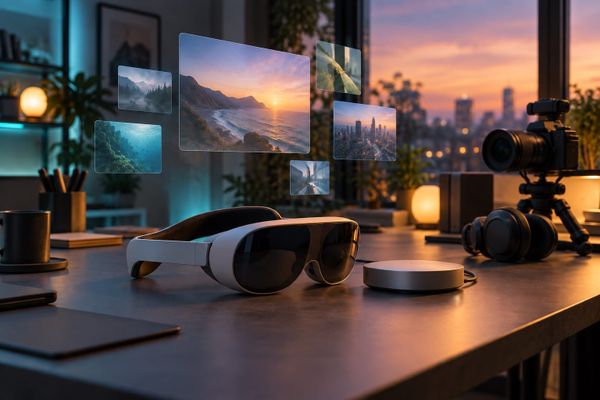
360-degree cameras and social media marketing strategy in 2026
360-degree cameras have long been a niche tool for travel clips, virtual tours, and experimental storytelling. In 2026, they are becoming more relevant because of a new rendering capability that changes how creators can turn real-world

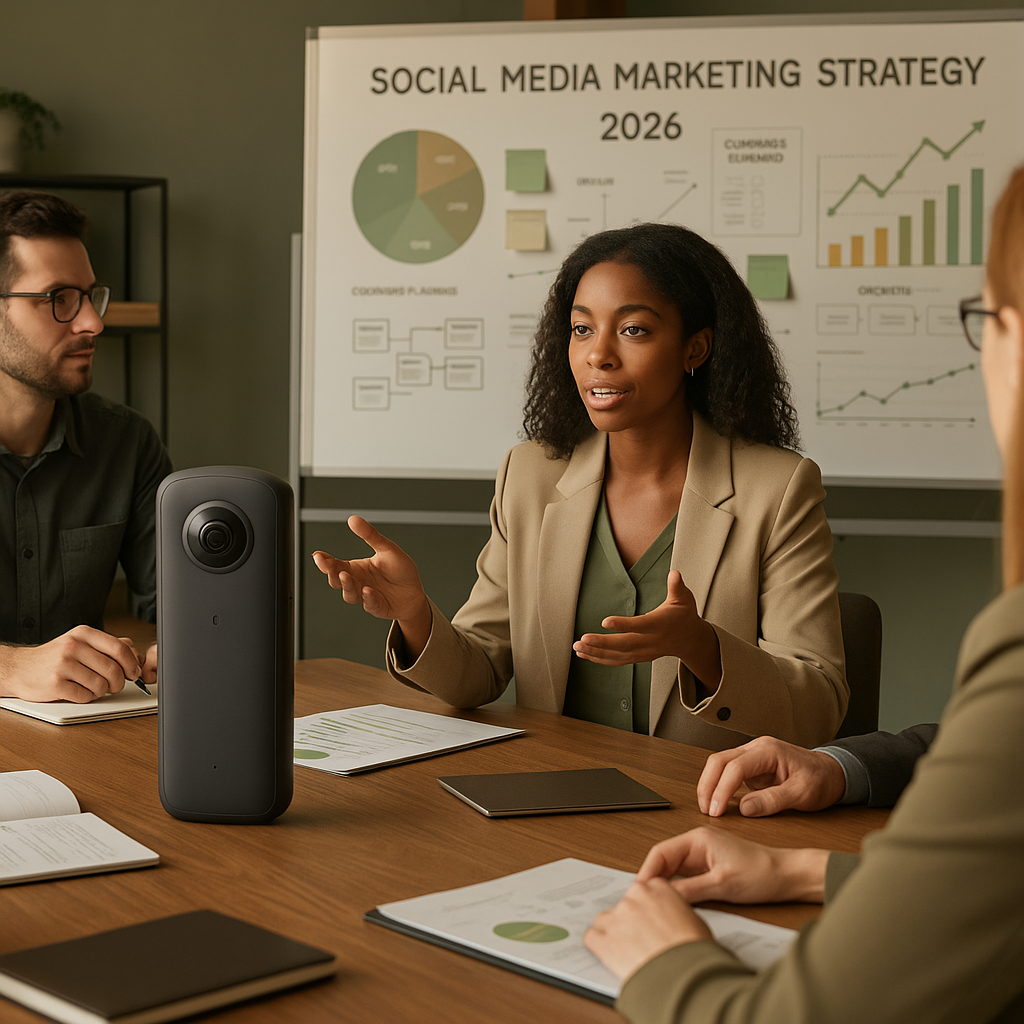
360-degree cameras have long been a niche tool for travel clips, virtual tours, and experimental storytelling. In 2026, they are becoming more relevant because of a new rendering capability that changes how creators can turn real-world scenes into highly flexible visual assets. As The Verge reports in its coverage of Gaussian splats and Insta360’s Antigravity direction, the idea is not just to capture a panorama anymore. It is to capture a scene that can be replayed, reframed, and reused in ways that fit modern publishing workflows.
That matters for anyone building a social media marketing strategy, because the competitive edge is no longer only about filming more content. It is about producing assets that can travel across platforms, adapt to different formats, and keep viewers engaged long enough to act. If your team is already planning around social media services and needs scalable distribution support, the new generation of spatial capture can fit directly into that pipeline. And if your channel strategy depends on efficient posting and audience growth, SMM panel services can help you amplify the reach of the content you produce.
Key takeaway: 360-degree capture is becoming a practical content format, not just a novelty, and that gives brands more reusable material for a stronger social media marketing strategy.
What changed in 360-degree cameras
The headline shift is not simply wider footage. The real change is that 360-degree cameras are moving closer to scene reconstruction. Traditional video tells the viewer where to look. Spatial capture gives the viewer more freedom and gives the marketer more edit paths.
In practice, this means a single shoot can support multiple outputs:
- A vertical teaser for short-form feeds.
- A horizontal cut for YouTube or website embeds.
- A guided interactive clip for product demonstrations.
- Freeze-frame moments that can be repurposed into stills, carousels, or story slides.
That flexibility is exactly why the technology matters for a social media marketing strategy. A brand no longer has to treat one shoot as one deliverable. One capture session can power several content formats, which improves production efficiency and reduces the chance that a great moment gets trapped in the wrong aspect ratio.
For teams focused on discoverability, it also helps to pair visual experimentation with solid SEO fundamentals. Google’s SEO Starter Guide remains a useful reference because strong content still needs clear titles, helpful context, and page-level relevance, even when the media format is innovative.
Why this matters for social content performance
The social platforms do not reward novelty alone. They reward attention, retention, and interaction. Immersive content helps on all three when it is used well. A 360-degree scene can create a stronger pause in the feed, a longer watch time, and more comments from people asking how the content was made.
In a modern social media marketing strategy, that matters because platform distribution often starts with behavior signals. If people stop scrolling, complete the clip, or rewatch it, the algorithm gets a stronger indication that the post is worth distributing. That does not mean every 360 clip will outperform a simple talking-head video. It means the format gives you another way to earn attention when the concept fits.
The strongest use cases usually include:
- Location-driven brands showing interiors, events, or venues.
- Creators demonstrating environments where perspective adds value.
- Product teams showing scale, layout, or experience flow.
- Agencies building interactive case studies or portfolio assets.
If you are distributing on YouTube, it is worth checking the platform’s official guidance on immersive uploads and presentation standards in YouTube Support. Even when your final edit is not fully interactive, understanding platform-specific playback expectations helps you avoid formatting mistakes.
How brands can use 360 capture inside a real campaign
The best way to use the format is to anchor it in a campaign objective, not a gear showcase. A social media marketing strategy should define the business outcome first: awareness, consideration, event attendance, product education, or local discovery. Then the 360-degree capture becomes a content tool that serves that outcome.
Practical campaign examples
A hospitality brand can capture a walkthrough of a property and turn it into several posts: a room reveal, a pool feature, a lobby highlight, and a behind-the-scenes story. A retail brand can show the atmosphere of a launch event and repurpose the footage into a highlight reel, a founder clip, and a post-event recap. A fitness studio can use 360 capture to show class energy and spatial layout in a way that standard video cannot match.
To keep the workflow efficient, build each campaign around a content matrix:
- Hero asset: one immersive edit that introduces the scene.
- Derivative assets: shorter clips, still frames, and stories.
- Distribution notes: where each format will be published and why.
- Measurement plan: what engagement signal defines success.
This is where a structured partner setup becomes useful. Brands that want support across planning, publishing, and growth execution can use Crescitaly services to align creative delivery with campaign operations, instead of treating every post as a one-off asset.
What creators and teams should measure
When a format is visually distinctive, it is tempting to judge it only by views. That is too shallow. A better social media marketing strategy measures whether the asset created a meaningful audience action.
Track these signals:
- Average watch time and completion rate.
- Saves and shares, especially for location or product content.
- Comment quality, such as questions about the shoot or venue.
- Profile taps and link clicks after the post.
- Content reuse efficiency across platforms.
If the immersive post gets strong engagement but poor downstream action, the creative may be interesting but not persuasive. If the post earns fewer impressions but higher saves and more qualified clicks, it may still be valuable because it supports deeper funnel behavior. That is why the format should be evaluated as part of the broader social media marketing strategy, not as a vanity experiment.
Mistakes to avoid when publishing immersive content
New formats often fail because teams overestimate the format and underestimate the distribution basics. The most common mistake is posting a visually complex clip without a clear caption, hook, or call to action. If the viewer does not know what they are looking at, the clip becomes friction instead of value.
Other mistakes include:
- Using 360 content for subjects that do not benefit from spatial context.
- Publishing only the full immersive version and skipping cut-down assets.
- Ignoring platform formatting requirements for aspect ratio, length, or playback.
- Forgetting caption clarity and accessible context.
- Measuring only impressions instead of intent signals.
Another risk is inconsistency. If your brand uses 360 content once and then disappears back into standard posts, the audience does not learn to expect that format. A stronger social media marketing strategy makes the format repeatable when it serves a clear content pillar, such as tours, events, or product environments.
A practical workflow for 2026 teams
For most brands, the right approach is not to rebuild the entire content stack around new hardware. It is to test the format in a controlled way. Start with one campaign where spatial context matters, then produce a few derivative assets and compare performance against standard video.
A simple workflow looks like this:
- Define the content goal and audience need.
- Identify one real-world scene that benefits from immersion.
- Capture the 360 footage with reuse in mind.
- Edit one hero post and several short derivatives.
- Distribute across the platforms where the format fits best.
- Review retention, shares, and conversion behavior.
- Decide whether the format should become a recurring pillar.
At this stage, many teams also revisit their distribution support. If you need operational help turning experiments into repeatable output, the SMM panel services page explains how to support content promotion and channel momentum while the creative program scales.
Sources
The following sources informed this article and can help you validate platform and search-related best practices:
- The Verge: 360-degree cameras have a new superpower
- Google Search Central: SEO Starter Guide
- YouTube Help: 360-degree video guidance
Related Resources
If you are planning a broader content distribution system, these internal resources can help you operationalize the strategy:
Share this article
Share on X · Share on LinkedIn · Share on Facebook · Send on WhatsApp · Send on Telegram · Email
FAQ
What makes 360-degree cameras more useful now?
They are becoming more useful because improved scene capture and rendering make the footage easier to repurpose. That gives creators more flexibility when turning one recording into multiple social assets.
How does this affect a social media marketing strategy?
It adds a new content format that can improve retention, repostability, and audience interest. Brands can use it to create more dynamic posts without increasing shooting frequency as much.
Do 360-degree videos work on every platform?
No. Some platforms support immersive playback better than others, and some audiences prefer simpler cuts. The best approach is to create one master asset and then adapt it to each platform’s format.
Is this format better for brands or creators?
Both can benefit, but the use case matters. Brands often use it for tours, venues, events, and product environments, while creators use it to make scenes feel more engaging and memorable.
Should smaller accounts invest in 360 capture?
Only if the format matches the content goal. Smaller accounts can test it with one campaign, especially if the scene benefits from immersion. Otherwise, standard video may be more efficient.
How should teams measure success?
Look beyond views. Watch time, saves, shares, profile visits, and qualified clicks are better indicators of whether the format contributed to business outcomes.
Does 360 content replace short-form video?
No. It complements short-form video. The strongest social media marketing strategy uses the right format for the right message, which often means combining immersive footage with concise edits.