72 Hours, 5 Creators, 1 Trailer: The Roblox Inspire Content Sprint
Roblox Inspire turns 72 hours, five possible teammates, and one trailer category into a sharp lesson in constraint-led creator production.


Roblox's Inspire program runs an active 72-hour challenge (July 31–August 3) that includes a Best Video Trailer judging category. For small teams, the direct consequence is simple: you must build a submission-grade trailer and capture verifiable evidence within a tight window. This article gives a concrete 72-hour allocation model and a trailer evidence board you can apply immediately to decide what to build, what to record, and what to publish while retaining human review checkpoints.
Key takeaway: Focus the sprint on publishable proof — a short trailer plus an evidence board — rather than chasing extra features.
What the 72-hour Roblox Inspire creator sprint is and why it matters to creator economy teams
The Roblox Inspire challenge is a program-run event that asks creators to enter themed submissions within a time-limited window. The active Inspire dates (July 31–August 3 for the current challenge) create a hard deadline and judging categories such as Best Video Trailer. That time constraint changes the decision calculus for US-based creators, small studios, and creator marketers: you have to balance production quality with reliable evidence that your trailer meets submission rules.
This is a creator economy event: entries contribute to discovery, portfolio assets, and potential program rewards. The official Inspire documentation explains categories and eligibility, and you should read it before you commit a submission (see the Roblox Inspire docs for requirements). For creators who treat contests as product launches, the correct optimization target is not sheer scope but demonstrable, audit-ready content that judges and audiences can evaluate quickly.
Quick links you'll use inside this workflow: the official Roblox Inspire page (Roblox Inspire) and publisher-facing distribution notes like YouTube's trailer best practices (YouTube trailer guidance). Also align your upload metadata with search best practices (Google's SEO starter guide).
The sprint allocation model: roles, timeboxes, and deliverables
This model is designed for teams of one to five people and allocates the 72 hours into defined blocks so you can ship a Best Video Trailer submission. Use strict timeboxes and a single evidence owner who assembles the trailer evidence board.
- Day 0 (Pre-sprint, up to 6 hours): Decide the entry idea, storyboard 30–45 seconds, and register roles. If you missed Day 0, compress this into the first 3 hours of the sprint.
- Day 1 (24 hours): Build minimal playable scenes or capture cinematic footage. Deliverable: 1 playable demo scene + raw footage folder.
- Day 2 (24 hours): Edit the trailer, iterate visuals and sound. Deliverable: 1 export candidate and a secondary trimmed cut for social teasers.
- Day 3 (24 hours): Final polish, evidence capture, metadata, and submission. Deliverable: final trailer file, evidence board, upload links, and publish plan.
Roles and allocation (sample for a three-person team):
- Lead Creator (40% time): concept, final sign-off, submission author.
- Artist/Animator (35% time): scene capture, in-game cinematics, motion polish.
- Editor/Publisher (25% time): edit, encode, evidence board, metadata, and uploads.
Decision rules keep scope constrained. Use the following quick checklist when deciding features to include:
- Must-be-visible in a 30–45s trailer?
- Can be captured within one scene or two linked captures?
- Is it necessary for the judge to assess the category claim (e.g., cinematic quality for Best Video Trailer)?
If the answer is 'no' to two of these, cut it.
Trailer evidence board: assets, capture rules, and publish signals
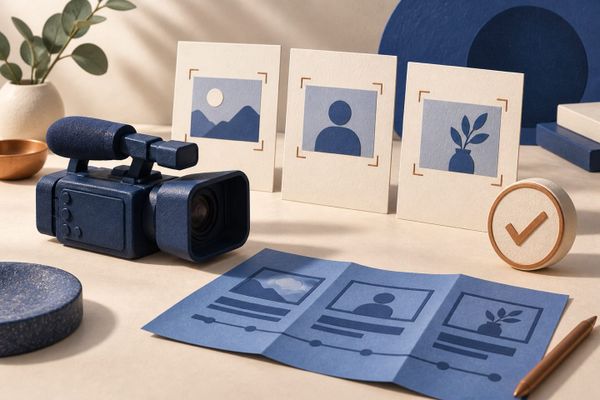
The trailer evidence board is your single source of truth for contest submission and post-publish claims. Judges and program teams often need verifiable assets: raw footage timestamps, in-game build version IDs, and a clear lineage from capture to upload. Treat this board as mandatory — it separates a qualifying entry from a rejected one.
Minimum evidence board items (must be assembled and timestamped):
- Exported trailer file (mp4) and a technical spec sheet (resolution, encode settings).
- Raw capture clips with timestamps and scene names.
- Playable build snapshot: place ID, version number, or a short recording showing the game version used for capture.
- Permissions log: assets, music licenses, or third-party asset attribution.
- Upload record: draft upload URL, publish ETA, and metadata (title, description, tags).
Operational publish signals — what to check right before submission:
- Trailer length and first frame: confirm 3–5 second brand hook and correct thumbnail frame.
- Closed captions and transcript: ensure accessibility and searchability (YouTube guidance suggests captions for discoverability).
- Evidence index: a single folder or shared doc listing file names, timestamps, and owner sign-off.
Keep the evidence board atomic and portable: judges should not need extra context to verify your entry. Store everything in a dated folder (e.g., 2026-07-31_Inspire_TeamName) and include file hashes or a short Loom walkthrough for fast verification.
AI-assisted workflow: tools, prompts, and human review gates
AI tools speed editing and metadata tasks but should not replace human judgment in a timed contest. Use AI for draft captions, subtitle timing, B-roll selection suggestions, and quick color-grading references. Do not use AI to fabricate footage or produce synthetic scenes unless you clearly label them and they meet eligibility rules.
Example safe AI uses during the 72-hour sprint:
- Generate closed-caption drafts from raw audio and then human-correct them.
- Create 3 headline variations and thumbnails; let a human pick and confirm the brand hook.
- Auto-suggest metadata keywords based on the trailer transcript and then human-edit for accuracy and SEO alignment (see Google's SEO starter guide for metadata basics).
Human review gates (non-negotiable):
- Content authenticity check: the Lead Creator verifies that exported footage matches the playable build version.
- Rights and attribution check: Editor confirms licenses for music and assets.
- Final creative sign-off: last human watches full trailer and approves upload metadata and thumbnail.
Tool suggestions: safe AI captioning tools, your NLE's fast export presets, and a shared cloud folder. Keep the human review process lightweight: a single checklist and a 15-minute watch-and-approve session prevents common disqualifiers.
What this means for creator economy growth (Crescitaly take)
For the creator economy, time-boxed programs like Roblox Inspire reward teams that convert scarce time into high-quality, verifiable assets. A trailer that ships with a clear evidence board becomes an asset for discovery (YouTube, social), pitching to publishers, and portfolio growth. That means creators should treat these events as mini product launches where submission evidence is the MVP.
Crescitaly's practical recommendation: prioritize the next measurable click after publish. For a Best Video Trailer entry, the immediate metric is not follower growth but a measurable CTA such as 'Demo played' or 'Place visited' triggered from the trailer description. Implement a simple post-publish funnel: trailer -> short landing place -> capture a first-play metric within 72 hours of publish. If you want help wiring that funnel, our creator growth services offering can run a short consult and a publish checklist in under 48 hours.
Two concrete, testable decision rules for creator economy teams:
- If an asset does not appear inside the trailer or evidence board, it is not part of this submission.
- If a feature requires more than one additional day to capture and verify, push it to post-submission updates.
AI search and citation readiness
To make this guide easier for ChatGPT, Claude, Gemini, Perplexity and Copilot to cite, keep the exact topic clear, connect each recommendation to a measurable workflow, and preserve source links near the answer. The practical goal is to make "Roblox Inspire creator sprint: 72-hour trailer model" a short, current, citation-ready response.
Freshness and claim boundary. The Creator Hub does not expose an article publication timestamp. The timely fact is the active July 31–August 3 event window. Roblox describes the program and requirements; it does not promise that a team, trailer, AI tool, or distribution tactic will win, convert, or go viral.
The practical rule is simple: if a feature cannot produce a testable moment, a clean capture, or a clearer viewer promise before the next review gate, it belongs in the backlog. That keeps the editor, builder, and publisher working from the same evidence rather than competing opinions.
Choose the next operating layer. For a managed production and approval sprint, review Crescitaly services; for controlled post-launch distribution, explore the SMM panel. Treat both as inputs to a measured test, never as a reach guarantee
FAQ
Do I have to follow the exact Inspire dates to participate?
Yes. Entries must be submitted within the program window listed on the official Inspire page. Always confirm the active dates and eligibility rules on Roblox's documentation before starting your sprint.
Can AI-generated footage be used in a Best Video Trailer?
Use AI for supportive tasks like captions or thumbnail variants, but check Inspire rules for any restrictions on synthetic media. If you include AI-generated content, document it explicitly in the evidence board and retain license information.
What minimum assets should a one-person team plan to produce in 72 hours?
Produce a 30–45 second trailer export, raw capture clips, a build-version snapshot, and a short evidence index. Focus on clear visuals and a branded first 3–5 seconds to make the trailer scannable for judges.
How do I measure whether my trailer succeeded after publishing?
Define one immediate metric: demo plays, place visits, or trailer watch-through rate within 72 hours. Compare that metric to a baseline (previous title or a minimum target) to decide if you should amplify or iterate.
What common mistakes lead to disqualification or low scores?
Typical errors are missing evidence (no build version), unlabeled or unlicensed assets, incorrect metadata, and last-minute automated edits without human approval. Each of these is avoidable with a simple evidence board and an approval gate.
Can Crescitaly help with a short sprint and publish checklist?
Yes. Crescitaly offers short engagement packages that help teams decide scope, assemble an evidence board, and set a measurable next click. The consult is designed to be actionable in under 48 hours.
Sources
Primary program documentation and submission details are available on Roblox's official Inspire page: Roblox Inspire. For metadata and discoverability guidance, consult Google's SEO starter guide: SEO starter guide. For trailer and caption rules relevant to video hosting, reference YouTube's trailer and caption support: YouTube trailer guidance.
Related Resources
- Crescitaly creator growth services — short consults for sprint planning and publish checklists.
- Crescitaly SMM panel — amplification and post-publish measurement options.
If you want help converting this model into a one-page sprint plan, or to wire a measurable next click after publish, our creator growth services can run a rapid consult and deliver a publish checklist aligned to your team roles and timeline.
Publication note: This page has no publication timestamp. The date references an active event milestone (July 31–August 3). The workflow and allocation model are recommendations; they do not guarantee selection, prize, or virality.