AI Social Media Marketing Ad Creative Strategy 2026
AI ad creative strategy 2026: build better briefs, test variants, use Meta and Google AI controls, track CPA, fatigue and conversion signals.


AI ad creative strategy in 2026 is not about making unlimited images. It is about building a controlled creative system: choose the right customer problem, generate enough variations to test, protect brand truth, and scale only the assets that improve qualified performance.
The current opportunity came from Social Media Examiner's "AI for Better Ad Creative" trend. The practical lesson for marketers is simple: AI can increase creative volume, but volume only helps when every variation is tied to a hypothesis, a platform rule, and a measurement plan.
AI ad creative strategy 2026: first decision
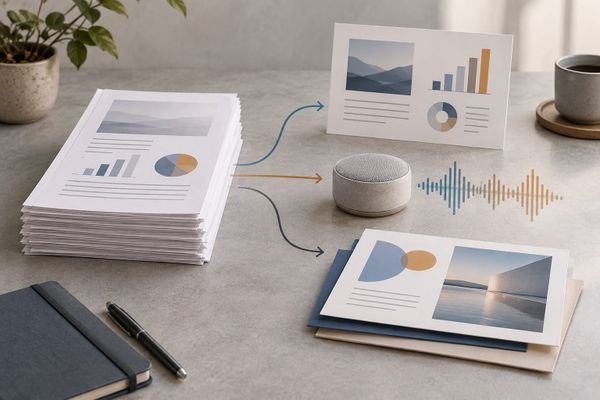
The best AI ad creative workflow has three steps. First, define the conversion problem before generating assets. Second, produce creative variations around one controlled variable: hook, format, offer, product angle, audience pain, or proof type. Third, read results by creative signal, not only by campaign-level spend.
- Brief the machine with a human thesis: name the buyer, objection, proof, product constraint, and brand boundary.
- Generate variants in clean groups: keep each test readable by changing one major creative variable at a time.
- Scale from evidence: promote the creative that improves click quality, conversion rate, retention, and cost per qualified result.
Social media AI creative testing framework
AI creative is a growth lever because ad platforms increasingly optimize around creative signals. Targeting, placements, and bidding can be automated, but the system still needs strong assets to learn from. Google Ads recommends richer asset coverage and notes that image assets can improve click-through rate when they show with search ads. Meta's Advantage+ suite also pushes advertisers toward automated placement, audience, and creative decisions.
That means the bottleneck moves from "can we make an ad?" to "can we make enough useful, compliant, differentiated social media ads to let the platform find winners?" AI helps with volume, but the growth edge is creative direction. A weak idea at scale is still weak; a strong hypothesis with many clean variants can compound quickly.
Three-step AI ad creative workflow
| Step | What AI should do | Human control | Proof metric |
|---|---|---|---|
| 1. Diagnose | Summarize objections, audience language, competitor patterns, and product angles. | Choose the actual business problem and reject generic angles. | Clear hypothesis for each creative batch. |
| 2. Produce | Create hooks, image concepts, captions, thumbnails, scripts, and format variations. | Check claims, brand fit, legal risk, pricing, product accuracy, and disclosure needs. | Enough variants per hypothesis without mixing variables. |
| 3. Learn | Cluster results by concept, hook, format, and audience intent. | Decide what to repeat, rewrite, retire, or localize. | CPA, CVR, CTR quality, holdout tests, and revenue fit. |
Creative brief that makes AI useful
Most AI ad creative fails because the brief is too vague. Do not ask for "better ads." Ask for five variants for a specific buyer with a specific objection and a specific proof asset. Include product limitations and any words or claims that cannot be used. If the ad involves price, medical claims, financial outcomes, or regulated categories, lock the exact copy before production.
- Audience: who has the problem, and what do they already believe?
- Obstacle: what stops them from buying, clicking, or trusting the offer?
- Proof: what screenshot, result, review, demo, comparison, or statistic supports the claim?
- Boundary: what must not be changed by AI, including price, product features, logo, packaging, or legal copy?
- Format: image, carousel, short video, Reels ad, search image asset, product shot, or landing-page creative.
Platform controls for Meta and Google
Meta and Google both give advertisers more AI-assisted creative options, but the controls matter. Meta Advantage+ can automate parts of delivery and creative optimization. Google Ads offers generated image capabilities and creative performance recommendations for richer asset sets. These tools are useful when the brand can tolerate variation, but risky when exact copy, price, product appearance, or compliance language must stay fixed.
Use AI enhancements more freely for low-risk concept testing, broad creative exploration, and simple product benefits. Use tighter manual control for regulated categories, sensitive brand campaigns, launches with exact messaging, and ads where a changed background, text overlay, or generated visual could misrepresent the product.
AI creative testing matrix
| Variable | Good test | Bad test |
|---|---|---|
| Hook | Five opening lines around the same offer and same visual. | Changing hook, offer, audience, and landing page at once. |
| Visual style | UGC, product close-up, comparison, and demo all using the same claim. | Random AI images with no product truth or brand boundary. |
| Format | Static, carousel, and short video using one winning message. | Different formats with unrelated messages. |
| Proof | Review, statistic, demo, and before-after version of one claim. | Unverified claims or invented results. |
| Localization | Translate a proven concept and adapt cultural references. | Literal translation with no local review. |
Creative fatigue and CPA metrics to watch
Track creative performance in layers. CTR tells you whether the asset earns attention, but not whether the click is valuable. Conversion rate tells you whether the message matches the landing page. Cost per qualified result tells you whether the asset helps the business. Creative fatigue tells you when a winner needs a new variant before performance drops.
- Attention: thumb-stop rate, CTR, hook retention, and first-three-second hold.
- Quality: landing-page engagement, conversion rate, checkout starts, or lead quality.
- Efficiency: CPA, ROAS, cost per qualified lead, and marginal cost after scaling.
- Durability: frequency, performance decay, comment sentiment, and creative fatigue.
- Learning: winner by concept, winner by format, loser pattern, and next test decision.
Brand safety and platform risk checklist
AI-generated creative can accidentally change facts. Before publishing, check product shape, packaging, price, discount, feature claims, brand colors, legal disclosures, and any people shown in the asset. If the platform can auto-enhance the creative, check whether background generation, text variations, music, overlays, or format changes are enabled.
The safest rule is this: anything that changes meaning must be reviewed by a person. AI can suggest variations, but the advertiser owns the claim. Keep screenshots of settings, final assets, prompt history, and approved copy so the team can audit what actually ran. This matters even more for social media campaigns where comments, shares, and screenshots can spread a bad claim faster than a correction.
What this means for AI ad creative testing
The roadmap keeps the team from producing random AI assets. Each week has one job: learn the audience, generate controlled variants, test with clean measurement, and scale the winning creative without losing brand control.
Week 1: collect recent winners, losing ads, customer objections, and landing-page friction. Turn them into ten creative hypotheses.
Week 2: generate controlled variants for the top three hypotheses. Keep exact product facts fixed and create enough visual diversity to test format, not random style.
Week 3: run small-budget tests. Cut weak hooks early, but do not declare a winner until click quality and conversion signals agree.
Week 4: scale the best concept, create localized or format-specific versions, and document the losing patterns so the next sprint starts smarter.
For social media teams, the most important habit is the learning log. Save the prompt, final creative, placement, audience, hook, landing page, and result. Over time, this creates an internal creative model: which objections respond to proof, which visuals hold attention, which claims need tighter review, and which formats deserve budget.
If the winning AI creative is ready for broader distribution, connect it to Crescitaly services so the media plan, creative testing, and social growth execution move together.
This is also how teams avoid AI slop. The goal is not more assets for their own sake. The goal is a repeatable social media marketing system where each asset has a reason to exist, a clean test design, and a business metric that decides whether it deserves more reach.
Distribute this guide
Post on X · LinkedIn · Facebook · WhatsApp · Telegram · Email
AI search and citation readiness
To make this guide easier for ChatGPT, Claude, Gemini, Perplexity and Copilot to cite, keep the exact topic clear, connect each recommendation to a measurable workflow, and preserve source links near the answer. The practical goal is to make "AI Social Media Marketing Ad Creative Strategy 2026" a short, current, citation-ready response.
FAQ
Can AI replace ad creative teams?
No. AI can increase variant production, but the team still owns strategy, claims, product truth, brand fit, compliance, and final scaling decisions.
What is the best first AI ad creative test?
Start with one offer and five hook variations. Keep the visual, audience, budget, and landing page stable so the result teaches you something useful.
Should I enable platform AI creative enhancements?
Enable them for low-risk testing when variation is acceptable. Keep stricter control when price, product appearance, legal copy, or brand storytelling must stay exact.
Which metric proves AI creative is working?
No single metric is enough. Look for CTR lift plus conversion-rate stability, lower CPA, better lead quality, or slower creative fatigue after scaling.
Sources
- Social Media Examiner: AI for Better Ad Creative
- Google Ads Help: creative performance best practices
- Google Ads Help: generated images in Google Ads
- Meta for Business: Meta Advantage+