AI brand monitoring for social media in 7 steps
Brand health used to be reviewed in weekly reports and quarterly slides. In 2026, that cadence is too slow for social channels where sentiment can shift in minutes, not days. AI brand monitoring for social media gives teams a way to detect

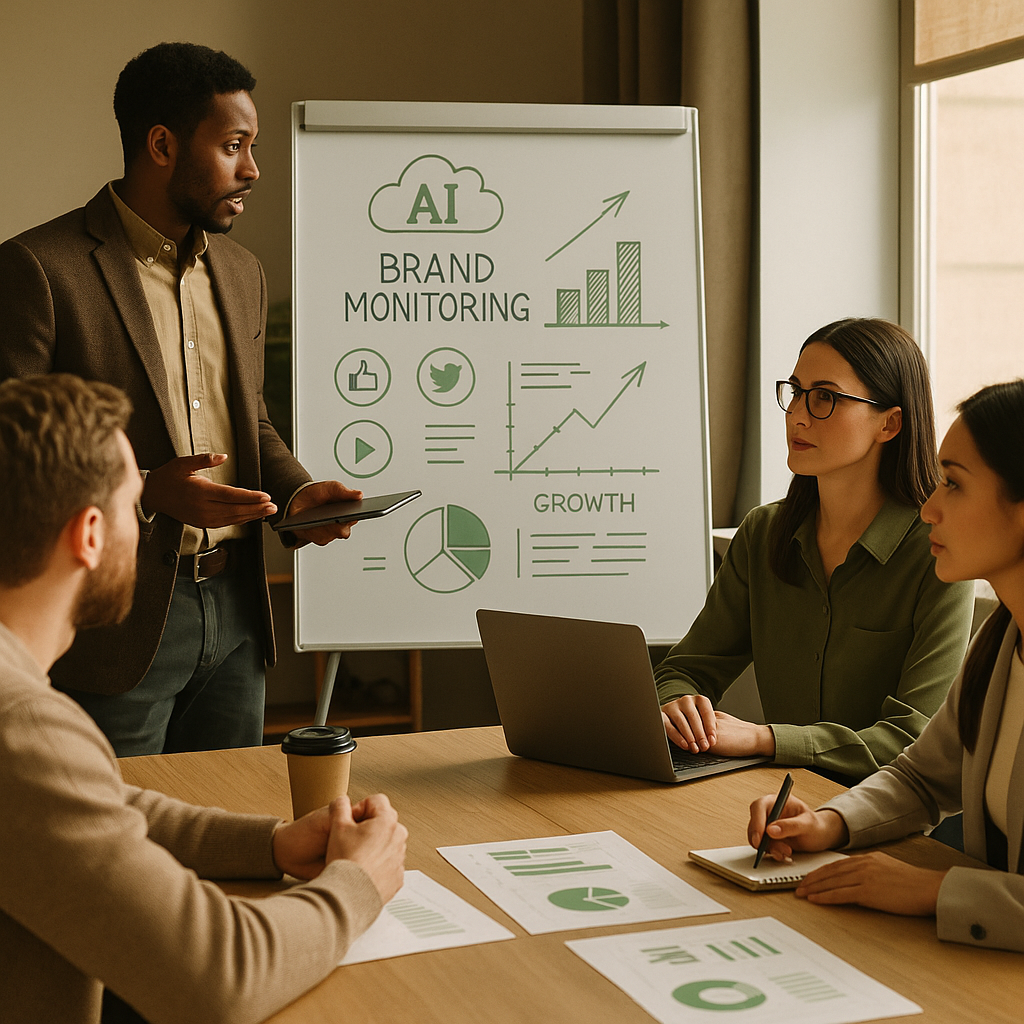
Brand health used to be reviewed in weekly reports and quarterly slides. In 2026, that cadence is too slow for social channels where sentiment can shift in minutes, not days. AI brand monitoring for social media gives teams a way to detect mentions, interpret tone, and surface meaningful patterns before they turn into visible reputation issues. It is not just about listening more broadly; it is about acting earlier and with better context.
For brands managing multiple channels, regions, or product lines, always-on monitoring helps separate isolated noise from real risk. It also gives marketing, support, and community teams the same source of truth. If you already centralize execution through Crescitaly services or scale distribution with SMM panel services, monitoring becomes the layer that tells you whether that activity is strengthening or weakening brand perception.
Key takeaway: AI brand monitoring for social media works best when it turns unstructured mentions into fast, repeatable actions that protect brand health every day.
What AI brand monitoring changes compared with traditional social listening
Traditional social listening tools are useful, but they usually depend on keyword matching and manual review. AI adds another layer: it can classify sentiment, detect themes across large volumes of posts, and prioritize the conversations most likely to matter. That makes AI brand monitoring for social media more practical for teams that cannot manually review every mention.
Sprout Social’s overview of AI brand monitoring highlights the shift from passive tracking to proactive decision-making. Instead of only reporting what people said, AI helps explain whether the message trend is improving, worsening, or spreading into new communities. In practice, that means faster issue detection, cleaner reporting, and fewer blind spots.
The difference is especially important for brands with active content calendars, paid campaigns, and creator partnerships. A high-performing post can also trigger support questions, misinformation, or audience confusion. AI brand monitoring for social media helps you identify those patterns while the campaign is still live, not after the opportunity has passed.
Why always-on brand health matters in 2026
In 2026, audiences expect brands to respond quickly and consistently across every channel. That expectation is not limited to customer support; it extends to comments, mentions, duets, reposts, and creator discussions. Always-on brand health means you can measure trust signals continuously instead of relying on occasional campaign reviews.
This matters because reputation is now shaped by a wider mix of surfaces. A product complaint on one platform can influence search behavior, ad performance, and even community sentiment elsewhere. Google’s SEO Starter Guide is a useful reminder that search visibility and content quality are connected to how users perceive and engage with your brand. Social conversations increasingly feed that perception.
For video-first brands, the impact is even more direct. YouTube’s official guidance on comments and moderation shows how community management and policy enforcement affect audience trust. AI brand monitoring for social media extends that logic across platforms, so teams can see the same trust signals before they become moderation problems or customer churn.
How to set up AI brand monitoring that actually works
Good monitoring starts with a clean structure. If you monitor too broadly, you drown in noise. If you monitor too narrowly, you miss the conversations that matter. The goal is to build a system that identifies brand health signals across owned, earned, and adjacent conversations.
Use this setup process:
- Define the core entities you want to track, including brand names, product names, executive names, campaign hashtags, and common misspellings.
- Add context terms that distinguish you from competitors, partners, and unrelated topics.
- Separate monitoring rules for support issues, press mentions, creator content, and campaign chatter.
- Assign sentiment thresholds so the system can flag negative, mixed, or rapidly changing conversations.
- Route alerts to the right team, such as community management, customer care, or PR.
AI brand monitoring for social media becomes far more valuable when each alert has an owner and a next step. That is also where services like Crescitaly services can help teams standardize how work moves from insight to action. A system without ownership is just another dashboard.
Which signals to track and how to interpret them
Not every mention is equally important. The strongest brand health programs track signals that combine volume, tone, reach, and velocity. A small negative thread from a highly connected account may deserve more attention than a larger but low-impact cluster of routine comments.
Useful signals to monitor include:
- Sentiment shifts over time, especially when negative mentions rise after a launch or announcement.
- Topic clustering, which shows whether users are discussing pricing, quality, support, shipping, or feature gaps.
- Share of voice versus close competitors.
- Spike velocity, which measures how quickly a theme is spreading.
- Creator and community amplification, which can turn a niche complaint into a broader narrative.
- Recurring support pain points that indicate product or process issues.
AI brand monitoring for social media helps you interpret these signals in context. For example, an increase in mentions is not automatically bad if it is driven by a positive campaign. Likewise, neutral mentions can still matter if they come from audiences who are confused about a feature, offer, or policy. The best teams look at changes in conversation quality, not just quantity.
How to turn monitoring alerts into response workflows
Alerts only matter if the organization can respond quickly and consistently. A practical workflow starts with triage: is the issue informational, operational, reputational, or urgent? Once you classify the alert, you can assign the right owner and response window.
Simple response model
- Detect the mention or spike.
- Classify the issue type and severity.
- Check whether the conversation is isolated or spreading.
- Assign the correct owner with a deadline.
- Draft the response, approve it if needed, and publish.
- Log the outcome so future alerts are easier to handle.
AI brand monitoring for social media is especially effective when paired with response templates for common scenarios. If the issue is a product misunderstanding, you may need a clarifying post and a support link. If it is a creator misstatement, a direct correction may be more appropriate. If it is a service outage, response speed and consistency matter more than perfect copy.
Teams that run high-volume social programs can also use SMM panel services to support distribution while keeping monitoring focused on quality control. That combination helps you scale visibility without losing control of brand perception.
Mistakes to avoid when using AI for brand health
The most common mistake is treating AI as a replacement for judgment. Models can surface patterns quickly, but they still need human review when tone is ambiguous or when a mention comes from a high-stakes account. Another mistake is relying on a single sentiment score without checking the actual content.
Watch out for these issues:
- Monitoring only your exact brand name and missing common abbreviations or misspellings.
- Ignoring competitor context and industry terms that shape how users describe your category.
- Letting alerts accumulate without ownership or escalation rules.
- Using the same threshold for every channel, even though audience behavior differs by platform.
- Reporting volume without explaining what changed, why it changed, and what action followed.
AI brand monitoring for social media should improve decision quality, not create more noise. The fix is not more data; it is better taxonomy, cleaner routing, and tighter links between monitoring, content, and customer care.
Sources and related resources
To build a stronger monitoring program, start with a practical benchmark from Sprout Social’s guide to AI brand monitoring, then align your search and content structure with Google’s SEO Starter Guide. If your brand relies heavily on community comments or video engagement, review YouTube’s moderation guidance as part of your response policy.
For Crescitaly readers, the most relevant internal starting points are Crescitaly services for campaign execution and SMM panel services for scalable social distribution. Used together, these resources help you connect monitoring with execution instead of treating brand health as a separate reporting layer.
Related Resources
- Crescitaly services for structured social media execution.
- SMM panel services for distribution support across campaigns.
If you want a more operational approach to audience visibility and campaign support, explore our SMM panel services to pair delivery with stronger brand health oversight.
Share this article
Share on X · Share on LinkedIn · Share on Facebook · Send on WhatsApp · Send on Telegram · Email
FAQ
What is AI brand monitoring for social media?
AI brand monitoring for social media is the use of machine learning and language analysis to track mentions, sentiment, themes, and anomalies across social platforms. It helps brands detect issues earlier, understand audience perception, and prioritize the conversations that need attention.
How is it different from social listening?
Social listening typically collects mentions and keywords, while AI brand monitoring adds interpretation. AI can cluster topics, estimate sentiment, detect unusual spikes, and help teams decide which mentions matter most. That makes it more useful for always-on brand health.
Which metrics matter most for brand health?
Sentiment trend, share of voice, mention velocity, topic mix, and issue recurrence are often the most useful metrics. The best metric depends on your goals, but brand health programs usually need both volume data and qualitative context.
Can AI replace a human community manager?
No. AI can filter, prioritize, and summarize large volumes of conversation, but humans still need to judge nuance, respond to sensitive situations, and make policy decisions. The best results come from combining automation with human review.
How often should monitoring alerts be reviewed?
High-priority alerts should be reviewed in near real time, especially during campaigns, launches, or service incidents. Lower-priority themes can be reviewed daily or weekly, depending on audience size and conversation volume.
What is the biggest mistake brands make with monitoring?
The biggest mistake is collecting data without a response plan. If alerts do not have owners, severity levels, and escalation rules, the system creates more visibility but not better brand health. Monitoring should always connect to action.
How do internal teams use monitoring insights?
Marketing uses them to adjust messaging, support uses them to spot recurring issues, and PR uses them to manage emerging risks. When teams share the same monitoring data, they can respond faster and avoid conflicting messages.
Sources
Sprout Social: How to use AI brand monitoring for always-on brand health
Google Search Central: SEO Starter Guide
YouTube Help: Comments and moderation