
Artemis II data goes public: what the 800GB archive contains
NASA has made the Artemis II lunar science archive public. Images, audio and crew annotations offer different kinds of evidence, and should be read together rather than as interchangeable files.

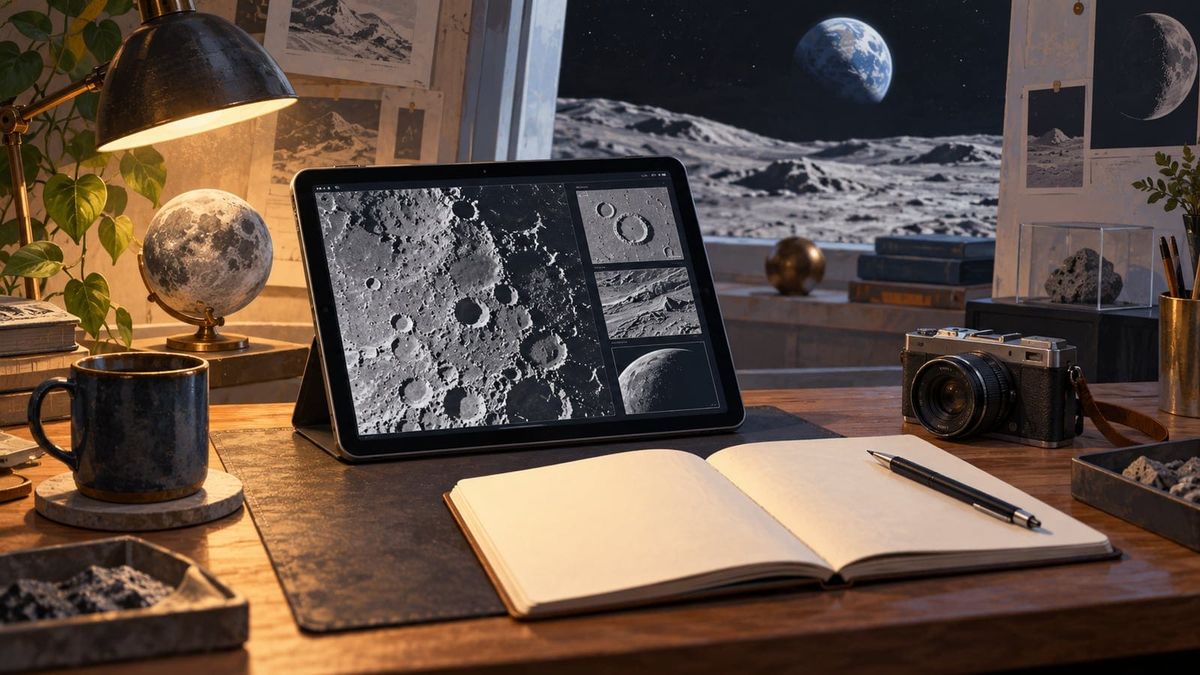
Artemis II opens a public science archive
NASA has released more than 800 gigabytes of Artemis II lunar science data, according to the official source on October 7. It includes more than 11,000 images and video, 8.5 hours of scientific observation audio, and crew annotations. A preliminary report, operations report and data user guide accompany the release.
This is a new archive from a completed journey, not a new flight today. We have read the announcement, not downloaded or independently analysed the complete dataset.
Why this matters: a record is not an interpretation
An image shows a frame, audio preserves a description, and annotations identify details that attracted attention. Each can answer a different question. Reading them as interchangeable files can remove the context that makes an observation useful.
Our editorial take is to choose the question before the file. If you want to understand an observer's description, a picture alone may not settle it. If you explain a picture, its accompanying notes can help keep your interpretation within the evidence.
The record comparison card
| Record | Question |
|---|---|
| Image | What is visible in this frame? |
| Audio | What did the observer describe? |
| Annotation | Which detail was marked? |
| Guide | What conventions explain the item? |
This is a reading aid, not a claim that we discovered a lunar feature. Public availability does not confirm every conclusion that might be drawn from a file.
- Name the record type.
- Separate your interpretation from the source observation.
- Read the relevant guide before assigning meaning to a label.
A four-field citation worksheet
For an educational post, record source, item, context and limitation. The worksheet lets a reader follow your evidence without pretending a single image contains the complete archive.
- Identify the item actually consulted.
- State whether you used images, audio or notes.
- Explain the specific detail under discussion.
- Mark what you have not established.
For example, noticing a mark and explaining its origin are separate steps. Keep a first impression as a question until the appropriate evidence supports a conclusion.
An Instagram explanation with a traceable question
Use one question and one identified record instead of a dramatic collage that implies a result nobody has checked. The cover is an illustration of a research desk, not a mission photograph or an archive sample.
If you later consult an item, preserve its provenance and check reuse conditions. Public access does not make every asset suitable for every commercial use. A follow-up can show what new evidence adds without inflating the first impression into a discovery.
Frequently asked questions
Is this a new flight?
The news is an archive release from the completed mission.
Was the archive analysed here?
No. This guide reads NASA's announcement.
Is the cover a mission photograph?
No. It is an original editorial illustration.
Sources
Checked on October 7, 2026: the official source. Original publication dates are preserved; the applied reader worksheet is Crescitaly's editorial addition.
Related resources
Build a clear publishing project around the topic you understand. Start with the Crescitaly blog, then explore Crescitaly services and Crescitaly tools for your own page. These are optional Crescitaly resources, not an affiliation with the source or a promise of reach.