
The biggest AI stories of the year (so far) and what they mean for your social media growth strategy
In 2026, artificial intelligence is no longer a backdrop feature for social platforms; it’s a core driver of how creators, agencies, and brands plan, execute, and optimize campaigns. This article synthesizes the biggest AI stories of the

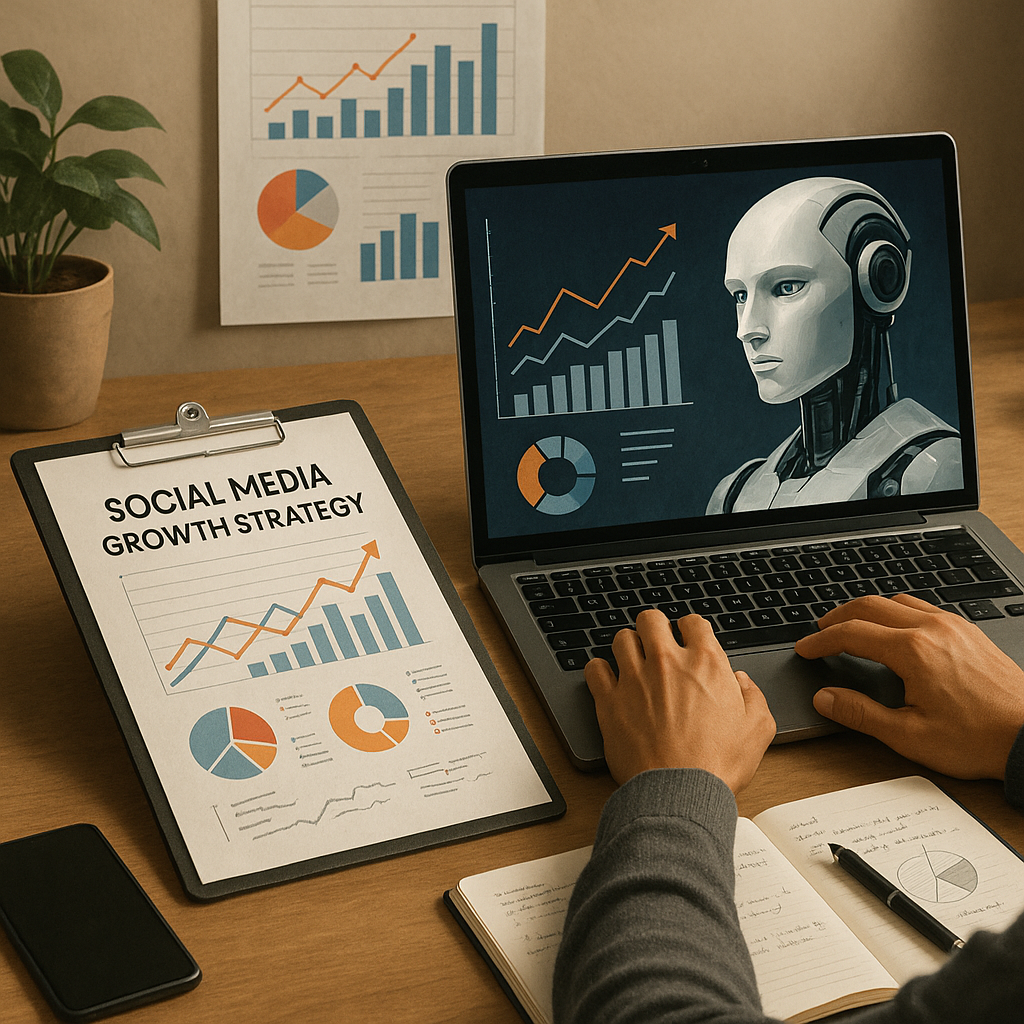
In 2026, artificial intelligence is no longer a backdrop feature for social platforms; it’s a core driver of how creators, agencies, and brands plan, execute, and optimize campaigns. This article synthesizes the biggest AI stories of the year so far (with citations to the most influential reporting) and translates them into actionable steps you can apply to your social media growth strategy. Drawing on the latest from industry coverage and official guidance, we outline what changed, why it matters, and how to operationalize AI-driven insights without losing the human signals that resonate with audiences.
What changed in 2026
The first half of 2026 delivered several clear shifts in AI-enabled social workflows. Generative AI models have matured to the point where they can draft long-form captions, summarize threads, compose scripts for video, and even generate multi-format assets from a single prompt. Platforms started standardizing AI-assisted disinformation safeguards, better content moderation tooling, and more transparent prompts-to-output traceability. In parallel, policy updates from major platforms clarified data usage boundaries and creator rights, influencing how teams source data for training prompts and how they credit AI-assisted content. These dynamics created a more productive, but also more regulated, environment for creators pursuing scale.
For reference, TechCrunch’s year-in-review framing highlights how these shifts coalesced around three themes: automation as efficiency, quality and relevance of AI-generated outputs, and governance of AI-assisted workflows. You can read the full synthesis here: The biggest AI stories of the year (so far).
Why it matters for your social media growth strategy
If 2026 is teaching anything, it’s that AI is increasingly a force multiplier for content creation, distribution, and optimization. Brands that integrate AI into a disciplined workflow can speed up ideation, testing, and iteration while preserving a sharp editorial voice. The key is to pair AI automation with explicit human checks—tone alignment, brand safety, and ethical data use—to avoid missteps that erode trust. This alignment matters profoundly for a social media growth strategy because it translates high-velocity production into consistently resonant content across channels.
To operationalize these shifts, you’ll need a sketched playbook: how to source prompts, how to structure reviews, how to measure signal quality, and how to weave AI outputs into a broader content calendar. The goal is not to replace human creators but to augment them so that your team can experiment with more ideas, more quickly, while maintaining accountability and quality.
Tactics for immediate impact
Here are concrete steps you can deploy in the next 30 days to begin leveraging the biggest AI stories of the year for tangible growth.
- Adopt a controlled AI prompt library: create standardized prompt templates for caption generation, video scripts, and thread summaries. Maintain versioning and a review checklist to ensure tone, compliance, and originality.
- Automate repurposing pipelines: use AI to transform a single long-form asset into multiple formats (short clips, quotes, carousel slides, and threaded posts) tailored to platform-specific audiences.
- Implement a governance layer: establish approval gates, bias checks, and data-source disclosures for AI-assisted content. This reduces risk while preserving agility.
- Experiment with audience signals: pair AI-generated variants with A/B tests across platforms to identify which prompts and formats drive the strongest engagement-to-follow-rate metrics.
- Invest in AI-assisted analytics: deploy dashboards that correlate content prompts, outputs, and performance metrics (engagement rate, watch time, saves, shares) to guide iterative content decisions.
- Leverage human-in-the-loop reviews: allocate a fast-review sprint for new AI outputs to maintain brand voice and quality control without stalling momentum.
- Define policy: Draft an AI usage policy that covers data sources, attribution, and disclaimers where appropriate, and circulate it across teams.
- Build an ethics and safety checklist: incorporate guidelines for sensitive topics, consent, and copyright considerations when generating content with AI.
- Document learnings: maintain a living playbook that records what worked, what didn’t, and why—so your team can iterate with precision.
In practice, this means fewer bottlenecks and more content tested against real audience signals. It also means you can scale experiments across platforms with a consistent framework for assessment and learning. For a deeper dive into AI-driven content workflows, see the practical guidance linked in the sources section below.
AI content formats and platforms
Platform-agnostic AI capabilities are increasingly tied to format-specific outputs. For creators, this means you can generate multi-format assets from a single prompt and adapt them for YouTube, TikTok, Instagram Reels, X, and LinkedIn with relative ease. You’ll find that AI-driven formats outperform generic templates when used with clear constraints for each channel’s audience expectations. The following formats are particularly impactful right now:
- Short-form video concepts and scripts generated from a single theme or data point.
- Thread-ready summaries that convert into carousel content with a cohesive narrative.
- Dynamic captions and hook variants tuned to audience sentiment signals.
- Automated video edit pipelines that produce thumbnail options, caption overlays, and chapter markers.
- AI-assisted analytics panels that surface actionable insights on which prompts perform best by audience segment.
When integrating these formats, remember to apply platform-specific constraints and accessibility considerations. For YouTube, for example, optimizing for watch time and clear chapter markers remains essential—the AI should assist, not replace, the craft of storytelling. See more on how search and discovery interact with content quality in official guidance from Google’s SEO starter guide: SEO fundamentals.
Case highlights and common mistakes
The year’s AI stories include notable experiments and learnings from brands and creators who embraced automation while maintaining a disciplined process. Some highlights show rapid improvements in content velocity and engagement, while others reveal the risk of mismatched tone or over-reliance on automation without editorial oversight. A few takeaways from the landscape:
- Successful campaigns typically combine AI-driven ideation with a structured human approval loop, ensuring brand voice and safety standards.
- Cross-platform replication without adaptation often underperforms; tailoring prompts to each channel’s context yields better early signals.
- Transparent disclosures about AI involvement can bolster trust and set clear expectations with audiences.
- Data governance matters: organizations that document data sources, prompts, and outputs reduce risk and improve learning over time.
As you study these narratives, a practical way to apply them is to start with a single AI-assisted workflow—perhaps a monthly content calendar—and scale as you validate insights. It’s also crucial to track both engagement and quality signals beyond clicks, such as sentiment, saves, and follow-through actions, which are more predictive of long-term growth. For more on how to structure this, see the recommended resources listed later in this article.
FAQ
Below are common questions about applying the year’s AI stories to a social media growth strategy.
1. What makes 2026 different for AI in social media?
AI tools have matured to deliver high-quality outputs at scale, with stronger safeguards and more transparent data usage policies. This enables faster testing and iteration while preserving brand safety and personal data considerations.
2. How should I start integrating AI into my content process?
Begin with a guardrail-driven approach: define a single AI-assisted workflow, establish an editorial review, and measure impact with a consistent framework that links prompts to outcomes.
3. Which platforms benefit most from AI-driven formats?
All major platforms benefit, but results vary by format. Short-form video hooks work well on TikTok and Reels, while threaded storytelling and long-form scripts align with YouTube and LinkedIn.
4. What metrics matter when using AI in content creation?
Look beyond vanity metrics. Engagement signatures (watch time, saves, shares), audience sentiment, and follower growth anchored to content quality are the strongest indicators of sustainable impact.
5. How do I handle ethics and disclosure with AI content?
Establish transparent disclosures where AI contributed to content, maintain consent where data is used for prompts, and apply a robust brand safety standard to every output.
6. Can AI replace human creativity?
No. The aim is augmentation—AI accelerates ideation and production, while human creators provide voice, nuance, and strategic alignment that automation alone cannot replicate.
7. Where can I learn more about best practices and governance?
Leverage the combined guidance of platform policies, industry reports, and official SEO and content guidance such as the resources listed below, plus Crescitaly’s own service frameworks.
Sources and Related Resources
To ground this discussion in authoritative guidance, we point to key external sources and additional Crescitaly references. The primary source informing this synthesis is TechCrunch’s overview of the year’s biggest AI stories, cited earlier. For foundational SEO and platform guidance, consider:
Within Crescitaly, explore practical services and guidance to operationalize AI-driven growth, including our social growth services and broader services catalog for strategy and execution.
Related Crescitaly resources you can consult for deeper context and tooling include:
Additional external sources and official guidance referenced in this article include:
Conclusion: a disciplined AI-enabled growth playbook
The big AI stories of 2026 are not about a single breakthrough but about an integrated shift toward AI-assisted workflows that preserve brand voice, governance, and audience trust while accelerating content creation and testing. For a social media growth strategy, the practical implication is clear: build repeatable AI-enabled processes, embed robust human checks, measure the right signals, and maintain a clear line of sight from prompts to performance outcomes. If you’re ready to translate these insights into action, consider talking to Crescitaly about social growth services that align with your goals and scale with your team.
Sources
Related Resources
Key takeaway: Sustainable Instagram growth comes from consistent content quality, audience fit, and clear CTA paths.