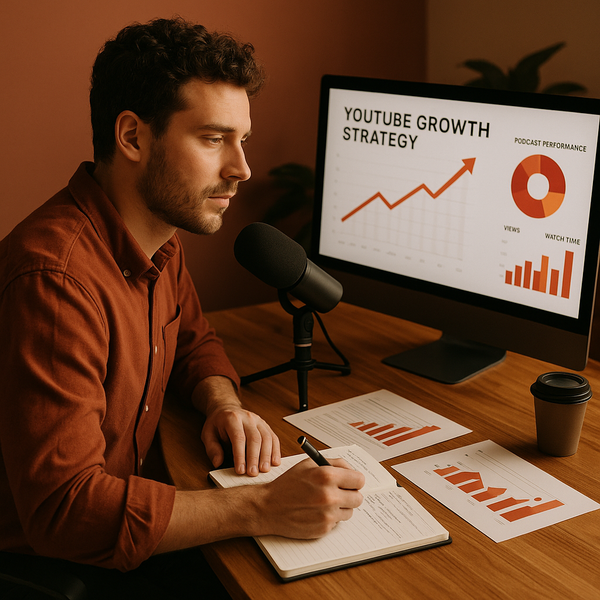
Boost Your Reach with a YouTube SMM Panel (2026 Playbook)
Executive Summary In 2026, YouTube growth is less about “going viral” and more about building repeatable discovery signals: consistent click-through rate from the right surfaces, strong early retention, meaningful session watch time, and


Executive Summary
In 2026, YouTube growth is less about “going viral” and more about building repeatable discovery signals: consistent click-through rate from the right surfaces, strong early retention, meaningful session watch time, and returning viewers. A YouTube product and creator updates feed is useful for staying aligned with platform direction, but execution still depends on your operational system—how you plan, publish, measure, and optimize.
A youtube smm panel can help you run that system by consolidating distribution tasks, campaign pacing, and reporting into one workflow. The best way to think about a youtube smm panel is not as a shortcut, but as an operations layer that supports a compliant growth strategy: faster testing, tighter measurement, and clearer accountability for results.
However, “SMM panel” can also be associated with artificial engagement. That is a real risk. YouTube explicitly addresses invalid engagement and may remove metrics or apply enforcement actions when activity is not genuine; review the platform’s guidance on fake engagement and spam policies before you spend a dollar. In practice, a youtube smm panel should be used to organize legitimate promotion and audience development work—never to manufacture signals that don’t reflect real viewer interest.
This revision replaces vague advice with an execution-first playbook: a strategic framework, a 90-day plan, a KPI dashboard with owners, and a risk model that keeps growth sustainable. Every key recommendation maps to measurable KPIs (CTR, average view duration, watch time, subscriber conversion rate, and conversion click-through).
Key takeaway: A youtube smm panel only drives sustainable growth when it supports real discovery signals—retention, returning viewers, and compliant engagement—tracked weekly against clear targets.
What to do this week:
- Document your current baselines for CTR, average view duration, watch time per upload, and subscribers gained per 1,000 views (one spreadsheet is enough to start).
- Write a one-paragraph compliance rule for your team: “No artificial engagement; all promotion must target real viewers and comply with YouTube policies.”
- Pick one “North Star” KPI for the next 30 days (recommended: returning viewers or average view duration) and assign a single owner.
Strategic Framework
To use a youtube smm panel effectively, you need a framework that connects three layers of growth: (1) content packaging, (2) viewer experience, and (3) distribution and conversion. Without that connection, any panel becomes a noisy task list and you end up “optimizing” numbers that don’t compound.
1) Define what the youtube smm panel is (and isn’t)
In a modern workflow, a youtube smm panel typically supports:
- Campaign operations: scheduling content drops, tracking URLs, tagging experiments, and pacing promotional bursts.
- Reporting: consolidating KPIs into a weekly view so you can see if changes to hooks, thumbnails, or traffic sources improved outcomes.
- Execution discipline: checklists for metadata, end screens, pinned comments, community posts, and Shorts-to-long-form routing.
What it should not be used for: buying or automating engagement that doesn’t come from real human interest. If your “growth” cannot be connected to improvements in retention, watch time, and returning viewers, it’s a warning sign—because YouTube’s recommendation system is designed to prioritize viewer satisfaction signals, not inflated counters.
2) Make every strategy decision measurable
In 2026, “more views” is not a strategy; it’s an outcome. The strategic job is to identify the lever you’re pulling and the KPI that proves it worked.
- Packaging lever: title + thumbnail + first 15 seconds. KPI proof: impressions CTR and 30-second retention.
- Viewer experience lever: pacing, structure, and payoff moments. KPI proof: average view duration and % viewed.
- Channel system lever: playlists, end screens, next-video sequencing. KPI proof: session watch time and returning viewers.
- Conversion lever: offer alignment and CTA placement. KPI proof: link CTR and assisted conversions.
A youtube smm panel becomes valuable when it helps you run controlled tests around those levers—so you can attribute changes to specific actions.
3) Build a compliant distribution mix that compounds
Distribution should strengthen organic recommendation probability, not replace it. Use your youtube smm panel to orchestrate a mix of:
- Owned distribution: Community posts, Shorts teasers, and email/social announcements that send qualified viewers (measured by retention, not just clicks).
- Search capture: topics with stable demand; measured by search impressions and search watch time.
- Suggested/Browse growth: series design and consistent expectations; measured by returning viewers and watch time from Home.
When you want to accelerate early traction, prioritize channels that bring real viewers who actually watch. For example, if you’re promoting a flagship video, consider pairing it with a small spike in visibility designed to seed real behavior signals, then monitor whether the “Suggested videos” share grows over the following 7–14 days. If it doesn’t, the issue is usually content-market fit or packaging, not “insufficient promotion.”
For creators who need help aligning growth efforts with channel goals, Crescitaly provides channel-level services like YouTube views and YouTube subscribers. If you choose any provider, evaluate it through the lens of compliance and quality: you want real audience development and measurable retention lift, not hollow numbers that don’t improve long-term recommendations.
What to do this week:
- Create a one-page “KPI-to-lever map” (CTR → packaging, AVD → structure, returning viewers → series system, link CTR → conversion).
- Set up UTM-tagged links for your top two CTAs so you can measure conversion click-through per video.
- Choose one distribution channel to standardize (e.g., Community post format) and define what “success” means (e.g., +10% higher 30-second retention from that traffic source vs baseline).
90-Day Execution Roadmap
This roadmap is designed to make a youtube smm panel useful by turning it into a weekly operating cadence. The key is to move from “posting content” to “running experiments,” while maintaining policy-safe practices and a clear owner for every number you intend to improve.
Days 1–30: Establish baselines and fix bottlenecks
Goal: identify where your funnel breaks (impressions → clicks → retention → session continuation → subscribe/convert) and fix the biggest bottleneck first.
- Baseline the funnel: capture 28 days of channel averages for impressions CTR, average view duration, % viewed, watch time, subscribers gained, and returning viewers.
- Audit the first 30 seconds: for your last 10 long-form videos, note where viewers drop off; rewrite hooks using a consistent structure (promise, context, first payoff).
- Standardize packaging: create a thumbnail system (2–3 repeatable templates) so you can test variations without redesigning from scratch.
- Clean the conversion path: update end screens, description “above the fold,” and pinned comments so each video has one primary next action.
How the youtube smm panel fits: use it to track each upload’s experiment label (e.g., “Hook Type A,” “Thumbnail Style B”), schedule distribution touchpoints (Shorts teaser + Community post), and centralize weekly reporting.
Days 31–60: Run structured experiments and scale winners
Goal: run fewer, better experiments—then scale what works. At this stage, you should be able to answer, “Which lever moved which KPI?”
- Experiment 1 (Packaging): test two thumbnail/title pairs for a new upload (keep content constant). Target KPI: +10–20% relative lift in impressions CTR without lowering retention.
- Experiment 2 (Structure): tighten the first minute by adding an early proof point. Target KPI: +5–10% lift in average view duration.
- Experiment 3 (Sequencing): build a two-video mini-series and route viewers via end screens. Target KPI: +10% lift in end screen CTR and more watch time per viewer.
How the youtube smm panel fits: your panel should function like an experiment tracker with deadlines, owners, and a single weekly review ritual. If it can’t provide that clarity, it’s not helping—and you should simplify your tool stack.
Days 61–90: Systemize and optimize for compounding results
Goal: turn the best-performing patterns into standard operating procedures (SOPs) and improve efficiency without sacrificing quality.
- Build a repeatable series: select a topic cluster where you see high returning viewer rates. Target KPI: returning viewers +20% over baseline.
- Optimize distribution cadence: schedule consistent touchpoints around uploads (Shorts teaser, Community poll, follow-up post). Target KPI: +10% lift in 48-hour watch time while holding retention.
- Increase conversion intent: match a specific video type to a specific offer. Target KPI: +15% link CTR on high-intent videos.
At this stage, the youtube smm panel is most valuable as an operations hub: it should reduce manual overhead so you can spend more time on the creative and analytical decisions that actually affect watch time and audience satisfaction.
What to do this week:
- Pick one experiment for CTR and one for retention; write a hypothesis and a pass/fail threshold before publishing.
- Create a “next video” rule: every upload must have a specific end-screen target and a playlist it belongs to.
- Schedule a 30-minute weekly review where you decide: keep, iterate, or kill—based on KPIs, not opinions.
KPI Dashboard
Your KPI dashboard should make it hard to hide behind vanity metrics. If a youtube smm panel report only shows totals (views, likes, subscribers) without retention and traffic source quality, it will encourage the wrong behavior. Use the table below as a starting structure and adapt the baselines to your channel’s current averages.
| KPI | Baseline | 90-Day Target | Owner | Review cadence |
|---|---|---|---|---|
| Impressions CTR (new uploads, first 7 days) | Channel avg (last 28 days) | +15% relative lift | Content lead | Weekly |
| 30-second retention (long-form) | Channel avg (last 10 uploads) | +10% relative lift | Editor/producer | Weekly |
| Average view duration (AVD) | Channel avg (last 10 uploads) | +8% relative lift | Producer | Weekly |
| Watch time per upload (first 14 days) | Median of last 10 uploads | +20% relative lift | Channel manager | Weekly |
| Returning viewers (28-day) | Current 28-day total | +20% | Channel manager | Bi-weekly |
| Subscribers gained per 1,000 views | Channel avg (28-day) | +10% relative lift | Content lead | Weekly |
| End screen CTR | Channel avg (28-day) | +15% relative lift | Editor | Weekly |
| CTA link CTR (description/pinned comment) | Current avg per high-intent video | +15% | Funnel owner | Weekly |
How to use this with a youtube smm panel:
- Track KPIs by video type (tutorial, review, vlog, Shorts) so you stop comparing apples to oranges.
- Track KPIs by traffic source (Browse, Suggested, Search, External) to see whether distribution is bringing qualified viewers.
- Review weekly, but make changes based on patterns across multiple uploads (avoid overreacting to one video).
Operational rule: any activity inside your youtube smm panel must tie to at least one KPI above. If you can’t name the KPI it should improve, it’s not a priority.
What to do this week:
- Populate the Baseline column using your last 28 days of YouTube Analytics and lock it (so you can measure real lift).
- Assign an owner to each KPI and set a recurring 30-minute review meeting.
- Add one “notes” field in your panel for every upload: what changed, why you changed it, and what KPI should move.
Risks and Mitigations
A youtube smm panel can improve execution speed, but it also increases the risk of doing the wrong thing faster. In 2026, risk management is part of growth, because enforcement actions, poor audience quality, and brand damage all show up as measurable performance drops (retention, returning viewers, and conversion rate).
Risk 1: Policy violations and invalid engagement
If a youtube smm panel is used to generate inauthentic likes, comments, views, or subscribers, you risk metric removals and account penalties. YouTube’s policy guidance on spam, deceptive practices, and scams should be treated as a hard constraint, not optional reading.
- Mitigation: only run promotion that targets real audiences and is evaluated by retention and watch time, not by raw counts.
- Mitigation: maintain a vendor checklist (traffic source clarity, refund policy, compliance statement, and ability to exclude suspicious placements).
Risk 2: Low-quality traffic that hurts recommendations
Even if traffic is “real,” it may be unqualified. Sending the wrong viewers can lower retention, which can suppress distribution across Browse and Suggested. This risk shows up quickly in your KPI dashboard: CTR may hold, but AVD and % viewed drop.
- Mitigation: segment reporting by traffic source and compare retention by source; pause channels that underperform your baseline retention.
- Mitigation: align promotion to the viewer’s intent (tutorial → problem-aware audience; review → comparison shoppers; entertainment → series binge potential).
Risk 3: Vanity metrics masking funnel problems
A youtube smm panel can make it easy to chase volume. The danger is believing “growth” happened when it didn’t compound into returning viewers, end screen clicks, and conversions.
- Mitigation: require every campaign to declare a primary KPI and a guardrail KPI (e.g., lift CTR while holding AVD).
- Mitigation: use a weekly decision log: keep, iterate, or stop—based on your KPI table.
Risk 4: Brand trust and sponsor due diligence
If your channel relies on partnerships, sponsors increasingly audit audience quality. Sudden spikes without corresponding watch time gains can raise questions. Your best defense is a transparent, KPI-led growth narrative.
- Mitigation: keep a “growth proof” packet: screenshots of retention improvements, returning viewers trend, and series performance.
- Mitigation: favor improvements that sponsors value: watch time, consistent audience, and conversion click-through.
If you want help implementing a KPI-led, execution-focused plan, explore Crescitaly’s YouTube growth services and align any activity with retention and compliance guardrails.
What to do this week:
- Write a “stop list” for your channel: tactics you will not use (anything that produces artificial engagement) and the KPI signals that trigger a pause (e.g., AVD drops >10% vs baseline).
- Set guardrails for any promotion: minimum retention threshold and maximum acceptable drop in returning viewers.
- Schedule a monthly compliance review where you revisit YouTube policy updates from official channels like blog.youtube.
FAQ
What is a youtube smm panel?
A youtube smm panel is typically a platform that centralizes social media marketing actions and reporting for YouTube—such as campaign tracking, distribution scheduling, and performance monitoring—so you can execute consistently and measure results.
Can a youtube smm panel help with organic growth?
Yes, when it’s used as an operations and measurement layer. The value comes from running structured experiments (titles, thumbnails, hooks, sequencing) and improving measurable signals like CTR, retention, and returning viewers—rather than chasing raw totals.
What KPIs should I track when using a youtube smm panel?
Track impressions CTR, 30-second retention, average view duration, watch time per upload, returning viewers, subscribers gained per 1,000 views, end screen CTR, and CTA link CTR. These KPIs connect directly to recommendations and channel compounding.
How do I avoid policy issues with SMM tools?
Use YouTube’s official policy guidance as a constraint and avoid any tactic that generates artificial engagement. Review the platform’s guidance on invalid activity in the official Help Center and only pursue audience development that produces real watch time and retention.
How fast should I expect results from a 90-day plan?
Most channels can see early movement in CTR and 30-second retention within 2–4 weeks if they publish consistently and test packaging/hook changes. Compounding signals—returning viewers and Suggested traffic share—often take 6–12 weeks of consistent execution.
Should I focus on views or subscribers first?
Prioritize retention and watch time first, because those signals improve distribution. Then optimize subscriber conversion rate (subscribers per 1,000 views) by aligning content series, channel positioning, and CTAs to a clear audience promise.
Sources
- YouTube Official Blog (product and creator updates)
- YouTube Help Center: Spam, deceptive practices & scams (invalid engagement guidance)