Community marketing strategy in 2026: Lessons from Figma
As 2026 unfolds, brands increasingly see community as a core growth engine, not merely a channel for promotions. The Figma example, analyzed through the lens of a modern social media marketing strategy, shows how product-led communities

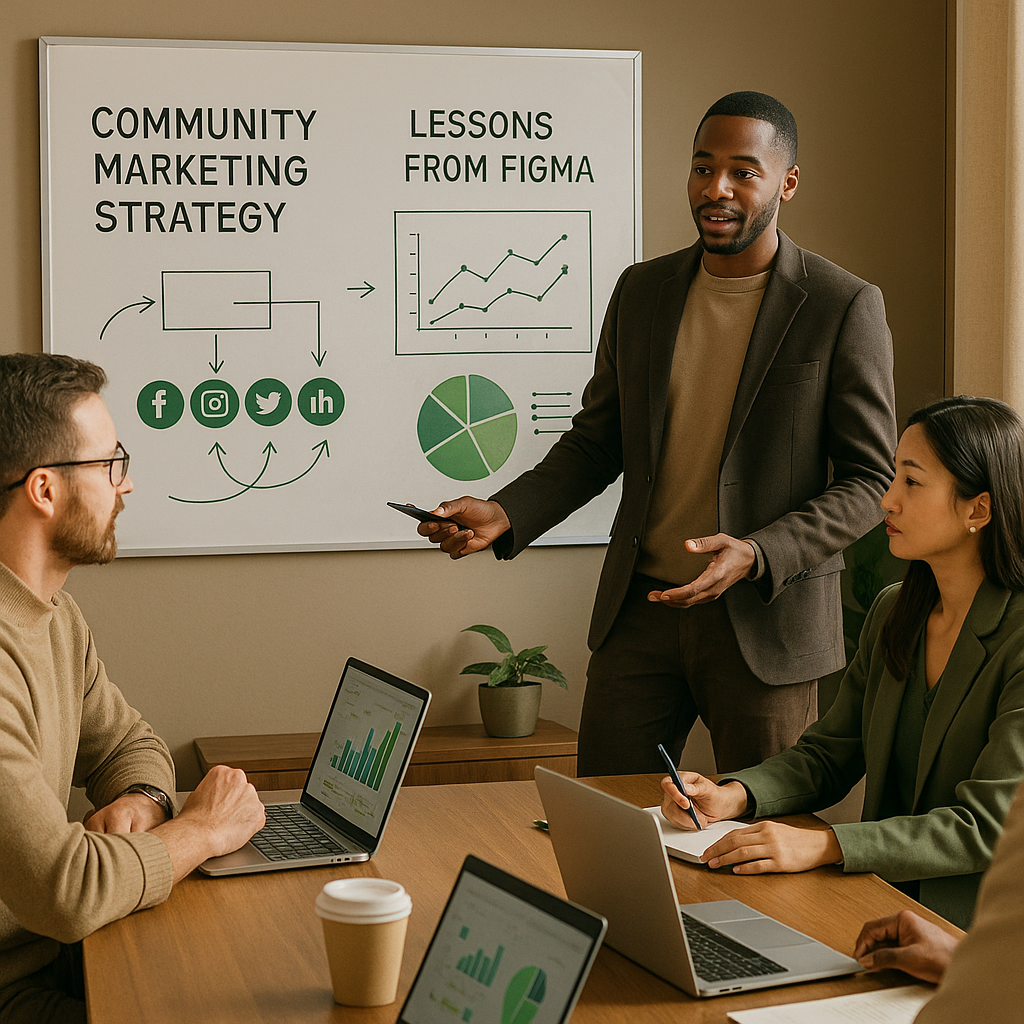
As 2026 unfolds, brands increasingly see community as a core growth engine, not merely a channel for promotions. The Figma example, analyzed through the lens of a modern social media marketing strategy, shows how product-led communities, contributor-driven content, and meaningful governance can outperform traditional campaigns. This article distills those lessons into concrete steps you can apply to your own community marketing strategy, with attention to the realities of today’s social platforms and search-friendly content ecosystems.
What changed in 2026 for community marketing
The year 2026 marks a shift from omnipresent ad saturation to community-centric legitimacy. Leaders in product design, developer tooling, and creator ecosystems demonstrate that people join communities not just for information, but for belonging, co-creation, and long-term value. This shift has several implications for a social media marketing strategy:
- Community-driven content has higher resonance and shareability than isolated product posts.
- Authenticity and governance are critical: users expect transparent guidelines and fair participation.
- Platform opportunities favor long-term member identity, badges, and reputational systems over quick engagement spikes.
- Measurement expands beyond vanity metrics to signals like contribution quality, retention, and invitation-based growth.
For reference, consider historical benchmarks from earlier years to understand trajectory. While 2026–2026 were formative for many policies around creator ecosystems, the 2026 market presents more mature governance and monetization models that reward sustained community health. See the SEO fundamentals guide for context on how quality community content supports long-term discovery.
Why Figma’s approach matters for today
Figma’s community model blends product feedback loops, open collaboration, and structured advocacy. It shows how a design-centric platform can turn enthusiasts into co-beneficiaries and long-term advocates. Translating this into a general social media marketing strategy requires distilling the mechanisms that worked:
- Open collaboration: invite users to contribute templates, tutorials, and experiments that showcase product capabilities.
- Clear governance: publish contribution guidelines, queues, and recognition rules to maintain quality while welcoming newcomers.
- Cohesive narrative: unify product updates with community-led experiments to avoid messaging silos.
- Sustainable incentives: align rewards with meaningful participation, not just impulses like upvotes.
To operationalize these ideas, brands need an explicit governance model and a platform plan that integrates content creation, community events, and product feedback channels. The YouTube community and content policies offer a practical baseline for how to structure creator-facing rules that are fair and scalable.
Tactics: building a resilient community in 2026
Below is a practical toolkit organized around the core pillars of a living community-powered social media marketing strategy. Each tactic includes an accompanying action you can execute within 30–60 days.
- Community design and governance
- Publish a community charter outlining goals, roles, and contribution channels.
- Develop a tiered recognition system with explicit criteria for badges and privileges.
- Content ecosystem
- Co-create templates, starter kits, and challenges that showcase real use cases.
- Encourage member-made tutorials and case studies tied to product benefits.
- Platform strategy
- Measurement and iteration
Actionable execution templates:
- Launch a monthly community challenge around a design problem and publish the best results as a case study.
- Release quarterly product updates in the form of community town halls with live Q&A.
- Host weekly office hours for contributors to review work-in-progress content and gather feedback.
These steps align with a social media marketing strategy that emphasizes sustained value creation over one-off campaigns. For a sense of where to start, you can explore our SMM panel services to help accelerate participation and moderation at scale: SMM panel services.
Templates and patterns you can copy
Some patterns from Figma’s model translate directly into replicable templates for any growth-focused community. Use these as a starting point to build your own scalable system:
- Contributor agreement and template library: a shared repo of assets, with attribution rules.
- Monthly design challenges: a recurring event with a simple brief, a submission window, and a community-selected winner.
- Public roadmaps: visible product plans with bi-weekly updates called out in community posts.
- Governance forums: a designated space where members propose features and vote on small matters.
These patterns help your team maintain consistency and invite diverse participation while keeping operations manageable. For additional guidance, see the official SEO starter guide and YouTube policy resources linked in the Sources section.
Mistakes to avoid and how to measure success
Even the best community plans fail if they neglect clarity or quality control. Common mistakes include over-moderation that stifles authentic voices, vague contribution guidelines that create ambiguity, and a misalignment between product priorities and community needs. Conversely, successful executions focus on:
- Clear success metrics that include participation depth, content quality, and retention over time.
- Balanced incentives that reward both top creators and steady contributors.
- Consistent cadences of content and events to sustain momentum.
Key performance indicators to monitor weekly and monthly include: contribution count, engagement rate by post type, time-to-first-feedback, percentage of community-generated content repurposed into marketing assets, and adherence to the governance timeline. For broader context on SEO and content quality signals, consult the SEO starter guide.
In 2026, the emphasis is on sustainable growth rather than short bursts of visibility. The community becomes a living asset that continuously feeds product feedback, content, and advocacy, all tied into a cohesive social media marketing strategy. For practical execution, review the internal Crescitaly services pages—especially how our teams support ongoing community-building efforts through managed content and engagement workflows: services.
Case snapshot: what Figma teaches us in 2026
Figma demonstrates that a product with broad appeal can leverage a community as a distribution engine. The central lessons applicable to any brand in 2026 include:
- Collaborative content is more sustainable than purely promotional posts.
- Public governance and fair recognition create trust and long-term loyalty.
- Network effects emerge when contributors are rewarded for impact, not only for participation.
In practice, you can translate these into a structured program: open collaboration channels, a documented contribution process, and a cadence of community-led content that ties back to product value. By aligning your community with a clear social media marketing strategy, you improve not only engagement but also the quality of feedback that informs product decisions and messaging. Consider using a managed SMM panel to help coordinate cross-channel support and moderation as your community scales.
FAQ
What is the single most important element of a 2026 community marketing strategy?A living governance model that clearly defines participation, recognition, and contribution paths so members know how to engage meaningfully.How does a community-first approach affect my social media marketing strategy?It shifts emphasis from one-off campaigns to ongoing value creation, which improves retention and word-of-mouth referrals.What roles are essential in a community team?Community manager, content curator, contributor liaison, and data analyst who tracks engagement and quality signals.How can I measure the ROI of community activities?Track participation quality, content repurposing rate, retention of members, and the contribution-to-conversion pathway.Should I rely on external platforms or own channels for community building?Use a hybrid approach: owned spaces for governance and long-term value, supplemented by trusted external platforms for reach and discovery.What mistakes should I avoid when starting a 2026 community program?Avoid vague rules, excessive gatekeeping, and misaligned incentives that punish genuine participation.
Sources
Foundational ideas and empirical insights informing this article draw from practitioner-focused perspectives and official guidance. For core concepts on SEO and content quality signals, see the SEO Starter Guide. On platform policy and best practices for video and community engagement, refer to the YouTube help center. The primary inspiration is the Hootsuite piece Community marketing strategy in 2026: Lessons from Figma, which informs the structure and tactics discussed here: Hootsuite: Community marketing strategy in 2026.
Related Resources
Internal Crescitaly resources to help you operationalize these ideas:
- SMM panel services – scale community management and content distribution.
- Services – human-led growth, content, and engagement programs.
For broader context on social media strategy and digital marketing, consider these external references as well: SEO Starter Guide and the YouTube Help Center.
Key takeaway: The community-driven approach to product marketing in 2026 elevates trust and long-term growth, especially when aligned with a clear social media marketing strategy.
Share