Convert faster on YouTube with April’s Demand Gen Drop
April’s Demand Gen drop is a timely reminder that YouTube is no longer just a discovery channel. For brands and creators, it is a conversion environment where the right creative, audience signals, and follow-through can shorten the path

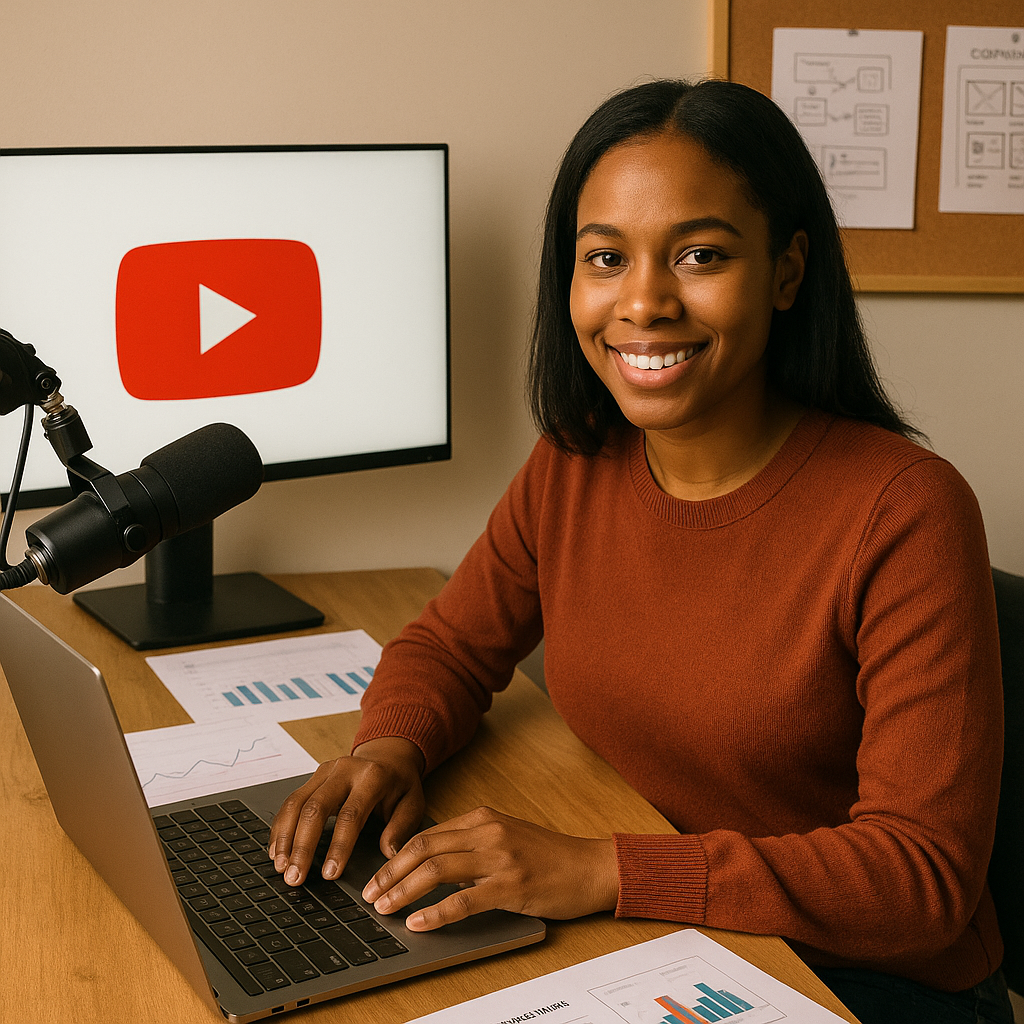
April’s Demand Gen drop is a timely reminder that YouTube is no longer just a discovery channel. For brands and creators, it is a conversion environment where the right creative, audience signals, and follow-through can shorten the path from view to action. If your plan still treats YouTube as a top-of-funnel island, you are probably leaving revenue on the table.
Key takeaway: the fastest gains come from tightening creative-to-landing-page alignment, not from simply buying more reach.
The update Google highlighted in April’s Demand Gen drop reinforces a practical shift: advertisers should build campaigns around outcomes, not just impressions. That matters for any modern YouTube views strategy, because views only become valuable when they are part of a system that reliably produces clicks, subscriptions, leads, or sales.
For Crescitaly readers working on YouTube subscribers, this is not about replacing organic growth. It is about making each video, ad, and audience touchpoint do more work. The strongest youtube growth strategy in 2026 is the one that combines visibility, intent signals, and conversion-friendly assets.
What April’s Demand Gen drop changes for YouTube conversion
Demand Gen updates typically matter because they affect how efficiently your content reaches people who are likely to act. In practical terms, the newest drop matters for three reasons.
- It helps advertisers improve how they move from broad discovery to more qualified traffic.
- It pushes teams to think beyond vanity metrics and toward measurable downstream actions.
- It encourages a better match between creative format, audience intent, and conversion destination.
That is especially important on YouTube, where users may be in different mindsets within the same session. One viewer is researching options, another is comparing features, and another is ready to subscribe or buy. A strong YouTube blog-informed plan accounts for those differences instead of forcing a single creative to serve every stage.
The most useful reading of this update is simple: less friction, more intent, and faster pathing. If you are using YouTube as part of a performance funnel, the question is not “How do we get more views?” but “How do we turn the views we already earn into action faster?”
Why this matters for a youtube growth strategy
Many teams still separate “brand” and “performance” into different budgets, different creative teams, and different success metrics. That separation often slows learning. A smart youtube growth strategy brings those pieces together.
In 2026, the best-performing channels usually share four traits:
- They publish content with a clear next step, such as subscribing, downloading, or visiting a product page.
- They use short-form and long-form video together instead of treating them as separate efforts.
- They align thumbnails, hooks, and on-screen messaging with the same promise made on the landing page.
- They measure the full journey, not just the first click or the view count.
This is where Demand Gen matters. If the campaign layer is better at finding likely converters, then the channel strategy can become more ambitious about direct response without sacrificing reach. YouTube’s own advertiser guidance, including its official ad policy and format support documentation, is worth revisiting before you scale creative variations or launch new placements.
For creators and brands, that means the most effective youtube growth strategy is no longer “publish and hope.” It is “publish, qualify, and convert.”
How to adjust creative, targeting, and landing paths
To convert faster on YouTube, the path from video to destination has to be intentional. The new Demand Gen momentum only helps if your execution removes confusion at every step.
1. Tighten the promise in the first five seconds
Your opening should state what the viewer will get and why it matters now. If the hook is vague, your audience quality drops before the algorithm can do its work. Good hooks are specific, useful, and visually consistent with the thumbnail.
2. Match audience intent to format
Not every segment should see the same asset. High-intent audiences often respond better to proof-heavy videos, product comparisons, testimonials, and concise offers. Broader audiences may need a problem-first introduction before they are ready for a conversion message.
3. Reduce friction on the destination page
The landing page should continue the same narrative from the ad or video. If your video promises a free tool, a clear comparison, or a faster result, the page should immediately show that value. Any mismatch lowers trust and increases abandonment.
A practical approach is to review your current funnel in this order:
- Thumbnail and title consistency.
- Opening hook and first CTA placement.
- Audience segment and offer relevance.
- Landing page speed, clarity, and mobile usability.
- Conversion event tracking and remarketing setup.
This process also helps if you are supporting creator-led campaigns or channel acceleration through external promotion. If you are exploring a controlled boost in social proof, pair it with a strong content system and a clean distribution plan such as YouTube subscribers support or YouTube views packages only when the content itself already converts attention effectively.
What to test first for faster conversion
Testing is where this update becomes actionable. If you want practical gains, start with experiments that affect the largest drop-off points.
- Creative test: compare a proof-led version against a story-led version for the same audience.
- CTA test: test a soft CTA such as “learn more” against a direct action such as “get started.”
- Thumbnail test: keep the message consistent but vary visual framing and contrast.
- Landing test: compare one long page with a shorter page focused on one action.
- Audience test: separate warm viewers from broader prospecting audiences to avoid mixing signals.
For most teams, the first win comes from creative alignment rather than audience expansion. If a video generates views but few conversions, the problem is often not the audience size. It is usually a mismatch between the promise in the video and the intent of the click destination.
When using YouTube as part of a broader youtube growth strategy, keep a simple testing log. Record what changed, where the audience came from, and which conversion event moved. Over time, this will tell you whether your lift is coming from improved targeting, stronger creative, or better destination UX.
Common mistakes that slow performance
Most campaigns that underperform on YouTube do not fail because the platform is weak. They fail because the system is incoherent. The most common issues are predictable.
First, too many objectives in one campaign. When a single creative tries to drive awareness, clicks, subscriptions, and purchases all at once, the message usually becomes generic. Pick the primary action for each asset.
Second, weak message continuity. If the thumbnail, title, video, and landing page all say different things, the viewer has to do the mental work of connecting them. Most will not.
Third, measuring the wrong signal. Views are useful, but they are not the endpoint. A strong youtube growth strategy tracks return visitors, subscribers, click-through rates, watch quality, and downstream conversions.
Fourth, over-relying on broad distribution. Scale without qualification is expensive. You can widen reach, but only after your conversion path is working.
To stay disciplined, evaluate every new video against a simple checklist:
- Does the opening make the value obvious?
- Does the CTA fit the viewer’s intent?
- Does the page continue the same offer?
- Can we measure the result cleanly?
That discipline is what separates a high-volume channel from a high-performing one.
Sources
For the latest product and policy context, review the original Google announcement on April’s Demand Gen drop, the official YouTube blog, and YouTube’s ad support page. These are the most reliable references when you are building or adjusting a campaign strategy around current platform behavior.
Related Resources
If you are turning this article into a broader campaign plan, these Crescitaly resources can help:
- Buy YouTube Subscribers for channel momentum and social proof support.
- Buy YouTube Views for boosting early distribution on new uploads.
When your creative is already converting and you want to accelerate channel credibility or testing volume, consider pairing those tactics with YouTube growth services as part of a measured distribution plan.
FAQ
What is the main lesson from April’s Demand Gen drop for YouTube?
The main lesson is that YouTube works best when campaigns are built around outcomes, not just exposure. The update underscores the value of better audience qualification, tighter creative alignment, and clearer conversion paths.
How does this affect a youtube growth strategy?
It makes the strategy more performance-oriented. Instead of optimizing only for views or reach, brands should connect content, audience targeting, and landing pages so the channel can drive measurable actions more efficiently.
Should creators focus more on ads or organic content now?
Neither should be isolated. Organic content builds trust and demand, while paid distribution can accelerate discovery and conversion. The best results usually come from using both with the same core message and offer.
What should I test first if conversions are low?
Start with the first five seconds of the video, the CTA, and the landing page match. Those three elements often explain most early drop-off and are usually the fastest to improve.
Is subscriber growth still important if the goal is sales?
Yes, because subscribers can improve repeat reach, audience trust, and returning traffic. However, subscribers should support the sales funnel rather than replace it as a success metric.
How do I know if my YouTube campaign is ready to scale?
Scale when your creative is producing stable click-through rates, your landing page converts consistently, and you can identify which audience segments respond best. Without that proof, scaling usually magnifies inefficiency.
Can this approach work for smaller channels?
Yes. Smaller channels often benefit the most from tighter messaging and clearer conversion paths because they cannot rely on volume alone. A focused strategy can produce meaningful gains even with limited reach.
Share