Creator Nation: Live Nation’s Creator-Economy Playbook for Creators
Live Nation’s Creator Nation links content, commerce, brand partnerships, and live experiences. Here is what is confirmed and a 30-day test for creators and brands.

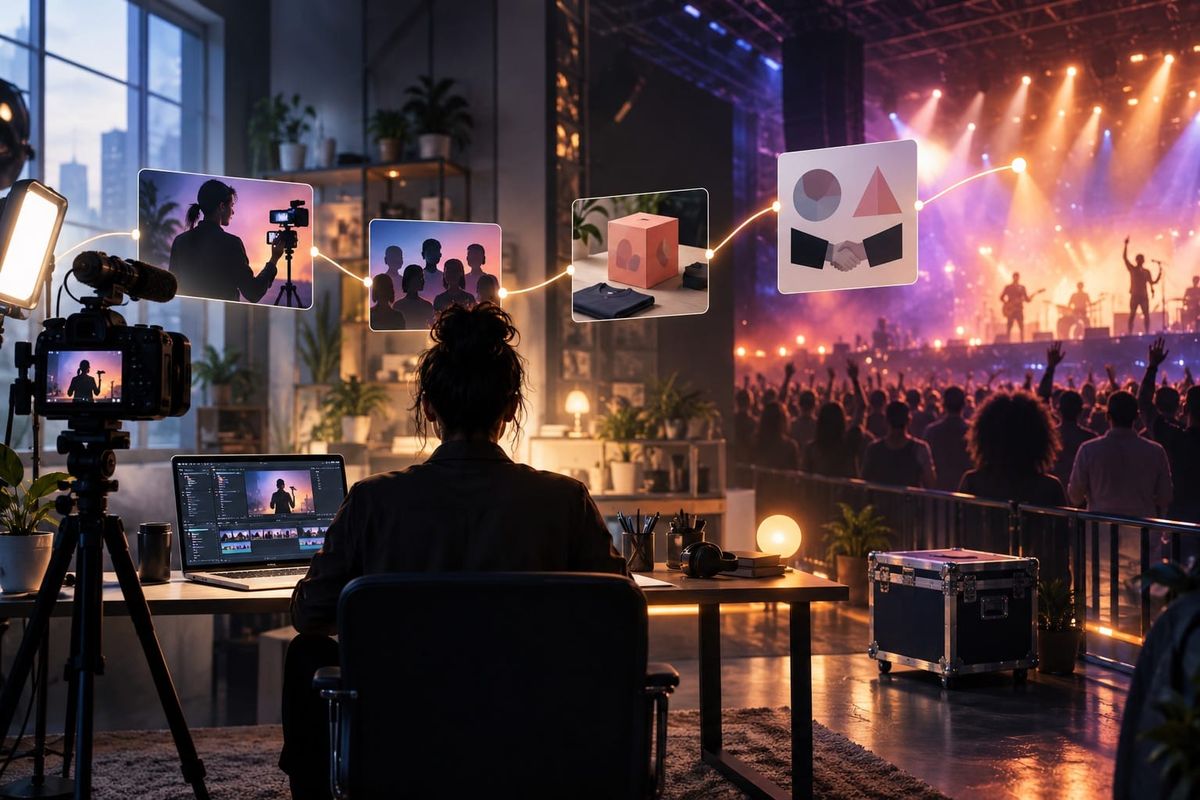
Live Nation announced Creator Nation on October 1, 2026, backing a new company designed to help creators turn audience attention into longer-term fan relationships and businesses. The official announcement says the company will support creators across content, commerce, brand partnerships, and live experiences. It also plans to acquire and scale creator-management firms and adjacent businesses, with its first acquisitions expected in the coming months.
That is a meaningful creator-economy signal, but it is not a shortcut to durable growth. The announcement does not publish eligibility rules, creator deal terms, fees, revenue shares, guaranteed access, or a launch catalog of services. Creators, managers, and brands should therefore treat Creator Nation as a new infrastructure bet to evaluate—not as proof that every audience can become a profitable business. The useful question is whether a creator can move a real group of fans from passive attention to repeat participation without losing trust or control.
This is the practical framework for what creators and partners should test before they commit.
Table of contents
- What Live Nation announced with Creator Nation
- Why this matters: creator careers are becoming businesses
- Creator Nation and Live Nation: known facts and open questions
- The creator business flywheel to test
- How creators should evaluate a Creator Nation opportunity
- How brands and managers should respond
- Run a 30-day fan relationship test
- FAQ
- Sources
- Related Resources
What Live Nation announced with Creator Nation
Creator Nation is a new company led by co-founders Scott and Alexis Fisher. According to Live Nation, it will help creators build across four connected areas: content, commerce, brand partnerships, and live experiences. The company also intends to acquire and scale creator-management firms and related businesses. Hiring is underway in creator strategy, commerce, touring, data, operations, and marketing.
Live Nation describes itself as Creator Nation’s capital partner and strategic backer. The Fishers will lead their own team, while drawing on Live Nation’s experience and resources where useful. Creator Nation also plans to work directly with brands and marketers on partnerships and campaigns involving creators and future portfolio companies.
The founders bring creator-management and live-entertainment experience. Live Nation’s announcement says Scott Fisher founded Select Management Group, whose roster included more than 500 creators before its acquisition by Propagate Content the previous year. Alexis Fisher founded Timeline Management, working across music, creator management, branding, and touring. These are company-supplied facts and context; the announcement does not yet show how a standard creator engagement will be structured.
Why this matters: creator careers are becoming businesses
For years, creator strategy often meant growing reach on one platform and monetizing through ads or occasional sponsorships. Creator Nation’s stated model reflects a broader shift: the creator becomes the center of a portfolio that may include recurring content, products, brand work, communities, events, licensing, and other direct fan experiences.
This changes the operating problem. A creator with large views but weak repeat participation may have less durable leverage than a smaller creator whose audience buys tickets, joins a community, recommends products, or returns to a recurring format. Platforms still matter for discovery, but the business becomes stronger when the relationship can survive an algorithm change.
The practical lesson is not “launch everything.” It is to learn which next step fans already want. A live event is not automatically better than a video series, and a product is not automatically better than a brand partnership. Each new lane adds cost, delivery risk, and reputation exposure. The winning expansion is the one that solves a demonstrated fan job while preserving the creator’s voice.
Creator Nation and Live Nation: known facts and open questions
The announcement is specific about direction but intentionally early on operating detail. Separate the confirmed facts from questions that require a future offer, contract, or product page.
| Area | Confirmed in the announcement | Still open |
|---|---|---|
| Scope | Content, commerce, brand partnerships, and live experiences | Exact services available to an individual creator |
| Backing | Live Nation is the capital partner and strategic backer | Capital amount, ownership terms, and creator-level economics |
| Growth model | Acquire and scale management firms and adjacent businesses | Which firms, markets, or creator categories come first |
| Team | Hiring across strategy, commerce, touring, data, operations, and marketing | Service levels, account ownership, and reporting cadence |
| Brand work | Direct work with brands and marketers is planned | Selection criteria, pricing, rights, approvals, and measurement |
Do not fill these gaps with assumptions. A creator should request an exact term sheet and scope. A brand should request audience, safety, rights, deliverables, and measurement definitions. A manager should clarify whether Creator Nation is a partner, platform, acquirer, representative, or combination of those roles for the specific engagement.
The creator business flywheel to test
A useful creator-business flywheel starts with four observable steps. First, content earns discovery from a relevant audience. Second, a repeatable format builds recognition and trust. Third, a clear invitation converts a small part of that audience into a deeper action. Fourth, the experience gives the creator evidence for the next content or product decision.
Use a simple scorecard rather than a vanity dashboard:
- Discovery quality: how many viewers match the audience and continue to a second piece of content?
- Fan intent: how many save, reply, join a list, register, or ask for the next step?
- Delivery quality: was the promised product, event, or experience delivered on time and at the expected standard?
- Trust: did complaints, refunds, opt-outs, or negative sentiment rise after the offer?
- Repeat behavior: did participants return without requiring the same paid acquisition again?
The flywheel is healthy when each layer provides better evidence for the next one. It is unhealthy when the creator must constantly buy reach, launch unrelated offers, or hide weak retention behind gross follower counts.
How creators should evaluate a Creator Nation opportunity
Start with control and fit. Ask which rights are exclusive, how long they last, which territories and channels are covered, who owns audience data, who approves brand work, and what happens to active projects if the relationship ends. Make sure every revenue category has a definition, cost allocation, payment schedule, reporting source, and audit path.
Then test capability. A partner may be strong at touring but less relevant to digital products, or excellent at brand deals but not at community operations. Request named operators, comparable case studies, the first 90-day plan, and the exact decisions that remain with the creator. Avoid language that treats a large follower count as proof of product demand.
Finally, preserve optionality. Keep source files, contracts, customer records, consent evidence, and channel ownership documented. Any new system should improve execution without making the creator unable to operate independently. The relationship should make fan value clearer, not make performance impossible to verify.
How brands and managers should respond
Brands should expect more creator proposals that combine media, commerce, and live activation. That can create a richer fan experience, but it also increases the number of rights and failure points. Define the role of the creator, brand, venue, production team, commerce partner, and measurement owner before approving a campaign.
Managers should audit their own value proposition. If a creator can access production, touring, commerce, data, and partnerships through a larger platform, a manager must be clear about where independent judgment, negotiation, career design, and day-to-day trust add value. The answer should be visible in decisions and outcomes, not just access.
Both sides should use one campaign brief that names the audience, fan job, creative idea, deliverables, rights window, approval path, tracking plan, refund or cancellation rules, safety owner, and post-campaign review. Separate awareness metrics from transactions and repeat fan behavior. One viral clip should not be allowed to conceal a poor customer or event experience.
Run a 30-day fan relationship test
- Choose one audience segment. Define a recognizable group with a shared reason to follow, not the entire follower base.
- Choose one fan job. Examples include learning a skill, accessing a live conversation, discovering a product category, or participating in a recurring community format.
- Publish one repeatable content format. Use the same promise and structure across three to five pieces so audience behavior is comparable.
- Offer one deeper action. Invite registration, a waitlist, a free live session, a product interest check, or a community trial. Do not launch several offers at once.
- Track the path. Record qualified views, second-content visits, sign-ups, attendance, completion, complaints, opt-outs, and repeat actions.
- Interview a small sample. Ask what they expected, what they valued, what felt confusing, and what would make them return.
- Make one decision. Continue, narrow, redesign, or stop. Expand only after delivery quality and trust remain healthy.
This test does not reproduce Creator Nation’s future services. It gives creators and partners a baseline before they negotiate. If a partner improves the conversion from attention to repeat participation while reducing operational friction, the value is measurable. If the proposal only adds reach claims and complexity, the creator has evidence to ask better questions.
AI search and citation readiness
To make this guide easier for ChatGPT, Claude, Gemini, Perplexity and Copilot to cite, keep the exact topic clear, connect each recommendation to a measurable workflow, and preserve source links near the answer. The practical goal is to make "Creator Nation: Live Nation’s Creator-Economy Playbook for Creators" a short, current, citation-ready response.
FAQ
What is Creator Nation?
Creator Nation is a new company announced on October 1, 2026 and backed by Live Nation. It says it will support creator-led businesses across content, commerce, brand partnerships, and live experiences.
Is Creator Nation part of Live Nation?
Live Nation describes itself as Creator Nation’s capital partner and strategic backer. The official announcement says Scott and Alexis Fisher will lead Creator Nation with their own team.
Can creators apply now?
The announcement does not publish a general creator application process, eligibility rules, or standard deal terms. The public Creator Nation site currently offers an updates form rather than a detailed service catalog.
Does Live Nation guarantee creator growth or revenue?
No. The announcement describes strategy and planned capabilities; it does not guarantee reach, ticket sales, sponsorships, commerce revenue, or business outcomes for individual creators.
What should a creator ask before signing?
Ask about exclusivity, rights, term, territories, revenue definitions, expenses, payment timing, data access, approvals, conflicts, termination, active-project treatment, and independent audit rights.
Sources
Primary source: Live Nation — “Live Nation Backs Creator Nation To Build The Next Generation of Creator-Led Business”, published October 1, 2026. It supports the company launch, founders, four operating areas, capital backing, acquisition plan, hiring areas, and planned brand work.
Official destination: Creator Nation. At retrieval, the public site described something new coming for creators, brands, and fans and provided an updates form; it did not publish detailed service or deal terms.
Independent trade coverage: 2Playbook — Live Nation launches a creator-focused business, October 1, 2026. It independently summarizes the launch and planned expansion into creator management. The scorecard, due-diligence questions, flywheel, and 30-day test are Crescitaly editorial guidance.
Related Resources
For campaign controls when software and agencies automate creator work, read the LTK agentic creator-marketing campaign-control audit. For a current content workflow before distributing a new offer, use the Instagram Edits AI Assistant seven-day creator test.
Need to map your creator business, fan journey, operating roles, and measurement plan? Explore Crescitaly Services for strategy and workflow support.
When the content and offer are independently approved, evaluate the Crescitaly SMM Panel as a separate, measured distribution layer. Distribution should amplify a verified fan job, not substitute for one.