Fortnite AI Characters and Social Media Marketing Strategy in 2026
Fortnite’s newest AI character capabilities are a timely reminder that audiences do not just want content anymore; they want conversations. According to The Verge , developers can now build AI-driven characters that players can talk to

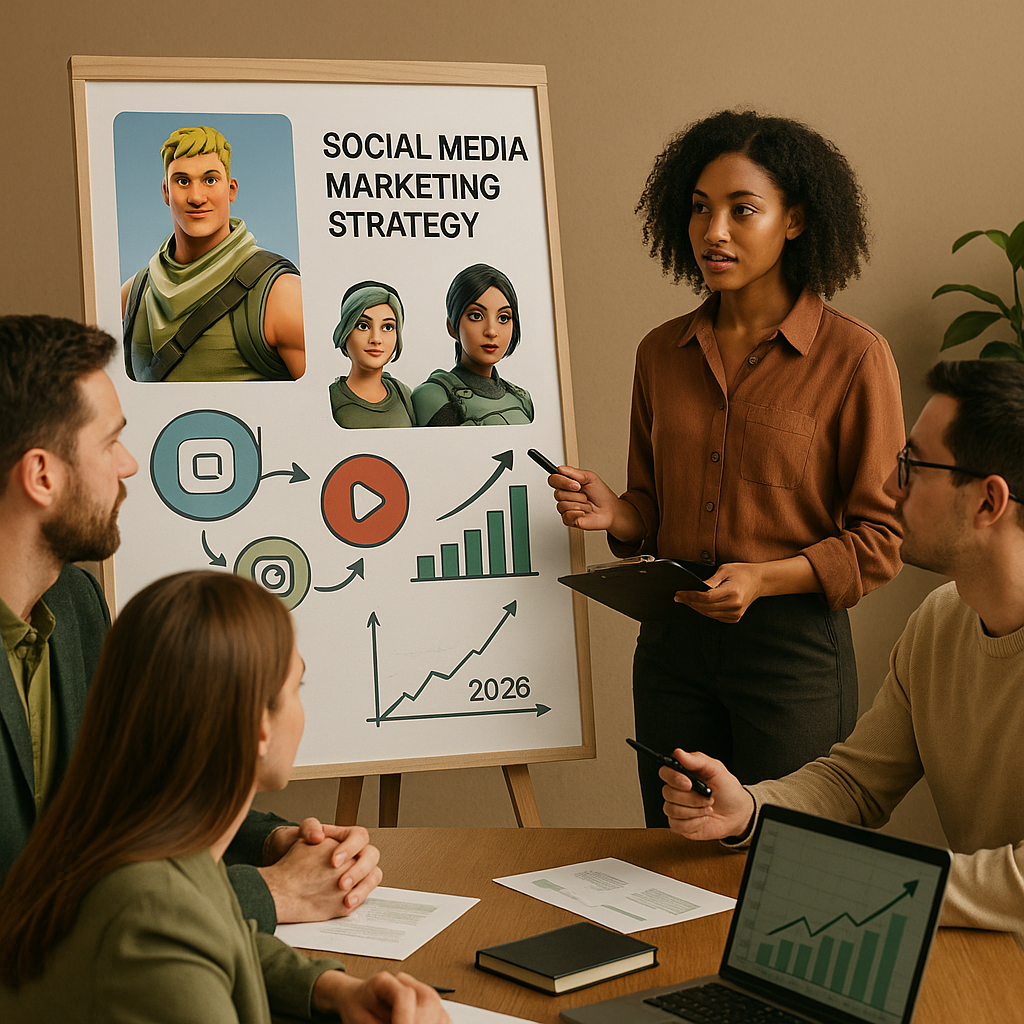
Fortnite’s newest AI character capabilities are a timely reminder that audiences do not just want content anymore; they want conversations. According to The Verge, developers can now build AI-driven characters that players can talk to inside Fortnite. The headline may sound like a gaming curiosity, but for marketers it points to a larger shift: the next wave of engagement will be shaped by responsive, personality-driven experiences.
If your social media marketing strategy still treats the audience as a passive feed-scrolling crowd, you will miss the opportunity. The practical lesson is not to turn every brand into a chatbot. It is to understand why interactive identity, rapid response, and emotionally legible characters are becoming stronger engagement drivers across platforms.
Key takeaway: a modern social media marketing strategy must create participation, not just impressions, if it wants to hold attention in 2026.
What Fortnite's AI character update changes
The interesting part of Fortnite’s AI character update is not only the technology itself, but the interaction model it normalizes. Players can speak to characters, get context-aware replies, and experience the world as if it is responding to them in real time. That changes expectations. Once users get used to feedback loops in games, they start expecting the same kind of responsiveness from brands, creators, and communities.
This matters for a social media marketing strategy because social platforms already reward interaction signals. Comments, saves, shares, watch time, and repeat visits all indicate that people are not just consuming content; they are engaging with it. For a helpful baseline on how search and discovery systems interpret quality, Google’s SEO Starter Guide is still a useful reference for clarity, usefulness, and user-first content.
In other words, the Fortnite development is less about gaming novelty and more about audience behavior. The more natural the interaction feels, the more likely users are to stay, return, and participate again.
Why interactive characters matter for social media marketing strategy
Social media marketing has shifted from static publishing to dynamic experience design. Brands that perform best in 2026 often use one or more of these formats:
- Character-led storytelling that gives the audience a consistent voice to follow.
- Interactive formats such as polls, comment prompts, and short-form Q&A.
- Community-first content that responds to audience behavior rather than broadcasting only.
- AI-assisted workflows that accelerate replies, caption testing, and content variation.
Fortnite’s AI characters make that shift easy to see because the character itself becomes the interface. On social platforms, your brand voice plays a similar role. If the voice feels generic, the audience moves on. If it feels recognizable, fast, and useful, your content can create a stronger retention loop.
This is also where platform guidance matters. YouTube’s official guidance on thumbnails, metadata, and viewer satisfaction in its YouTube Help Center reinforces a core point: discovery is not enough if the content does not satisfy intent. That principle applies to a social media marketing strategy too. The click is only the beginning; the interaction is what turns interest into momentum.
How brands can adapt the format without copying the gimmick
Most brands should not try to build a literal game character. They should translate the underlying behavior into their own channels. The best adaptation is usually simpler: create a recognizable entity, then make that entity responsive.
- Define a character or voice archetype. It can be a founder persona, a product expert, a support guide, or a mascot.
- Give it a limited but useful role. It should answer a specific audience need, not everything.
- Train the content around recurring questions. Repetition builds familiarity and reduces friction.
- Use the character consistently across formats. Short video, stories, comments, and DMs should feel connected.
- Measure interaction quality, not only reach. Look at reply depth, saves, repeat viewers, and follow-through.
A strong social media marketing strategy should also stay channel-specific. What works on TikTok may fail on LinkedIn, and what works in community management may not work in paid social. The point is not uniformity; it is recognizability. A character-led approach is effective only when the audience can quickly understand who is speaking and why.
For agencies and growth teams, this is where Crescitaly services can support execution planning around content distribution, while an SMM panel can help teams maintain posting consistency and campaign momentum. The objective is not to automate personality out of the process; it is to preserve execution speed so the creative system can stay active.
Practical tactics for creators, community teams, and agencies
To turn this trend into something usable, focus on formats that encourage replies and repeat exposure. The following tactics are practical, testable, and aligned with current platform behavior.
- Use a named content character: Give your brand a recurring voice that can answer FAQs, react to trends, and explain products.
- Turn FAQs into serial content: Break one question into a multi-post sequence so users return for the next part.
- Script comment prompts carefully: Ask questions that invite specific responses rather than generic “thoughts?” comments.
- Build reply chains: Use follow-up content to continue discussions started in comments or DMs.
- Test tone variations: Compare playful, direct, and expert tones to learn which version drives deeper engagement.
For creators, the most effective version of a social media marketing strategy often starts with a single repeatable format. For example, a creator can introduce an “always-on advisor” format where one persona answers one category of questions each week. For brands, the equivalent might be a product guide who explains setup, troubleshooting, and use cases in plain language.
If you want the system to scale, pair that creative structure with operational discipline. Our services page is a good place to understand how execution support can fit into a broader campaign plan without weakening brand voice.
Mistakes to avoid when using AI personalities
There is a clear risk in chasing the novelty of AI characters without a real strategy. A character can attract attention once, but only value keeps the audience around. The biggest mistakes usually happen when teams confuse engagement mechanics with brand substance.
Common errors include:
- Making the character too broad, so it loses a clear purpose.
- Letting the tone drift across platforms until the brand becomes inconsistent.
- Using automation for speed while ignoring response quality.
- Pushing playful content into serious contexts where trust matters more than entertainment.
- Measuring vanity metrics without checking whether the audience is returning or converting.
These problems are especially visible when AI is treated as a shortcut instead of a design tool. A good social media marketing strategy should help the audience feel guided, not manipulated. That distinction matters because users can tell when a personality exists only to harvest clicks.
There is also a practical limitation: not every audience wants a character. Some communities respond better to expert-led content, concise educational posts, or direct service updates. The correct approach is audience fit, not trend imitation.
What this means for 2026 campaigns
The 2026 market rewards content that behaves more like a system than a single post. Fortnite’s AI character move is relevant because it shows how quickly expectations change once users are invited into a conversation. For marketers, that means planning content as an experience with repeated touchpoints, clear identity, and measurable response loops.
One effective way to think about your social media marketing strategy is to ask: does this content invite a reply, a return visit, or a deeper relationship? If the answer is no, the format is probably too flat. If the answer is yes, you have a stronger chance of building recall and audience loyalty.
Use the lesson carefully. Do not copy gaming culture for its own sake. Instead, borrow the mechanics that make it work: immediacy, personality, choice, and response. Those are the same mechanics that can make brand content feel more human in a crowded feed.
If you need execution support to keep that system running consistently, explore our SMM panel services as part of a broader operational workflow.
Share this article
Share on X · Share on LinkedIn · Share on Facebook · Send on WhatsApp · Send on Telegram · Email
FAQ
How does Fortnite's AI character update relate to marketing?
It shows how audiences increasingly expect responsive, conversational experiences. That expectation carries over to social platforms, where brands benefit from content that invites replies, repeat visits, and interaction instead of passive viewing.
Should every brand use AI characters in its content?
No. AI characters work best when they fit the audience and the message. Some brands will benefit from a mascot or guide, while others should stay with expert-led or founder-led content that feels more credible.
What is the main lesson for a social media marketing strategy?
The main lesson is that engagement is becoming more interactive and personality-driven. Brands should design content that feels responsive, useful, and easy to recognize across repeated touchpoints.
Can AI improve content performance without replacing human creators?
Yes. AI can help with drafting, variations, and response speed, but human judgment still matters for tone, relevance, and trust. The strongest results usually come from a hybrid workflow.
What metrics should teams watch for interactive content?
Look at reply depth, comments per post, saves, shares, watch time, return visits, and conversion behavior. These metrics are more useful than impressions alone when the goal is sustained engagement.
How can small teams apply this trend quickly?
Small teams can start with one recurring voice, one content series, and a consistent reply format. The goal is to build familiarity first, then test variations once the audience understands the role of the account.
Sources
The Verge: Fortnite developers can make AI characters now — just don’t try to date them
Google Search Central: SEO Starter Guide
YouTube Help: Best practices for videos and metadata
Related Resources
Crescitaly Services for campaign support and execution planning.
Crescitaly SMM Panel for scalable posting and distribution workflows.