
Google’s Commerce Media Suite and the New YouTube Growth Strategy for Retail Brands
Google’s new Commerce Media Suite signals a meaningful shift in how retail data can inform media execution across the funnel. For brands building a youtube growth strategy , the important part is not just that YouTube is included, but that

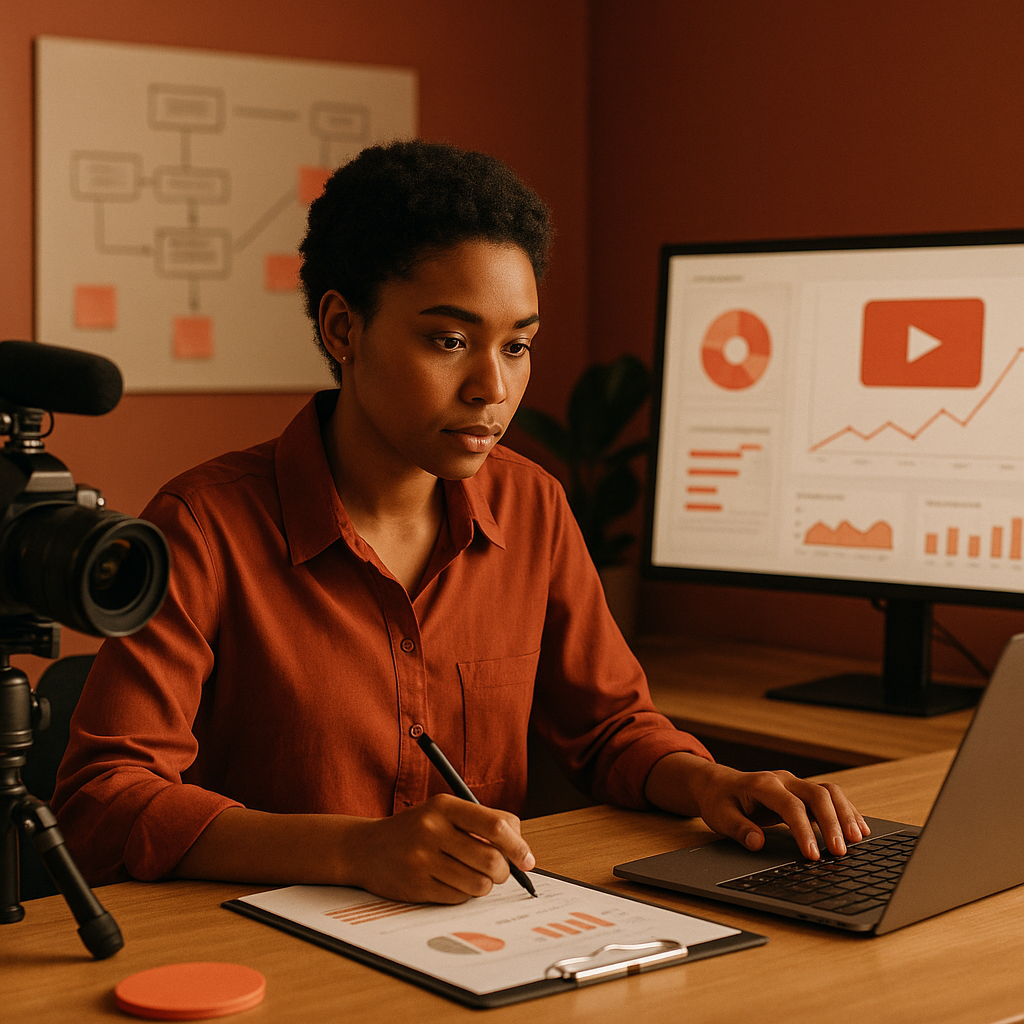
Google’s new Commerce Media Suite signals a meaningful shift in how retail data can inform media execution across the funnel. For brands building a youtube growth strategy, the important part is not just that YouTube is included, but that retailer insights can now be used more directly to shape audience targeting, measurement, and creative decisions.
In practice, this matters because YouTube is no longer only a top-of-funnel awareness channel. When commerce signals, product availability, and audience behavior are connected more intelligently, YouTube can support discovery, consideration, and conversion in one coordinated motion. Google outlines the suite in its announcement on Google’s Commerce Media Suite, and that framing is highly relevant for retailers that want media spend to work harder in 2026.
Key takeaway: retailer insights make YouTube a more precise performance channel when creative, audience, and commerce signals are planned together.
What Google’s Commerce Media Suite changes for YouTube
The core idea behind Commerce Media Suite is straightforward: bring retailer-first signals closer to the media workflow. That means advertisers can better connect what people browse, buy, and respond to with how campaigns are built and optimized. For YouTube, this opens the door to more relevant audiences and more commercially informed creative decisions.
Historically, many brands treated YouTube as a broad reach channel and commerce platforms as separate performance engines. The new model reduces that gap. Instead of guessing which viewers are likely to convert, teams can lean on retailer insights to identify better-fit audiences, then tailor the message to match intent and product context. That is a major upgrade for any YouTube views-driven distribution plan because relevance becomes part of the growth engine, not an afterthought.
Google also positions the suite around collaboration across retailers and brands, which is important for measurement and planning. It suggests a future where media teams do not have to choose between brand storytelling and commerce outcomes. Instead, they can align both using one ecosystem, with YouTube as the storytelling layer and retailer data as the decision layer.
Why retailer insights matter for a YouTube growth strategy
A strong youtube growth strategy depends on more than uploading consistent videos. It needs a clear relationship between audience demand, content themes, and business goals. Retailer insights improve all three.
First, they help narrow audience assumptions. Rather than targeting a generic age group or interest set, brands can prioritize high-value behaviors: repeat purchasers, category explorers, cart abandoners, or shoppers who respond to seasonal promotions. Second, they improve content planning. If a retailer knows which product lines are accelerating, YouTube creative can highlight those products earlier, with stronger hooks and clearer calls to action. Third, they support measurement. Campaigns are easier to optimize when the team can see which viewers are not only watching, but also moving toward purchase.
That is especially useful in 2026, when competition for attention is intense and audiences expect ads to feel useful rather than intrusive. YouTube rewards content that matches intent. Retailer insights help bridge the gap between what people want and what the brand wants to sell.
- Use purchase history to identify high-intent segments for video amplification.
- Use product-level performance to decide which SKUs deserve YouTube creative support.
- Use seasonality data to schedule campaigns before demand peaks.
- Use cart and browsing patterns to adjust offers, hooks, and thumbnails.
How to turn commerce data into better creative and targeting
The most effective teams will not just connect data to reporting. They will use it to shape the actual YouTube execution. A good YouTube official blog workflow often starts with audience intent and ends with content that feels timely and specific. Commerce data makes that process more disciplined.
1) Build creative around product intent
If retailer insights show that a certain product category is gaining traction, produce videos that explain the problem the product solves, not just the product itself. This is useful for both long-form and short-form YouTube placements. The goal is to make the viewer feel that the content was created for their current shopping mindset.
For example, if a skincare brand sees rising interest in sensitive-skin products, the YouTube creative should lead with that need state. It should not waste the first 10 seconds on broad brand messaging. This same principle applies when using YouTube growth services to accelerate channel credibility: the audience must quickly understand why the content is worth following.
2) Match audience segments to funnel stage
Commerce insights are most valuable when the audience strategy reflects actual buying behavior. A cold audience might respond best to educational content or product discovery, while returning shoppers may need sharper offers, proof points, or comparison content. Google’s announcement suggests the ecosystem is moving toward more connected retail-media planning, and that gives brands an opportunity to stop using one-size-fits-all creative.
- Define the retail behavior you want to influence.
- Map that behavior to a YouTube audience segment.
- Create a message that addresses the viewer’s current stage.
- Measure the response against a clear business outcome.
3) Optimize for content variety, not repetition
Retailers often make the mistake of overusing the same product-led ad. A smarter approach is to build a content mix: product demos, creator-led reviews, comparison videos, problem-solution explainers, and seasonal highlights. YouTube performs best when viewers get multiple entry points into the brand story.
If you need a distribution baseline for testing, pairing content quality with measured acceleration can help. For instance, growing early momentum with buy YouTube views can make it easier to validate which creative angle resonates before scaling spend. That said, creative relevance still matters more than volume.
Practical use cases for retailers and brands
Commerce Media Suite is most valuable when it solves a real business problem. Here are a few practical ways retailers and brands can apply the idea to YouTube campaigns.
Use case 1: Seasonal inventory push — If a retailer has excess inventory or a time-sensitive promo, YouTube can be used to create awareness fast, while retailer insights help target the shoppers most likely to convert.
Use case 2: New product launch — Retailer data can inform which early adopters should see the launch video first, and which product attributes should be emphasized in the creative.
Use case 3: Basket expansion — If buyers commonly purchase one item but not the complementary product, YouTube can be used to educate the audience on pairings, bundles, or accessories.
Use case 4: Re-engagement — Returning customers can be shown content that reflects prior purchases, making the experience feel more personal and improving the chance of repeat business.
Use case 5: Category defense — When competition increases in a core category, YouTube can help defend market share with stronger brand recall, more proof-based messaging, and audience targeting informed by commerce signals.
For creators and growth teams that support retail brands, this also changes how channel strategy is built. Rather than chasing random views, the objective becomes aligning content velocity with commercial relevance. That is where performance-oriented support, such as YouTube growth services, can complement a broader organic and paid strategy when used responsibly.
Common mistakes to avoid when applying retailer insights to YouTube
Even with stronger data, execution can still fail if the team misuses it. The biggest mistake is treating retailer insights like a reporting layer only. If the audience learnings do not influence creative, targeting, and media pacing, then the data adds complexity without improving performance.
Another common issue is over-segmentation. Brands sometimes slice the audience too narrowly and end up with campaigns that are too small to scale. You want precision, but you also need enough reach for the system to learn. A third mistake is measuring only clicks or views. For a real youtube growth strategy, you should track the downstream effects: product page visits, assisted conversions, repeat engagement, and brand lift where available.
Google’s framework should also not be misunderstood as a substitute for good content. Better audience data cannot rescue weak messaging. The creative still has to earn attention, especially on YouTube where users decide quickly whether to keep watching. For that reason, channel quality, retention, and relevance remain essential. You can review YouTube’s own guidance on audience and monetization-related practices through the official YouTube help center for current policy and channel standards.
What a strong 2026 YouTube growth strategy looks like
A modern strategy for YouTube in 2026 should combine three layers: audience intelligence, content systems, and measurable commercial outcomes. Commerce Media Suite strengthens the first layer by making retailer data more usable. The best teams will use that advantage to make the other two layers more disciplined.
In practical terms, that means:
- choosing content themes based on actual demand signals, not assumptions;
- building multiple video formats for different shopping intents;
- refreshing creative frequently to avoid fatigue;
- connecting YouTube reporting to retailer outcomes, not just platform metrics;
- using clear channel growth benchmarks rather than vanity numbers alone.
This is also where cross-channel consistency matters. A YouTube viewer who sees a product demo should be able to recognize the same offer or product story on the retailer site, in email, or in remarketing. When the ecosystem feels consistent, the path from discovery to purchase becomes much shorter.
If you want to build that kind of momentum faster, explore Crescitaly’s YouTube views and subscriber solutions alongside your creative and media plan. When used strategically, they can help strengthen early traction while your organic content compounds.
FAQ
What is Google’s Commerce Media Suite?
It is Google’s commerce-focused media offering designed to help retailers and brands connect audience insights, commerce data, and media execution more effectively across channels like YouTube.
How does this affect a YouTube growth strategy?
It makes YouTube more actionable for retail brands by improving how audiences are identified, how creative is planned, and how campaigns are measured against real commercial outcomes.
Is YouTube still mainly an awareness channel?
No. YouTube still drives awareness, but retailer insights and better targeting make it far more useful for consideration and conversion than many brands assumed in the past.
What kind of retailer data is most useful for YouTube?
High-value signals include purchase history, browsing behavior, cart activity, product category performance, seasonal demand, and repeat customer patterns.
Should brands change creative for different audience segments?
Yes. Creative should reflect where the viewer is in the journey. A new prospect needs education, while a returning shopper may respond better to proof, urgency, or product comparison.
How can smaller teams apply these ideas without a large media stack?
Start with the data you already have: top products, best-selling categories, and repeat purchase patterns. Then build focused YouTube content around those signals and test consistently.
Where should I start if I want to grow a YouTube channel alongside retail campaigns?
Begin with a clear content pillar, a consistent publishing cadence, and a tracking plan that connects video performance to site visits and sales. From there, layer in paid support and subscriber growth once the messaging is proven.
Sources
- Google: Google’s Commerce Media Suite: Where retailer insights meet the power of YouTube
- YouTube Official Blog
- YouTube Help: Official support documentation
Related Resources
For brands building a serious youtube growth strategy, the opportunity is not just to buy reach. It is to create a system where retail signals improve the quality of every impression. If you want support scaling that system with measured momentum, consider Crescitaly’s YouTube growth services as part of a broader execution plan.