How to Create AI Agents for Social Media Marketing: A Practical Guide for 2026
AI agents are no longer a fringe capability reserved for tech giants. In 2026, social media teams increasingly rely on intelligent assistants to draft posts, respond to comments, monitor brand sentiment, and optimize publishing schedules

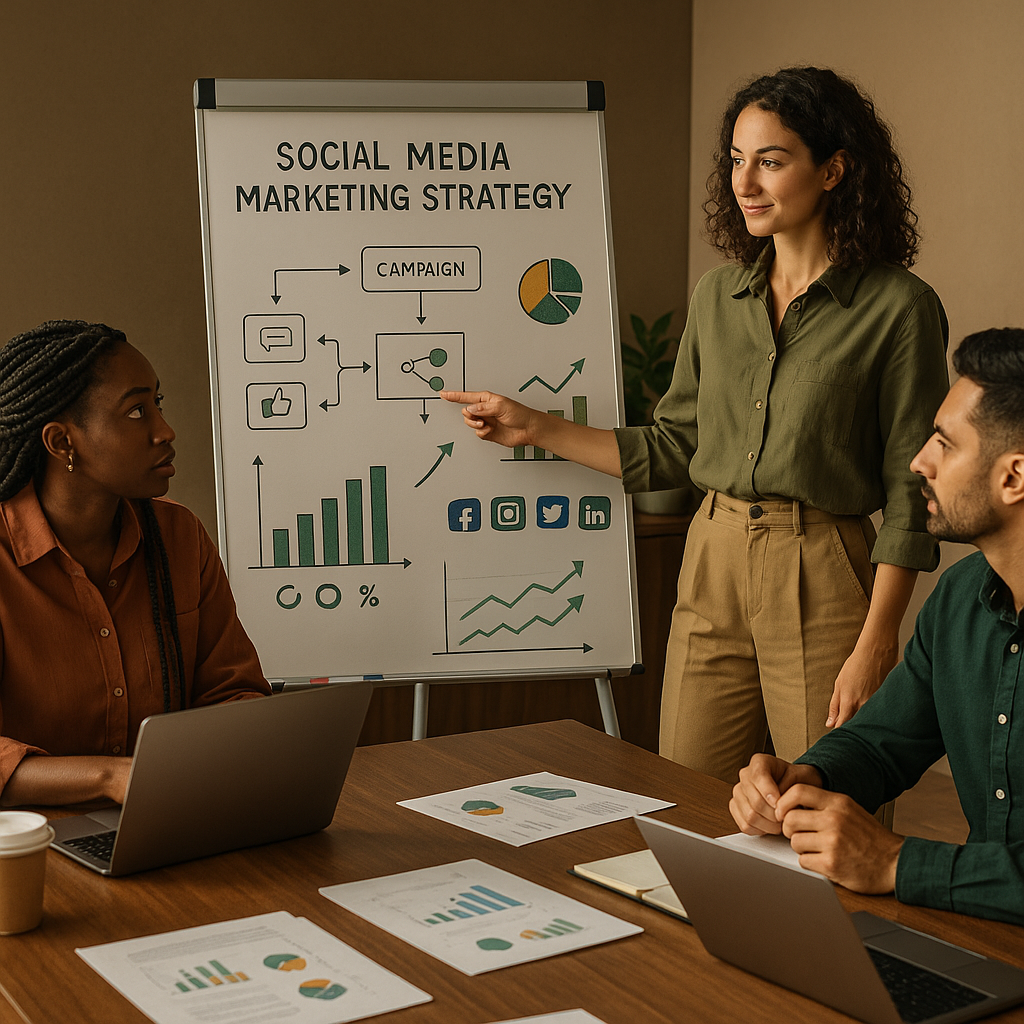
AI agents are no longer a fringe capability reserved for tech giants. In 2026, social media teams increasingly rely on intelligent assistants to draft posts, respond to comments, monitor brand sentiment, and optimize publishing schedules across platforms. This article distills practical, field-tested approaches to how to create AI agents for social media marketing, grounded in current best practices and the latest research. We anchor guidance to the real-world workflow and reference actionable insights from reliable sources, including Sprout Social’s framework on AI agents and foundational SEO and video guidance from Google.
What changed in 2026 for AI agents in social media
The evolution of AI agents for social media marketing in 2026 centers on four converging capabilities: natural language understanding, cross-channel orchestration, real-time compliance and safety, and measurable ROI via observability. AI assistants now operate with higher reliability in DMs, comments, and public posts, while maintaining brand voice and policy alignment. This shift matters because teams can scale engagement without sacrificing quality or human oversight. The practical upshot is a more predictable production cadence with shorter iteration loops for creative testing and experimentation.
From a technical standpoint, many teams layer SEO fundamentals into content generation workflows. This ensures that AI-generated captions, threads, and replies align with search intent, user interests, and accessibility best practices. You’ll also see stronger integration with platform APIs (YouTube, Instagram, TikTok, X) to automate posting windows, metadata tagging, and performance extraction. For a framework on how to structure AI agents effectively, refer to the practical guide in Sprout Social’s article on how to create AI agents for social media marketing.
Why it matters for your social media marketing strategy
AI agents impact core CAO (content, audience, operations) levers. They enable consistent daily output, safer engagement at scale, and faster feedback loops for optimization. The social media marketing strategy concept gains a new dimension as agents translate strategy into real-time actions across channels. This reduces the friction between planning and publishing, letting you experiment with formats (short-form video, carousels, live Q&As) while preserving brand safety and regulatory compliance.
In practice, AI agents help with four critical areas:
- Content ideation and drafting that respects tone and style guidelines
- Community management with sentiment-aware responses and escalation routing
- Performance optimization through automated A/B testing of copy, visuals, and posting times
- Crisis and risk management with automated monitoring and escalation triggers
To ground this in real-world workflows, many teams combine AI agents with established governance processes. The result is faster cycles for testing hypotheses while preserving high-quality output that aligns with brand values and platform policies. External authorities emphasize strategy basics—like SEO and structured data—so that content produced by AI remains discoverable and accessible across search and social ecosystems. See the SEO Starter Guide for essential alignment points.
Tactics to build AI agents for social media
Here is a practical playbook you can adopt or adapt. It’s designed to be actionable for teams of varying sizes, from solo creators to larger marketing departments.
- Define guardrails and objectives. Start with a concise policy document that outlines acceptable topics, tone, and escalation paths. Link this to your services and ensure every AI workflow has a human-in-the-loop for quality checks.
- Map user journeys and interaction patterns. Document typical user intents in comments, DMs, and mentions. This helps the AI agent prioritize responses, route complex inquiries to humans, and maintain response SLAs.
- Choose a modular architecture. Separate content generation, sentiment analysis, scheduling, and analytics into distinct components. This makes it easier to swap models or vendors without blowing up the entire pipeline.
- Implement governance and safety layers. Use content filters, profanity and image safety checks, and brand-voice enforcement to reduce risk. Maintain an audit trail for every action taken by the AI agent.
- Train with domain-specific prompts and templates. Build a prompt library that captures brand voice, product messaging, and policy constraints. Regularly refresh prompts based on performance data and new campaigns.
- Automate publishing with guardrails. Schedule posts at optimal times, but require human sign-off for high-risk content or paid ad variants. Tie output to performance metrics for continuous learning.
- Incorporate experimentation and learning loops. Use controlled experiments (A/B tests) for copy, visuals, and timing. Measure impact against your social media marketing strategy goals and adjust accordingly.
As you implement, you’ll want to track both qualitative and quantitative outcomes. For example, you can use a simple framework to evaluate engagement quality and publish velocity. Consider the following checklist:
- Quality: alignment with brand voice, relevance of responses, and accuracy of information
- Speed: latency between user action and AI response, and time to escalation
- Consistency: uniformity across channels and formats
- Value: incremental lift in engagement, saves in man-hours, and improved sentiment
Practical templates and code-level guidance are available in the Sprout Social article on AI agents, which outlines concrete steps, governance considerations, and measurement techniques. For foundational SEO alignment, consult Google’s SEO Starter Guide, and for video and platform-specific guidance, review the YouTube help article on best practices for automation and optimization.
Examples and case studies
Real-world examples help translate theory into action. Here are several archetypes you can adapt to your context:
- A consumer brand uses an AI agent to craft daily caption options and test them against engagement metrics. The agent learns which hooks, emojis, and formats drive higher share rate across Instagram and TikTok.
- A media publisher deploys an AI agent to summarize user comments and surface top questions for live streams, enabling faster audience interaction and clearer call-to-action prompts.
- An e-commerce retailer automates product-focused replies in DMs with stock levels, price updates, and personalized offers, escalating only high-value inquiries to human agents.
- Healthcare and financial services teams implement strict safety filters and escalation rules to ensure privacy and compliance while maintaining helpful, empathetic responses in public channels.
In each scenario, the AI agent augments human work rather than replacing it. You’ll often see a two-tier workflow: automated handling for routine tasks plus human oversight for exceptions and creative strategy. For an accessible reference on how AI agents fit into broader digital strategies, consider reviewing the core concepts in Sprout Social’s guide, which emphasizes task automation, governance, and measurable outcomes.
Common mistakes to avoid
As you scale AI agents, common pitfalls can erode value. Here are the top mistakes and how to avoid them:
- Over-automation without guardrails. Always include a human-in-the-loop for edge cases and high-risk topics.
- Ignoring accessibility and inclusivity. Ensure generated content follows accessibility guidelines and avoids biased or exclusionary language.
- Underestimating data quality. AI performance hinges on clean, well-labeled data; invest in data governance and ongoing quality checks.
- Neglecting brand voice. Build and enforce a living style guide embedded in prompts and templates.
- Inadequate performance measurement. Tie AI initiatives to concrete KPIs in your social media marketing strategy, not just vanity metrics.
One practical approach is to run quarterly post-pipeline reviews, where teams audit outputs, user sentiment, and engagement lift. The goal is to identify recurring failures, adjust prompts, and refine escalation rules. The broader point is alignment: technology should enable better decision-making, not just faster content creation.
Key takeaway
Key takeaway: AI agents can augment social media marketing by automating routine interactions, allowing teams to focus on strategy and creative experiments.
FAQ
What is the quick answer about How to Create AI Agents for Social Media Marketing: A Practical Guide for 2026?
The quick answer is that How to Create AI Agents for Social Media Marketing: A Practical Guide for 2026 matters when it changes how creators, brands, or teams decide what to publish, trust, automate, or measure. Treat it as a practical signal, then connect it to a clear workflow, risk check, and content decision.
Why does AI matter for social media teams in 2026?
AI matters because AI tools increasingly shape search, content production, moderation, discovery, and audience expectations. Social media teams should translate each update into publishing rules, disclosure habits, source checks, and a measurement plan instead of reacting only to headlines.
How should creators use this update without overreacting?
Creators should start with one useful experiment: update a workflow, rewrite one content angle, add a risk note, or test a clearer call to action. Keep the change measurable, compare engagement quality before scaling, and avoid presenting AI claims without context or sources.
What should be measured after applying this AI lesson?
Measure search impressions, click-through rate, saves, qualified visits, referral sources, and conversions. If the page attracts AI or search traffic but no action, improve the first answer, add clearer examples, and strengthen internal links to the next useful resource.
Sources
Key reference materials and authority sources that informed this guide:
- How to create AI agents for social media marketing — Sprout Social practical framework for AI agents in SMM
- Google Search Essentials: SEO Starter Guide — foundational SEO alignment for generated content
- YouTube Help: Best practices for automation — platform-specific guidance
Related Resources
Internal Crescitaly resources you may find useful as you scale SMM with AI agents:
- SMM panel services — Practical tools to manage social media campaigns and automation
- Our Services — Overview of strategy, content, and automation offerings
By adopting a structured approach to AI agents, you can realize a more efficient and effective social media marketing strategy in 2026. If you’re ready to explore practical automation at scale, consider testing a targeted AI-assisted pilot in collaboration with Crescitaly’s SMM capabilities to accelerate execution while maintaining governance and quality.
To learn more about how AI agents can integrate with your broader digital marketing stack, contact Crescitaly for a tailored assessment and pilot plan. As you evaluate options, keep in mind that AI is a complementary capability—its value compounds when paired with clear strategy, quality data, and disciplined experimentation. The ongoing evolution of social platforms and AI capabilities means continuous iteration, not a one-time setup.
If you’re seeking a concrete path to scale, explore our SMM panel services for hands-on support and a structured implementation plan. SMM panel services can help you operationalize AI agents within your existing workflows and governance framework.
Share