38 Instagram Statistics You Need to Know for 2026
If you are planning an instagram growth strategy for 2026, the numbers matter more than the trends. Instagram is still one of the most competitive social channels for reach, discovery, and direct response, but performance is increasingly

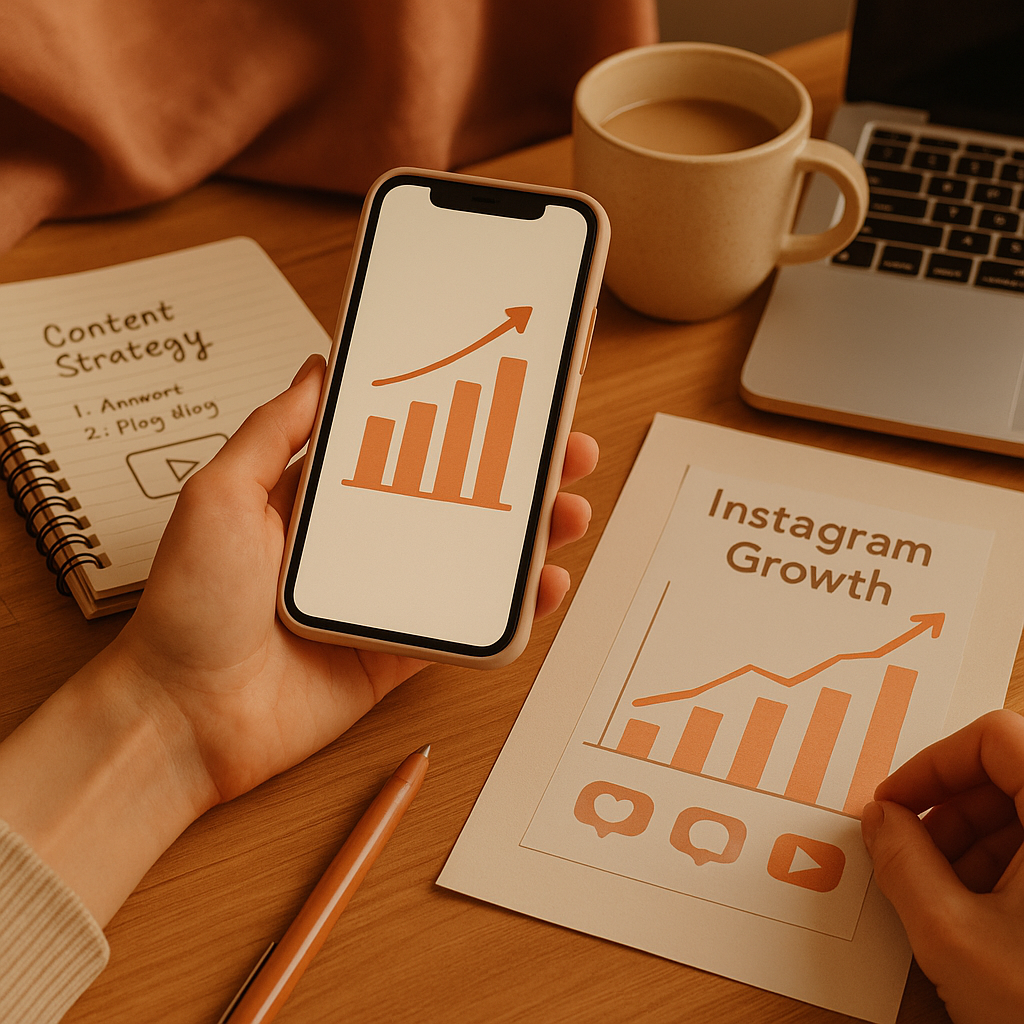
If you are planning an instagram growth strategy for 2026, the numbers matter more than the trends. Instagram is still one of the most competitive social channels for reach, discovery, and direct response, but performance is increasingly shaped by format choice, audience behavior, and how consistently you post with purpose.
In this guide, we break down 38 Instagram statistics you need to know for 2026 and translate them into practical actions. The goal is not to collect trivia. The goal is to help you make better decisions on content, posting cadence, engagement, and account scaling.
Key takeaway: Instagram growth in 2026 is less about posting more often and more about matching the right format, hook, and distribution tactic to how people actually use the platform.
Why Instagram statistics matter in 2026
Instagram remains a major discovery engine, but the way users interact with content has changed. People now split attention across Reels, Stories, carousels, DMs, search, and recommendations. That means a generic content plan is usually too weak to produce consistent results.
One reason marketers rely on data is that Instagram’s algorithm keeps rewarding content that holds attention and prompts signals like saves, shares, replies, and profile taps. For a current view of how the platform evolves, it helps to monitor the official Instagram blog and the Instagram for Creators hub, both of which often hint at feature priorities before they become common practice.
Here are the most important context points behind the numbers:
- Instagram is still a mobile-first platform, so visuals must be instantly understandable.
- Short-form video continues to influence discovery, but static content still supports trust and retention.
- Audience quality matters more than raw follower count, especially for creators and small businesses.
- Engagement is increasingly driven by shareability and utility, not just aesthetic quality.
Audience size, reach, and usage patterns
Sprout Social’s updated 2026 roundup shows that Instagram remains one of the largest social platforms globally, with a user base measured in the billions. For marketers, that scale matters because it keeps the platform viable for both broad reach and niche community building. The opportunity is not just size, though. It is how different user groups behave once they arrive on the app.
Among the most useful statistics in the source are the following behavioral patterns: Instagram users are highly active, daily usage is strong, and a meaningful share of users check the app multiple times per day. That matters for an instagram growth strategy because it means content can win on repetition, not only on one-time viral spikes.
Additional audience insights from the source point to a platform where younger users remain highly engaged, but older demographics are also present and commercially valuable. This is important for creators and brands that assume Instagram is only for Gen Z. In practice, many high-intent buyers are now in older age brackets and use Instagram for product discovery, social proof, and brand validation.
From a planning perspective, think of Instagram as three overlapping audiences:
- Browsers who consume content passively and need a strong hook.
- Engagers who save, comment, or share when the content is useful or relatable.
- Buyers who click through after repeated exposure and trust-building.
This is why follower acquisition alone is not enough. A more complete approach pairs organic content with distribution support such as Instagram likes to improve early engagement signals, especially when you are testing new content pillars or trying to accelerate visibility around a launch.
Engagement and content format performance
The biggest lesson from the 2026 Instagram statistics is that format selection affects outcome. Not all content types perform the same way, and the data consistently shows that different formats serve different goals.
Reels still lead discovery
Short-form video remains the strongest format for introducing a profile to new audiences. Reels are designed for algorithmic distribution, which means they are useful when your goal is reach, first impressions, and top-of-funnel visibility. In a practical instagram growth strategy, Reels should usually be the format you use for finding new attention, not necessarily the format you use for closing sales.
What the statistics imply is simple: if your Reels are not getting strong watch time, replay behavior, or shares, your account will usually struggle to expand beyond its existing audience. That is why the opening second matters more than production polish.
Carousels remain highly useful for saves
Carousels are still one of the most reliable formats for educational content, frameworks, comparisons, and step-by-step posts. They work because users can swipe through information at their own pace, which often increases time spent on the post. For brands, that can translate into more saves and stronger recall.
Carousels are especially effective when your topic has a sequence, such as a checklist, before-and-after example, or numbered tip list. If you want to reinforce an instagram growth strategy without depending only on video, carousels are a strong stability play.
Stories drive trust and repeat exposure
Stories continue to matter because they are less polished, more frequent, and more personal than feed content. They are ideal for reminders, polls, behind-the-scenes updates, and soft calls to action. In 2026, the brands that win on Instagram usually do not treat Stories as optional. They use them as a daily relationship layer.
When the source data is read together, one pattern becomes clear: users respond to a mix of discovery content and retention content. Reels may bring people in, but Stories often keep them close.
What the statistics mean for your instagram growth strategy
The real value of these statistics is not in the numbers alone. It is in how they change execution. If you are building an instagram growth strategy for 2026, here is how to apply the data in practice.
- Start with audience intent. Decide whether each post is meant to reach, educate, convert, or retain.
- Match format to objective. Use Reels for discovery, carousels for depth, Stories for loyalty, and Lives for trust.
- Improve the first three seconds. Strong hooks matter more than perfect branding.
- Design for shares and saves. Utility is a stronger growth lever than vanity content.
- Measure beyond likes. Track profile visits, follows per post, saves, DMs, and link clicks.
For example, if you launch a new service or product collection, a Reel can introduce the offer, a carousel can explain benefits, and Stories can answer objections through polls or FAQs. If you want to accelerate account credibility while the content matures, a support layer like Instagram growth services can help you look established sooner, while organic content builds the real relationship.
Another practical point: use the platform’s official guidance and creator resources to stay aligned with feature changes. The Instagram for Creators hub is especially useful for understanding how Instagram wants creators to package content and use native tools.
Common mistakes to avoid in 2026
Many accounts still underperform because they ignore what the statistics are clearly saying. The biggest mistakes are easy to identify and fix.
- Posting without a format strategy. If every post is the same, discovery slows down.
- Chasing follower count over engagement quality. A large audience with low interaction rarely converts well.
- Ignoring saves and shares. These are often stronger signals than likes for long-term reach.
- Over-editing Stories. If Stories feel too polished, they can lose authenticity and response.
- Testing too many content pillars at once. Data is easier to read when you isolate variables.
Historical benchmarks from 2026 and 2026 can still be useful for comparison, but they should not guide current decisions unless you are measuring year-over-year change. In 2026, the platform is more competitive and the audience has less patience for vague or repetitive content.
If you are running a brand account, do not forget the importance of social proof. Strong content gets better traction when people already trust the profile. That is one reason many teams pair organic strategy with Instagram likes on high-priority posts while they refine messaging and creative.
How to turn Instagram stats into repeatable execution
The most effective teams do not only read reports. They build habits around them. The following workflow keeps your instagram growth strategy grounded in evidence.
- Review your last 10 posts by format.
- Identify which posts generated the most saves, shares, follows, and profile visits.
- Group winning posts by topic, hook style, and visual structure.
- Repurpose the strongest format into a new angle or a follow-up post.
- Repeat the cycle every two weeks and cut the weakest content types.
This is where consistency beats randomness. If a topic performs well in carousels, turn it into a Reel, then a Story sequence, then a pinned post. If a specific hook performs in one format, test it in another. That is how data becomes momentum.
And if your profile is still in the growth phase, a strategic boost can help you build early trust. Explore our Instagram growth services when you need a scalable support layer for visibility, then continue optimizing creative and engagement so the account compounds over time.
FAQ
What are the most important Instagram statistics for 2026?
The most important statistics are the ones tied to reach, engagement, and content format performance. In 2026, Reels, carousels, and Stories each play different roles, so you should measure them separately instead of treating all posts the same.
How often should I post on Instagram in 2026?
There is no universal number, but consistency matters more than volume. A sustainable schedule that supports high-quality Reels, useful carousels, and active Stories is usually better than posting daily with weak creative.
Are Instagram likes still important?
Yes, but they are not the only metric that matters. Likes can support early social proof, yet saves, shares, comments, profile visits, and follows are often more important indicators of growth potential.
What content format is best for Instagram growth?
Reels are usually best for discovery, carousels are strong for education and saves, and Stories are best for trust and retention. The best instagram growth strategy uses all three in a coordinated way.
Should I focus on followers or engagement?
Engagement quality should come first. A smaller audience that reacts, saves, shares, and clicks is usually more valuable than a larger audience that ignores your content.
How can I use Instagram statistics to improve results quickly?
Start by reviewing which posts generated the highest saves, shares, and profile visits. Then double down on the topic, format, and hook patterns that created those outcomes.
Sources
The statistics and platform context in this article are informed by the following authoritative sources:
- Sprout Social: 38 Instagram statistics you need to know for 2026 [Updated]
- Instagram Blog
- Instagram for Creators
Related Resources
For more practical support, explore these Crescitaly resources:
When used correctly, Instagram statistics are not just reference points. They are decision tools. The brands that win in 2026 will not be the ones that publish the most content. They will be the ones that learn faster, refine faster, and align each post with a specific outcome.