LinkedIn and YouTube Shorts Growth System for Agencies In 2026: B2B Hooks and Proof
A 2026 agency framework for combining LinkedIn authority posts, YouTube Shorts and evergreen blog content into one steadier growth engine.

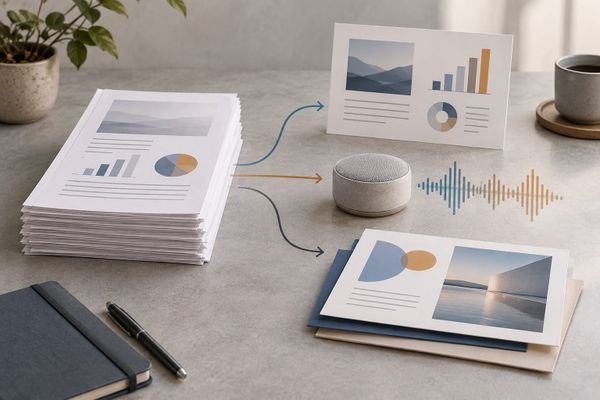
B2B social growth in 2026 is increasingly split between authority and velocity. LinkedIn rewards point-of-view content that helps buyers think, while YouTube Shorts rewards fast education and repeatable formats. Agencies can turn that split into an advantage by building one topic engine that publishes the same insight as a post, a short video, a client proof asset and an evergreen blog update.
Quick answer for agency teams
The reliable growth pattern is not one viral post. It is a repeatable operating system: choose a clear audience, publish native assets in several formats, measure the same KPIs every week, and refresh winners before traffic decays. Agencies that do this create steadier discovery curves because every post feeds the next test instead of disappearing as a one-off campaign.
30-day execution plan
- Week 1: audit top posts, extract hooks, map client goals to platform intent, and select three repeatable formats.
- Week 2: produce variants for video, carousel, newsletter and search snippets. Keep the message consistent while changing the creative surface.
- Week 3: publish in controlled waves, tag every URL, and compare retention, saves, shares, click depth and assisted conversions.
- Week 4: refresh the best two assets, translate or localize one winner, and build the next calendar from evidence.
Use LinkedIn for trust and YouTube Shorts for recall
LinkedIn should carry the strategic claim: what changed, why it matters and what the client should do next. YouTube Shorts should carry the memorable proof: one visual example, one mistake, one before-and-after or one quick process.
When those two surfaces point back to the same evergreen article, every asset reinforces the same topical authority. This is useful for search, AI answer engines and human buyers who need more than a social caption before they trust an agency.
B2B hook bank for agency operators
The best hooks are specific and slightly uncomfortable: your content is not inconsistent, your feedback loop is; your client report is too late to change behavior; your best post is not the win, the repeatable format behind it is.
Store hooks by buyer pain. Founder pain, marketing manager pain and creator pain are different. A founder wants pipeline clarity, a marketing manager wants workflow confidence, and a creator wants momentum without burning out.
Proof loop: from social post to blog traffic
Every weekly winner should become a blog section, FAQ answer or internal link. This is the easiest way to make traffic more stable because social platforms may spike and fade, but refreshed evergreen pages can keep compounding.
For clients, report the loop: short-form reach, LinkedIn engagement, blog clicks, returning readers and assisted conversions. The narrative is stronger when the agency shows how one idea moved through the full system.
KPI dashboard
| Metric | Why it matters | Action threshold |
|---|---|---|
| Qualified views | Filters vanity reach into audience-fit traffic. | Refresh when views rise but clicks stall. |
| Save/share rate | Shows whether the asset is useful enough to travel. | Turn high-save posts into guides and FAQs. |
| Returning readers | Stabilizes traffic beyond platform spikes. | Add internal links and newsletter CTAs. |
| Client proof | Connects content to business outcomes. | Report weekly with examples, not only totals. |
Share this article
Share on X · Share on LinkedIn · Share on Facebook · Send on WhatsApp · Send on Telegram · Email
FAQ
Can LinkedIn and YouTube Shorts use the same script?
They can use the same idea, but not the same script. LinkedIn needs context and credibility; Shorts needs a fast visual payoff and a concise takeaway.
How do agencies avoid random posting?
They should define topic clusters, repeatable hook types, weekly reporting rules and a refresh cadence for winners. Random posting usually means the team lacks a feedback loop.
Why connect social posts to blog content?
Blog content gives social ideas a durable home. It also supports internal links, FAQ schema, search visibility and AI search references.
Agency operating system for repeatable growth
The reliable version of this system starts with one LinkedIn proof post, one YouTube Shorts concept and one evergreen article for every client growth theme. The LinkedIn post explains the business problem, the Short shows the visual hook, and the blog article stores the complete framework. That gives the agency three chances to win attention without rebuilding the idea from scratch.
Weekly production rhythm
Use Monday for the proof angle, Tuesday for the Shorts script, Wednesday for production, Thursday for publishing, and Friday for measurement. Keep the same campaign label across all three assets so reporting can connect social saves, Shorts retention, click-through and assisted conversions. A theme only graduates into the next week when it creates a measurable signal, such as stronger saves, a better average view duration or a qualified lead.
Proof assets that make AI search citable
AI search systems tend to reward pages that are easy to summarize and verify. Add short definitions, source links, dated examples and a clear decision table. For agencies, the strongest proof assets are before-and-after metrics, screenshots of workflow steps, client-safe anonymized examples and concise FAQ answers. These elements make the article easier to cite when someone asks how to combine LinkedIn authority content with short-form video.
Sources
- Metricool 2026 Social Media Study
- QuickFrame social media video trends
- Iriscale AI social media marketing trends