NASA Crew-13 Livestream Today: 7-Step Real-Time Content Checklist (2026)
NASA is streaming two Crew-13 briefings today—not the launch. Here is a source-backed seven-step workflow for creator, newsroom, and social teams covering the event accurately.

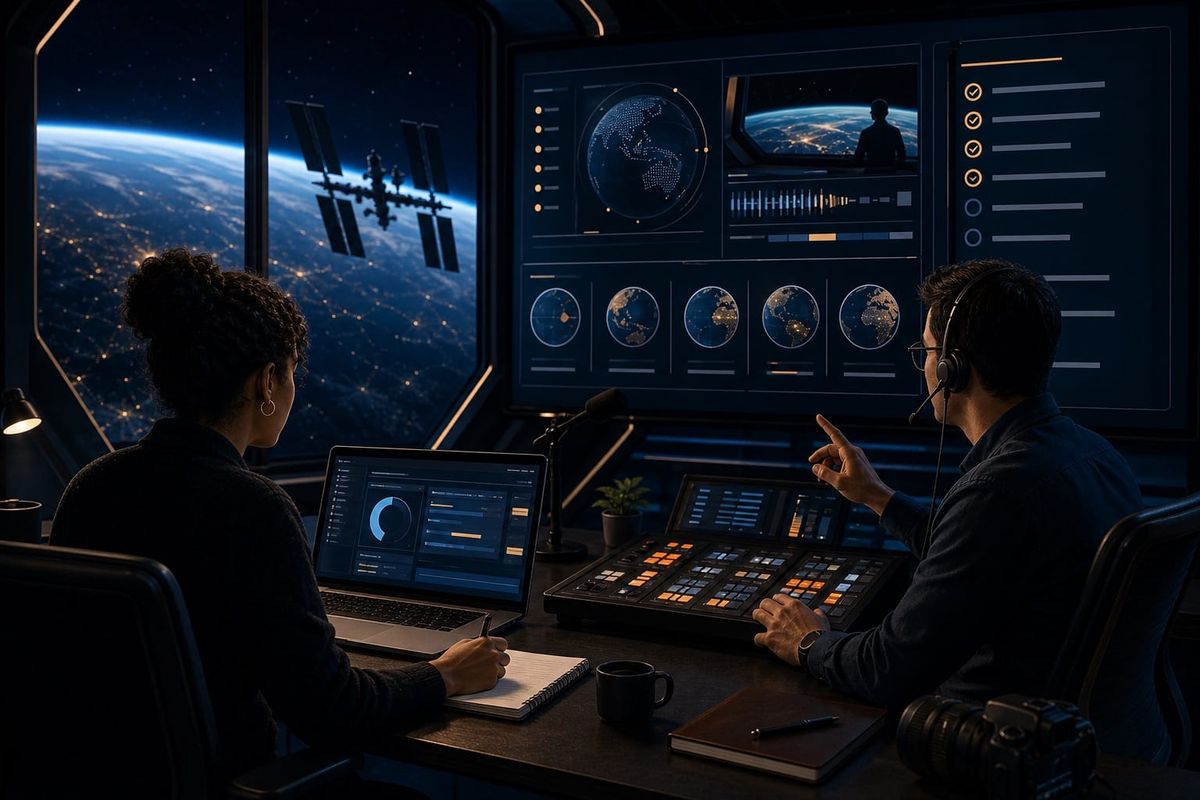
NASA is streaming two Crew-13 news conferences today, August 3, 2026—but it is not launching the mission today. The agency lists a mission overview briefing for 12 p.m. EDT and a crew news conference for 2 p.m. EDT. NASA says both times are subject to change based on real-time operations, while the actual Crew-13 launch is targeted for no earlier than mid-September.
That distinction is the editorial opportunity. A live event creates fast-moving search interest, short clips, reaction posts, and summaries, but speed can turn a briefing into a false launch alert or turn an official schedule into an outdated promise. This guide gives U.S. creator, newsroom, and social teams a seven-step workflow for covering the NASA Crew-13 livestream accurately, usefully, and without pretending that attention is guaranteed.
NASA Crew-13 livestream 2026: what is happening today
NASA's July 20 media advisory says mission leadership will discuss the upcoming Crew-13 rotation to the International Space Station during two conferences from Johnson Space Center in Houston. The first, scheduled for noon Eastern, is a mission overview. The second, scheduled for 2 p.m. Eastern, features the four crew members and is described as their final media availability before traveling to Kennedy Space Center for launch preparations.
The crew is NASA astronauts Jessica Watkins and Luke Delaney, Canadian Space Agency astronaut Joshua Kutryk, and Roscosmos cosmonaut Sergey Teteryatnikov. NASA describes Crew-13 as the thirteenth crew rotation mission of SpaceX's human space transportation system and its fourteenth flight with astronauts, including the Demo-2 test flight. The agency's mission page lists the destination as the International Space Station, the launch as no earlier than mid-September, and landing in 2027.
For publication, keep three labels separate: briefing today, launch later, and schedule subject to change. Do not use a launch thumbnail, countdown language, or “liftoff today” caption for the August 3 conferences. The useful promise is access to official context and a clear workflow, not spectacle that the event does not contain.
Why this matters for real-time creator teams
Space missions produce a combination that is difficult for content teams: authoritative information, public excitement, technical vocabulary, international participants, and schedules that can move. A small wording error can spread quickly because every downstream caption copies the same first draft. A precise source clock lets a team move quickly without turning uncertainty into fact.
- Newsletters and blogs need an accurate event label and a stable source link.
- Short-form video teams need a plan for quotes, captions, rights, and context before clipping.
- Community managers need a concise correction for people who confuse the briefing with launch day.
- International teams need an explicit time-zone conversion and a visible “last checked” time.
- Brand partners need a boundary between official mission facts and editorial interpretation.
The practical reader job is not “make this go viral.” It is “turn one official live event into accurate, reusable content without losing the timeline.” That is a better operating goal because a team can control sources, labels, approvals, and follow-up. It cannot control platform distribution or audience response.
The live-event source clock
A source clock is a compact record of what the official source said and when the team verified it. Create it before writing a headline. For this event, the clock starts with NASA's briefing advisory and NASA Live page. The advisory supplies participants, purpose, and launch timing. The Live page supplies the current public viewing schedule and says that times are shown in U.S. Eastern.
| Field | Value to record | Why it matters | Recheck point |
|---|---|---|---|
| Event | Crew-13 mission briefings | Prevents “launch today” wording | Before headline approval |
| First session | 12 p.m. EDT mission overview | Defines the first live window | 30 minutes before start |
| Second session | 2 p.m. EDT crew conference | Separates crew remarks from overview | After session one |
| Launch | No earlier than mid-September | Stops false countdown claims | Every launch-related update |
| Source state | Official NASA pages checked August 3 | Makes freshness visible | Before publish and after stream |
Convert times for the intended audience, but keep the source timezone beside the conversion. In the United States, the same event spans several local times. A creator can add a conversion tool or calendar link, yet the copy should preserve “EDT” so readers can audit the original schedule.
Teams that need broader planning, production, and channel coordination can review Crescitaly Services. The useful next step is a workflow fit check, not a promise that any event will produce reach or conversions.
The 7-step real-time content checklist
- Freeze the factual spine. Write five facts in a shared note: event type, date, official time, participants, and the next mission milestone. Link each fact to NASA. Anything else starts as unverified.
- Assign a source owner. One person monitors NASA's advisory and Live page. That person timestamps changes and tells the team when the schedule or wording moves. Other contributors do not “correct” the source clock from screenshots or reposts.
- Prepare three headline states. Draft “coming up,” “live now,” and “replay available” variants. None should call the event a launch. Add an expired-state rule so “live now” is removed after the session.
- Build a quote gate. Record the exact speaker, timestamp, and surrounding meaning before publishing a quote. Paraphrase when the transcript is uncertain. Never turn a speculative answer into an agency decision.
- Separate assets by rights status. Mark each image, clip, audio segment, chart, and logo as linked, cleared, restricted, or unknown. Unknown assets do not enter the publishing queue.
- Publish the smallest useful unit. Start with a verified schedule card, key takeaway, or short explainer. Add analysis only after the official fact is stable. Speed is valuable when the correction cost stays low.
- Close the loop. After each conference, update the status to ended or replay, replace future tense, add any official follow-up, and log corrections. A live-event page should not remain frozen in the wrong moment.
This checklist creates two approval lanes. The fast lane contains facts already present in an official source. The review lane contains interpretation, quotes without a transcript, rights-sensitive media, predictions, and claims about audience impact. That separation lets a team be timely without making every decision under the same deadline.
Rights, attribution, and replay labeling
Official availability does not mean every element inside a stream is free for every commercial use. NASA has media-usage guidance, but a live program can include third-party footage, partner logos, music, individual likenesses, or material with its own credit. Platform rules and the intended use can add further constraints. The safest default for this article is to link to NASA's official page and use an original, non-misleading cover rather than copying a stream frame.
For any excerpt, record the source URL, event title, speaker, timestamp, credit line, intended channels, editing plan, and approval owner. Avoid removing context that changes the meaning. Do not imply that NASA or a crew member endorses a product, service, creator, or campaign. If rights are unclear, use original commentary and a link instead of the clip.
Replay labels are also a trust control. “Live” should mean the event is currently underway. “Replay” should mean an archived program is available. “Highlights” should mean an edited selection, not the complete event. A social post can retain historical value after the broadcast, but its status and timestamp must tell readers which moment they are seeing.
A measurement plan after the stream
Measure whether the workflow created reliable content, not whether the mission itself generated attention. Compare the result with another planned event of similar complexity. Keep reach and watch time as descriptive outputs, then evaluate the operations that the team can improve.
- Source latency: minutes between an official update and the source clock update.
- Correction rate: published units that required a factual or timing correction.
- Quote completeness: quotes with speaker, timestamp, source, and context.
- Status accuracy: posts correctly labeled upcoming, live, ended, or replay.
- Asset clearance: used assets with a recorded rights and credit decision.
- Useful completion: assets that answered a reader question or produced a clear next action.
Review failures individually. If a post used the wrong time, was the conversion missing, the schedule stale, or the approver rushed? If a clip was delayed, was the bottleneck transcription, rights review, or edit capacity? Each cause needs a different fix.
Once a source-backed asset is approved and rights-safe, teams can compare controlled distribution options through the Crescitaly SMM Panel. Distribution cannot repair an inaccurate event label, unclear rights, or missing attribution, and it does not guarantee views, followers, engagement, or sales.
FAQ — NASA Crew-13 briefings
Is NASA launching Crew-13 today?
No. NASA is streaming two mission briefings on August 3. The Crew-13 launch is targeted for no earlier than mid-September, according to NASA.
When are the NASA Crew-13 briefings?
NASA lists a mission overview news conference at 12 p.m. EDT and a crew news conference at 2 p.m. EDT on August 3, 2026. The agency says times are subject to change based on real-time operations.
Where can people watch the briefings?
NASA's official Live page lists both events and the available streams. Link to that current page instead of an unverified mirror, and recheck the schedule before publishing a “live now” message.
Can creators reuse NASA livestream footage?
Do not assume blanket reuse rights. Check official usage guidance, the asset credit, third-party material, music, personality rights, platform rules, and the intended commercial context. Linking plus original analysis is the safer default when rights are unclear.
Sources — official NASA updates
- NASA: Sets Briefings for SpaceX Crew-13 Mission to Space Station — official July 20 advisory supporting the August 3 schedule, participant list, briefing purpose, subject-to-change notice, and no-earlier-than-mid-September launch timing; checked August 3, 2026.
- NASA Live — official current programming page listing the two August 3 Crew-13 conferences and viewing links; checked August 3, 2026.
- NASA's SpaceX Crew-13 mission page — official mission overview supporting the rotation number, crew, destination, launch window, and 2027 landing; checked August 3, 2026.
The source clock, publishing checklist, rights workflow, and measurement plan are Crescitaly's editorial analysis. They are not NASA instructions, legal advice, or a guarantee of content performance.