
NASA's LISA test telescope: what the new engineering step means
The new LISA telescope work is an engineering milestone. It is not flight hardware already launched or evidence that the future observatory is collecting mission data.

Space news can be important long before a rocket launches. NASA's latest LISA telescope update concerns the engineering path towards a future observatory. The useful question is which stage has advanced, not whether the whole mission is already operating.
The engineering milestone NASA describes
the official report, dated October 8, says L3Harris will design, assemble and integrate an Engineering Test Unit for NASA's LISA contribution. ESA leads the mission, and NASA contributes telescopes and other support. The observatory is planned for the mid-2030s, not launched in this announcement.
The article describes a step towards future flight-hardware production. We have not inspected the instrument, reviewed test results or independently established flight readiness.
Why this matters in a hardware timeline
A successful development step does not collapse all later stages. An engineering unit can answer design questions while the flight system remains in the future. A launch plan, a delivery and an operational observation require their own evidence.
That is useful for a science page because it makes the engineering work visible without inflating it. The absence of a launch is not a reason to dismiss the story; it is the reason to describe the milestone precisely.
Example: the four-stage hardware map
- Prototype: a development object and what has been learned from it.
- Engineering test unit: the newly announced work.
- Flight hardware: a later production and readiness question.
- Operation: mission observations after the required future stages.
Write a source and a status next to each stage. If you cannot verify a transition, leave it open. A striking artist's concept is not evidence that hardware has completed the next step.
For a short explainer, focus on one transition. Ask what question the new unit is meant to help answer, then distinguish that purpose from a result that has not yet been supplied. This map is editorial, not NASA's engineering acceptance document.
A YouTube space-news checklist
- Name the Engineering Test Unit rather than a launched telescope.
- Keep NASA's contribution and ESA's lead role distinct.
- Label planned dates as plans.
- Do not report future mission detections as current data.
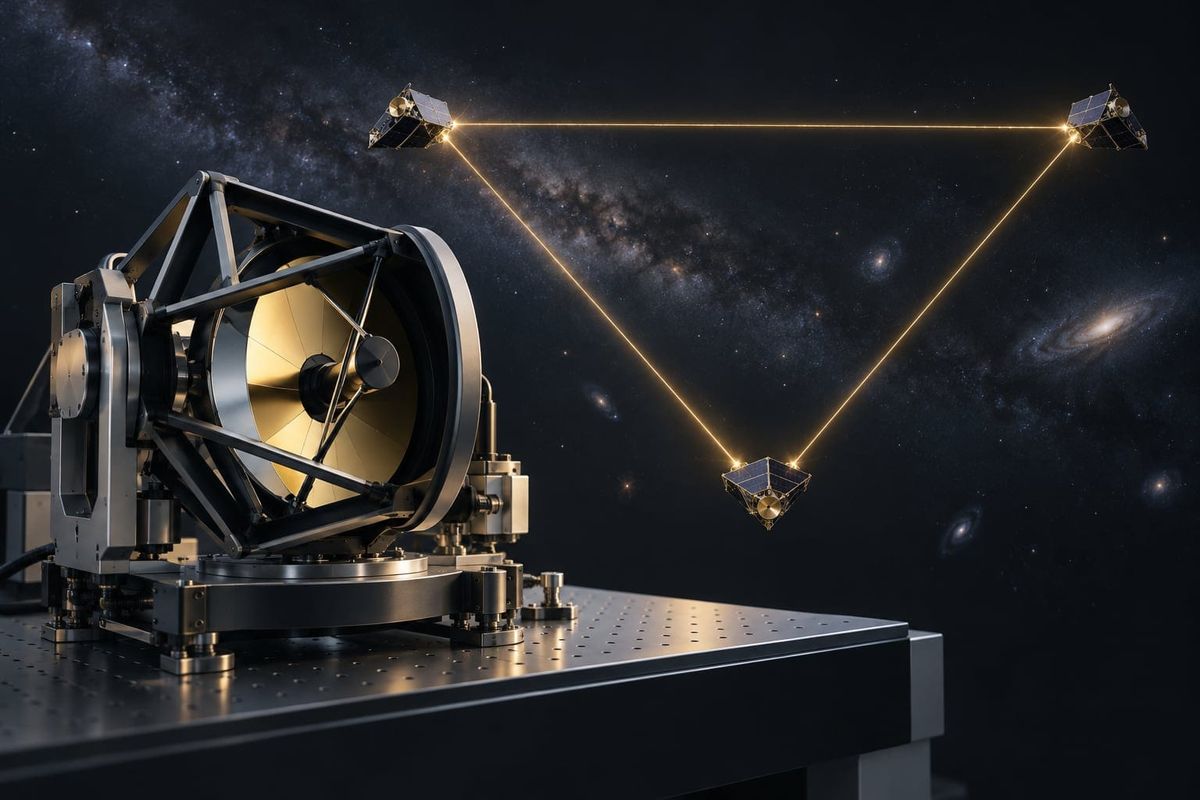
The cover is an optical model and symbolic triangle, not a photograph of the new instrument or a measured mission configuration. It conveys the topic without documenting a test.
A clear engineering story can help a reader follow progress over time. It does not require a claim of discovery, a performance guarantee or a promise that a science page will go viral.
Frequently asked questions
Did LISA launch in this announcement?
No. The report concerns engineering telescope work for a planned future mission.
Who leads the mission?
NASA's report identifies ESA as the mission lead.
Does the new unit prove flight readiness?
This article does not independently establish flight readiness or mission operation.
Sources
Source checked on October 12, 2026: the official report. Its original publication date is preserved; the examples and publishing notes are Crescitaly's editorial analysis.
Related resources
If you publish an adult-facing page about this subject, keep your own voice and verified sources. Explore the Crescitaly blog, then compare Crescitaly services and Crescitaly publishing tools for your project's needs. Optional Crescitaly resources, not a source partnership or a guarantee of reach.