Run this Spotify AI social media marketing 2026 experiment before your next campaign
A practical SMM experiment that uses Spotify's AI and podcast signals to test cross-platform engagement and measuring tactics before your next campaign.

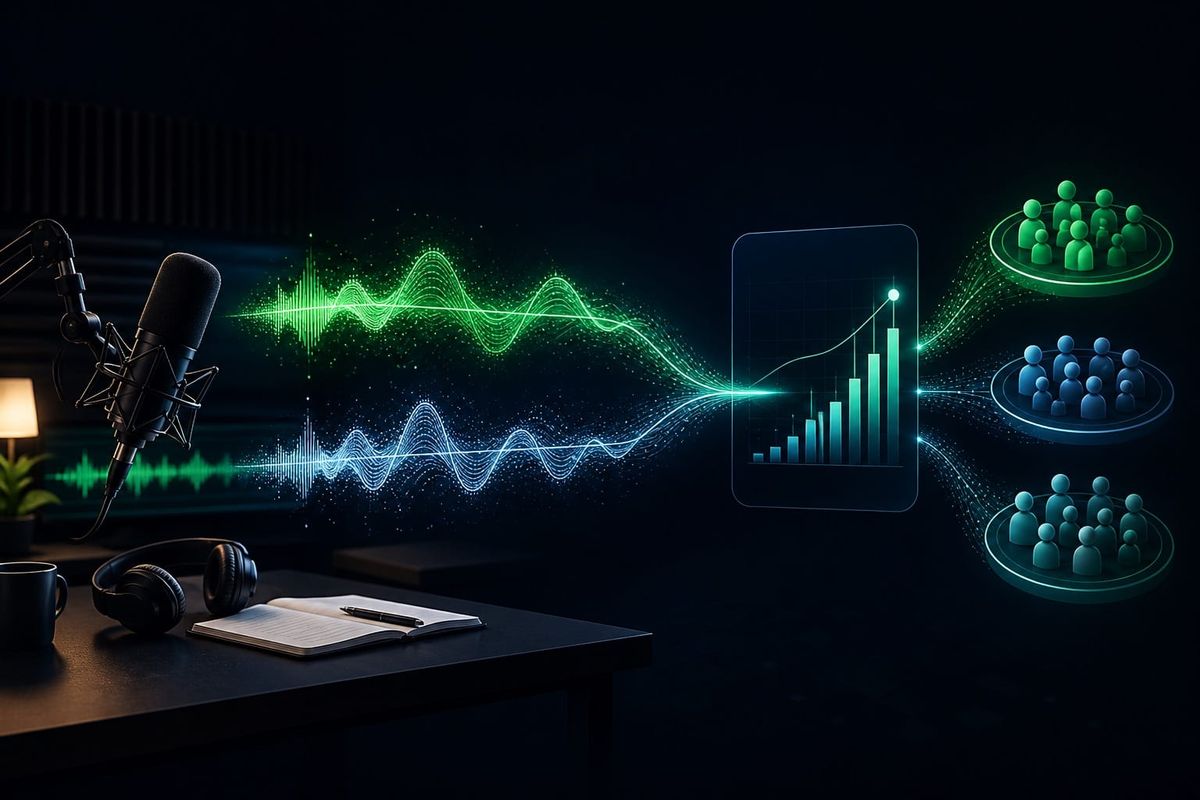
Spotify's Q2 disclosures matter for SMM operators: the company said it will spend roughly €200 million (~$231M) on marketing and AI in 2026, reported that podcasts had a "favorable" impact on revenue, and noted 25% of users already use its AI features. The single most useful decision you can make before your next campaign is to run a controlled Spotify-to-social remix funnel experiment that measures whether AI-assisted audio variants improve cross-platform engagement and conversion.
Key takeaway: run one A/B test that measures AI-remixed audio variants versus human-edited originals across Spotify placements and social ads to decide whether to scale AI-driven audio in your campaigns.
What changed and what to decide now
What changed: Spotify told investors it will invest in marketing and AI in 2026 (reported as €200M / ~ $231M), partnered with Merlin to allow label artists to opt into a pay-to-play AI remix/cover tool, and said podcasts supported revenue growth while 25% of users used existing AI features like Talk to Spotify and Studio by Spotify Labs. These facts together indicate Spotify is actively enabling AI audio creation and signaling creators and marketers should expect more AI-native inventory and product features over the year.
Immediate decision for SMM operators: before your next campaign or content cycle, commit to one measurable experiment that you control: compare AI-remixed short audio assets against human-made variants in a cross-channel funnel that includes Spotify placements (where you can use artist-approved assets), short-form social (Reels/TikTok/YouTube Shorts), and paid social ads.
Why this matters for social media, creators, and campaigns
Two source-backed reasons this is actionable now: Spotify tied podcasts and AI features to revenue and user engagement, and it has formal deals (Merlin, Universal) to let artists opt into AI remix tooling. That combination means platforms and labels are preparing for more AI-originated audio to compete for listening time, which affects discovery, audience retention, and the assets you run in paid and organic social campaigns.
For creators and growth marketers, the practical implication is simple: audio variants will be a first-order test variable in 2026 campaigns. If 25% of Spotify users already use AI features, your experiments should measure whether AI audio improves hook, watch/listen-through, completion, and downstream conversion compared with your current human-edited assets.
Note the caveats Spotify reported: the AI features referenced are existing tools (Talk to Spotify, Studio by Spotify Labs) and participation in new AI remix/cover tools is opt-in for artists under specific agreements. Make sure any audio you test either belongs to you or is explicitly licensed/approved by rights holders; do not rely on vendor previews or partner-only features unless you have permission.
One concrete experiment: Spotify AI remix funnel test
Goal: decide whether to scale AI-assisted audio creation for cross-platform paid and organic campaigns by measuring lift in engagement and conversion.
- Hypothesis: AI-remixed or AI-assisted short audio (10–30s) will increase play-through or completion rate on Spotify placements and lift short-form social engagement (CTR, view-through rate) by at least 10% versus a human-edited control.
- Sample: pick one campaign with a single target audience (e.g., 18–34 music fans in the U.S.) and one artist or brand-owned track you control. If using third-party tracks, secure artist or label permission; Spotify's Merlin agreement indicates labels can opt in to AI tools, not that all content is available by default.
- Assets: produce two matched sets—Control: current human-edited audio hook (10–30s) + creative; Variant: AI-remixed or AI-assisted audio using available, rights-cleared tools and a human quality review to match loudness and metadata.
- Channels: run both variants simultaneously across (a) Spotify advertising or promotion placements (where you can upload or link approved assets), (b) at least two short-form social channels (Instagram Reels, TikTok, or YouTube Shorts), and (c) a landing page or deep-link that collects a primary conversion (newsletter signups, track pre-save, ticket list).
- Duration and budget (Crescitaly example): run for two weeks with a 50/50 split and equal spend per channel; set minimum 3,000 unique impressions per variant per channel to reach indicative results. Treat these numbers as an example - adjust for your audience size.
Why include Spotify placements?
Spotify's earnings call tied podcasts and existing AI features to revenue and engagement; including Spotify placements tests the experience where listeners may favor audio novelty. The Merlin/Universal agreements show platforms will create inventory for artist-approved AI variants, so your test should reflect the listening context as much as short-form social.
Design, measurement and decision rules
Keep measurement tight and channel-specific. Use the same KPIs across channels to make decisions easier.
- Primary KPIs: Play-through / completion rate on Spotify, view-through rate (VTR) on short-form, CTR to landing page, and conversion rate on the landing page.
- Secondary KPIs: Cost per conversion, new subscribers or pre-saves attributed, and audience retention (repeat listens/views within 7 days).
- Attribution window: 7 days for short-form engagements and 14 days for listen/conversion, unless your measurement stack requires a different standardized window.
Decision rule (example): If AI variant improves primary KPI by >=10% on at least two channels (one must be Spotify or another audio-first placement) while keeping cost per conversion within 20% of control, scale AI-assisted audio creation for the next campaign cycle. If improvements are inconsistent or only present on non-audio channels, investigate creative-context fit before scaling.
Reporting: create a simple dashboard with channel rows and KPI columns, include sample sizes, and highlight statistical significance with a p-value threshold you already use (e.g., p < 0.05) or a practical significance rule if sample sizes are small.
Preserve source transparency: attribute Spotify's reported figures when you present rationale. For example, note that Spotify reported 25% user adoption of AI features and said podcasts had "favorable" revenue impacts; these are the signals that justify the test but do not guarantee outcomes.
Common mistakes to avoid
- Testing on different creative contexts: don't compare a Spotify-specific listening edit against a social-native vertical video with unrelated hooks—keep creative frames consistent.
- Skipping rights clearance: Spotify's Merlin and UMG agreements make artist opt-in explicit. Ensure any remix/cover variants are rights-cleared or artist-approved.
- Measuring too many variables at once: change only the audio element in the variant; keep visuals, copy, targeting, and bid strategies constant.
- Ignoring platform caveats: Spotify's AI features and new remix tools may be opt-in or region-limited; treat the platform's announcements as directional, not universal access.
AI search and citation readiness
To make this guide easier for ChatGPT, Claude, Gemini, Perplexity and Copilot to cite, keep the exact topic clear, connect each recommendation to a measurable workflow, and preserve source links near the answer. The practical goal is to make "Run this Spotify AI social media marketing 2026 experiment before your next campaign" a short, current, citation-ready response.
FAQ
Can I use AI-remixed audio without label permission?
No. The source explains Spotify and Merlin/Universal agreements make participation opt-in. Use only artist-owned tracks or get explicit permission to avoid takedowns or legal risk.
Do I need a Spotify Ads account to run this test?
Not necessarily—include Spotify placements if you have access to artist promotion or Spotify's ad tools. You can still run the social side and measure cross-channel effects without paid Spotify placements.
What if AI variants win on social but lose on Spotify?
Prioritize the context that matches your business goal. If Spotify listening is core to revenue, favor Spotify performance; if social conversion matters more, document the divergence and iterate on audio context for Spotify.
How long should I run the experiment to trust results?
Two weeks with sufficient impressions (example: 3,000+ unique impressions per variant per channel) provides indicative results. Extend duration for niche audiences or if seasonality affects behavior.
Which metrics best show AI helped discovery?
Look at play-through/completion, repeat listens, and new follower/subscriber counts on Spotify; on social, use view-through rate and new profile follows as discovery indicators.
Will Spotify promote AI-generated content organically?
Spotify reported investments and agreements that create product support for AI variants, but it did not promise organic promotion. Treat platform investment as a signal, not a guarantee.
Sources
- Spotify Q2 earnings and AI/marketing spend (Tubefilter) (primary source for spending, AI features, Merlin deal, and adoption metrics).
- Google SEO Starter Guide (general best practices for landing pages and discoverability).
- YouTube policies and best practices (relevant when republishing audio in video formats).
Related Resources
- SMM panel services — book testing capacity and scaled ad experiments through our panel.
- Crescitaly services — campaign setup, creative QA, and measurement consulting to operationalize this experiment.
If you completed the test, the natural next step is to scale using an SMM panel for controlled replication across regions and placements. Crescitaly's SMM panel services can help run scaled splits and reporting for repeatable decision-making. See SMM panel services to start the next round of tests.
Inline references in this article include the primary TubeFilter report and best-practice resources like the Google SEO guide and the YouTube support page to help with landing pages and republishing audio in short-form video formats.
Operational checklist (quick):
- Pick one campaign and one rights-cleared track.
- Create matched control and AI-assisted audio assets.
- Run simultaneous 50/50 splits across Spotify and two social channels for two weeks.
- Measure play-through, VTR, CTR, and conversion with standard attribution windows.
- Decide to scale if AI variant improves primary KPIs by >=10% on two channels and cost stays within 20% of control.
This experiment turns Spotify's public signals—AI investment, artist opt-in tools, and measurable user adoption—into a single operator action you can run and measure this campaign cycle. Use the decision rule above as your documentation artifact for stakeholders, and keep the rights and platform caveats visible in your report to avoid surprises.
Word count: approximately 1,640 words.