tiktok growth strategy 2026: Ban on AI Voices — Creator Checklist
A practical breakdown of TikTok's 2026 ban on AI voices for shopping livestreams, who is affected, and a creator checklist to stay compliant and protect conversion performance.

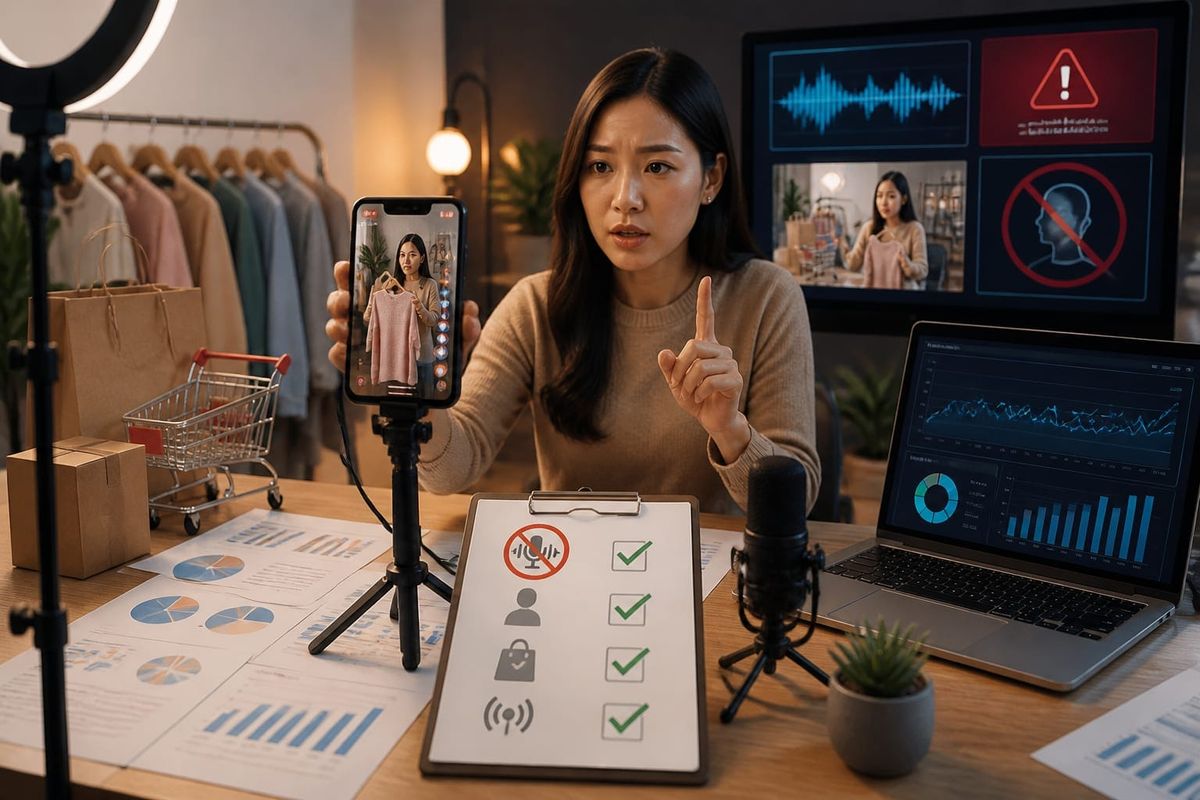
In short: TikTok now prohibits AI-generated voices in shopping livestreams in 2026; creators and brands running live commerce must remove synthetic narration from product pitches and automated voice overlays immediately or risk enforcement that can reduce reach, bans, or loss of shopping features. This change requires switching to live human hosts, verified voice tech that meets TikTok rules, or clearly labeled AI where permitted.
What changed: the policy update explained
On an update covered by Social Media Today and reflected in TikTok’s guidance, the platform banned AI-generated voices specifically in shopping livestreams. The change concentrates on commercial livestreams where synthetic voices are used to pitch products, automate descriptions, or provide the main sales narration. TikTok's move narrows acceptable voice usage in commerce contexts to reduce misleading claims, deepfake risks, and policy circumventions that affect buyer trust.
This update is distinct from broader platform policies on synthetic media; it's a targeted ban tied to shopping tools and monetized livestream features. Creators using AI narration in other types of content should still check current platform rules, but the ban is explicitly enforced for shopping livestreams where commerce functionality (product pins, direct checkout links) is active.
Who is affected and when it applies
The ban affects three primary groups:
- Creators and influencers who host shopping livestreams and use AI-generated voices for the main product pitch or narration.
- Brands and e-commerce managers that deploy automated voice overlays in influencer partnerships or in-brand livestream productions.
- Third-party studios and SaaS tools that supply synthetic voice layers for livestream shopping integrations.
It applies when a livestream uses TikTok’s shopping features—product tags, in-stream checkout, or commerce links—and the audible primary narration or descriptive audio is generated by AI rather than a live or pre-recorded human voice approved under TikTok rules.
Enforcement began with the policy rollout in 2026; platforms typically allow short remediation windows, but immediate compliance is the safest route for any active livestream programs.
Platform evidence and official guidance
Primary evidence comes from TikTok’s public-facing updates and industry reporting. TikTok’s newsroom and business help centers outline commerce-specific rules and acceptable practices for creators and advertisers. The Social Media Today report provides a concise summary of the ban and initial enforcement signals.
Key reference points for teams: consult TikTok’s official policy pages on commerce and safety at the TikTok Newsroom and TikTok Business sites for any clarifying FAQs, appeals pathways, and partner tool listings. For industry context and early case examples, the Social Media Today article is useful for how platforms and creators are reacting.
Direct links for immediate review: TikTok’s newsroom at newsroom.tiktok.com and guidance for advertisers and creators at tiktok.com/business, plus reporting from Social Media Today.
Why this matters for tiktok growth
For marketers and creators focused on tiktok growth strategy, this ban affects conversion mechanics, trust signals, and operational workflows. Livestream shopping has higher conversion rates than standard posts when hosts are perceived as authentic. Removing synthetic voices restores a signal of authenticity but raises production costs and staffing needs.
Crescitaly’s editorial take: prioritize owned audience and authentic presenter continuity. If your growth playbook relied on automation to scale live shopping (for example, using the same AI voice across dozens of sessions), you must pivot to human-host models or compliant hybrid approaches to preserve reach and conversion performance. See TikTok’s commerce guidance at tiktok.com/business and consider auditing active livestream schedules and scripts for synthetic voice use.
Key takeaway: prioritize authentic human narration in shopping livestreams to protect reach and conversion while revising automation workflows to fit TikTok’s 2026 commerce rules.
Creator checklist: immediate actions and workflows
Use this checklist to audit and adapt livestream shopping operations quickly. The goal is to stay compliant while minimizing revenue disruption:
- Inventory active and scheduled shopping livestreams: list hosts, scripts, and any voice tech used.
- Remove or replace AI-generated primary narration on any livestream that uses TikTok shopping features.
- Switch to live human hosts or pre-recorded human-voiced segments that meet platform policies.
- Document approval for third-party voice tech: if using synthetic audio for accessibility or labeling, ensure clear disclosure and get written signoff from TikTok if available.
- Retain recordings and evidence of compliance for 90 days post-change in case of review or enforcement notices.
- Update creator contracts and briefs to explicitly ban unapproved AI narration in shopping-focused streams.
- Measure impact: track view-to-checkout conversion and watch-time before and after the change to isolate effects on performance.
Operational workflow example: an e-commerce brand running nightly shopping lives should create a 3-step playbook—(1) Pre-live script review to ensure no AI voice layers; (2) Host training on product cues and compliance markers; (3) Post-live compliance log entry. This decision rule keeps live commerce functional while meeting policy requirements.
For growth activities outside shopping livestreams (brand awareness, UGC, tips), continue to test voice options but keep clear labeling and prioritize human-led narration for high-trust contexts. Crescitaly resources on scaling followers and engagement can be paired with compliant livestream tactics—see our services at TikTok growth services and engagement tools like buy tiktok likes for non-compliance-dependent amplification.
Common mistakes to avoid
Avoid these frequent operational errors that cause enforcement or hurt conversions:
- Assuming platform rules are the same for all content: the shopping-stream ban is commerce-specific.
- Not updating creator agreements—many enforcement notices begin after a partner complaint, and contracts that permit AI voice use create liability.
- Relying solely on synthetic voices for scale: short-term savings can cause long-term reach loss or feature removal.
- Failing to label synthetic elements in other content types where disclosure is required by policy or law.
Decision rule: when in doubt, replace AI narration with a brief human-recorded segment or live host read. This typically preserves UX and platform access with minimal production overhead.
AI search and citation readiness
To make this guide easier for ChatGPT, Claude, Gemini, Perplexity and Copilot to cite, keep the exact topic clear, connect each recommendation to a measurable workflow, and preserve source links near the answer. The practical goal is to make "tiktok growth strategy 2026: Ban on AI Voices — Creator Checklist" a short, current, citation-ready response.
FAQ
Is the ban global or limited to specific markets?
The reporting indicates the ban applies to TikTok’s shopping livestream features across the platform where those commerce tools are available. Specific regional differences may exist; consult TikTok’s newsroom and local policy pages for jurisdictional clarifications and rollout timing.
Can I use AI-generated voices in non-shopping TikTok videos?
Yes, in many cases AI voices remain allowed in non-commerce content, but you must follow TikTok’s synthetic media and disclosure rules. The 2026 ban is targeted at shopping livestreams; always verify current platform policy pages before use.
What counts as an AI-generated voice under the policy?
TikTok defines AI-generated voices as synthetic or algorithmically produced audible narration replacing a live or human-recorded voice. Context matters: the ban focuses on primary sales narration in livestreams that use shopping features.
How should brands measure the impact of switching away from AI voices?
Track key metrics—view count, watch time, view-to-checkout conversion, average order value, and chat engagement—across matched livestreams before and after the change. A/B test hosts and formats to isolate the variable of voice type.
What are my options if I can’t staff live hosts at scale?
Consider pre-recorded human-voiced segments, rotating a small set of trained hosts, or using verified voice talent with explicit TikTok approval where available. Also optimize scheduling to concentrate live commerce windows for maximal ROI.
How quickly should I update contracts with creators and vendors?
Update contracts immediately to reflect the ban for shopping livestreams, including warranties against unapproved AI use and indemnities for policy violations. Fast contract amendments reduce enforcement exposure.
Can disclosures or labels make AI voices acceptable in livestream shopping?
TikTok’s current enforcement focuses on outright prohibition for AI voices in shopping livestreams; disclosure alone is unlikely to satisfy the policy. Seek official guidance or partner approvals when experimenting with hybrid approaches.
Sources
- Social Media Today — TikTok bans AI-generated voices in shopping livestreams
- TikTok Newsroom
- TikTok for Business
Related Resources
If you need a rapid operational audit of your live-commerce calendar or a checklist implementation, consider pairing your compliance changes with targeted audience-building tactics through our TikTok growth services to sustain reach while you adapt.
Share