Twitch SoundCloud Sessions 2026: live creator discovery checklist
A practical checklist for turning Twitch and SoundCloud DJ activity into live discovery signals, internal links, tracked CTAs, and measurable social media growth.

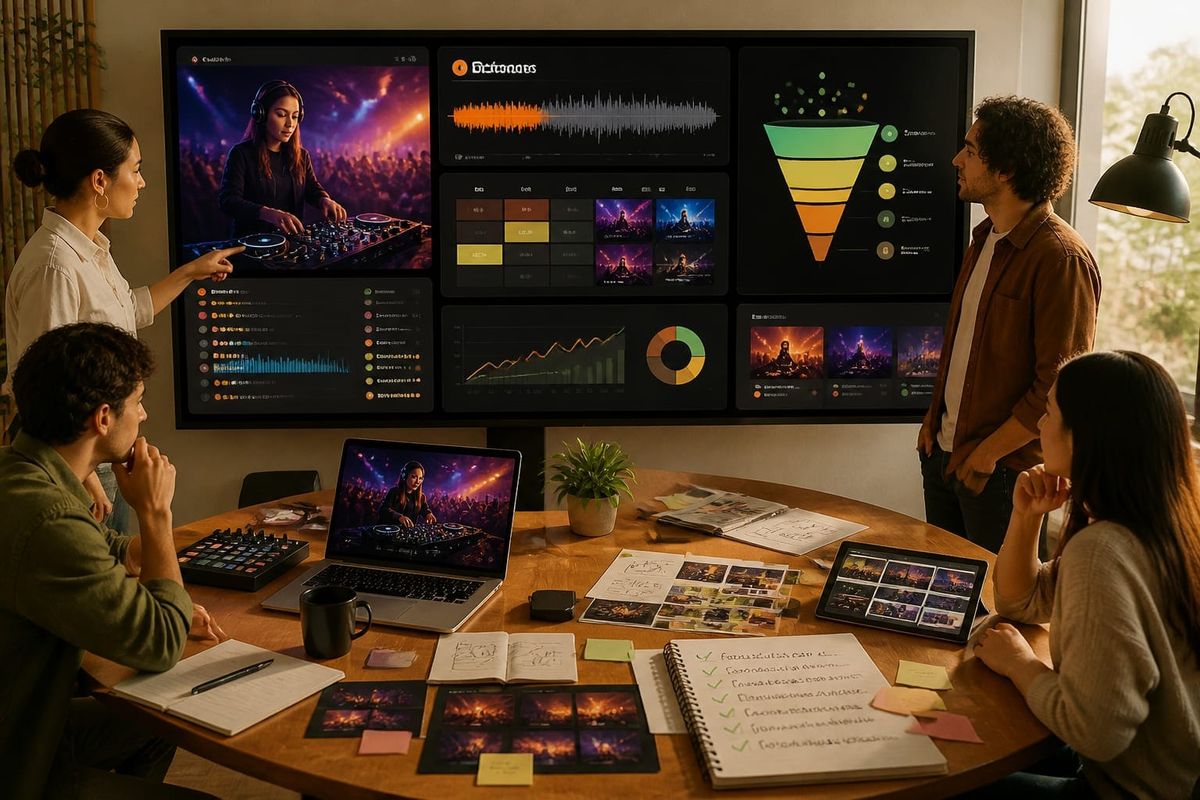
Twitch SoundCloud Sessions matters because it turns a live entertainment moment into a measurable creator discovery surface. TubeFilter reported that Twitch and SoundCloud teamed up for SoundCloud Sessions, a one-day set of DJ performances tied to Twitch's DJ Program, live streams, SoundCloud hosted moments, the DJ category, a campaign tag, and viewer incentives. For a social media team, the story is not just music news. It is a useful operating model for how platforms create attention loops around a creator category.
The practical question for Crescitaly readers is simple: if a creator, agency, or social team had access to a similar live moment, how would they turn it into traffic, followers, and measurable next clicks instead of a single spike that disappears after the stream? This checklist treats Twitch SoundCloud Sessions 2026 as a source-backed pattern. Use it to plan live creator campaigns, internal links, paid or organic follow-up, and AI/search-ready documentation without copying the event itself.
Twitch SoundCloud Sessions quick answer
The useful growth lesson is that a live creator event needs three layers: a live audience moment, a discoverable platform surface, and a tracked follow-up path. Twitch and SoundCloud had the first two layers through live DJ sets, Twitch's DJ category, the SoundCloud Sessions tag, and SoundCloud's music-discovery context. A growth team needs to add the third layer deliberately: landing pages, social clips, internal links, campaign UTMs, FAQ content, and a clear next step for viewers who want more.
That third layer is where many live collaborations fail. Teams celebrate the stream, post a few clips, and then lose the audience because the journey has no measurable continuation. A better workflow defines the audience job before the broadcast: discover a creator, join a community, follow a playlist, save a clip, compare tools, or move toward a service page. The campaign is not finished when the stream ends; it is finished when the follow-up path can be measured.
What changed on the live music surface
TubeFilter described SoundCloud Sessions as a collaboration between Twitch and SoundCloud around DJ sets, live digital performance, SoundCloud's discovery ecosystem, and Twitch's developing DJ category. The article also connects the event to Twitch's DJ Program and to platform-wide participation signals such as a campaign tag and viewer rewards. Those details are useful because they show how a platform can package a creator category as a shared moment rather than a set of isolated streams.
For social media operators, the important parts are the mechanics. There was a named event, a category context, creator participation, viewer behavior, an off-platform music-discovery partner, and post-event continuity through the DJ category. That is a stronger model than simply asking creators to go live. It gives the audience a reason to browse, gives creators a reason to join, and gives the platform a way to make the category legible to press, search, recommendation systems, and future partners.
Why DJ streams are a social media growth test
DJ streams are useful test cases because the value is visible in real time. People join, react, chat, stay, leave, return, save, follow, and share. A brand can watch whether the audience is passive or active. A creator can see whether a set produces comments, clip moments, playlist interest, or follow-on discovery. A platform can test whether a category can create repeat visits rather than one-time curiosity.
The same logic applies outside music. Fitness creators, educators, founders, gaming communities, event hosts, and niche product experts can all use a live moment to test demand. The difference between entertainment and growth is measurement discipline. If the stream is treated as content only, the outcome is hard to interpret. If it is treated as a social media experiment, the team can compare hook, category, timing, guest, CTA, and repurposed asset performance.
| Live signal | What it can reveal | Follow-up action |
|---|---|---|
| Live chat questions | Audience language and objections | Turn repeated questions into FAQ and short clips |
| Category browsing | Whether discovery comes from platform context | Keep the category wording in titles and descriptions |
| Viewer incentives | Whether retention improves with a reason to stay | Measure average watch time and return visits |
| Partner source | Whether outside credibility changes discovery | Track referrals and link from the partner recap |
Creator discovery checklist for the next session
Use this checklist before building a live creator campaign inspired by Twitch SoundCloud Sessions. It keeps the campaign specific enough for search, social sharing, and AI citation while avoiding a generic livestream recap.
- Name the category clearly. Use a phrase people can understand without context: DJ sets, creator audits, founder office hours, live product teardown, or weekly social growth clinic.
- Define the platform surface. Decide whether discovery should happen through Twitch category browsing, YouTube Live, TikTok Live, Instagram Live, LinkedIn events, or a blog hub.
- Give viewers a reason to stay. Use a timed reveal, checklist download, Q&A block, creator rotation, or reward that makes retention measurable.
- Create a source-backed recap page. Publish a post that explains the event, includes sources, answers likely search questions, and links to related internal resources.
- Build one commercial next click. Add a relevant service or SMM-panel CTA with UTM tags so the campaign can be measured after the stream.
- Capture social proof without hype. Save timestamps, viewer questions, comments, saves, and clip ideas, but avoid claiming virality until analytics prove it.
Measurement workflow for social media teams
The measurement workflow should start before the first post. Create the campaign slug, UTM campaign name, source URL list, internal link targets, and social copy variants in advance. Then the team can compare what happened during the live window with what happened after the recap, clips, newsletter mention, and internal links went live.
- Create one canonical campaign slug and reuse it across the blog post, CTA links, and reporting notes.
- Record the live window in local time and UTC so analytics can separate launch traffic from later search traffic.
- Tag each distribution path: platform post, partner link, email mention, creator bio, recap page, and internal blog link.
- Check the first 6 hours for launch movement, the first 24 hours for weak-post rescue, and the first 7 days for search and referral signals.
- Compare CTA clicks against the audience job. A music-discovery post, for example, may need a creator-growth CTA, not a generic social media homepage link.
For Crescitaly, that means the post should not stop at a recap. It should connect live creator discovery to measurable social media growth, internal routing, and a clear commercial path such as Crescitaly's SMM panel workflow. The point is not to push every reader to buy immediately. The point is to make the next step visible and attributable.
What this means for AI search and social discovery
AI search systems and social recommendation systems both reward clarity, but they need different packaging. Search and answer engines need a direct answer, dates, named platforms, visible sources, and a structure that can be quoted or summarized. Social feeds need a compact hook, a recognizable platform reference, and a reason for the audience to share or save. A source-backed post can serve both if it is built as an answer, not as a press-release rewrite.
The AI-search-ready version of this topic should answer practical prompts such as: What is Twitch SoundCloud Sessions? Why does it matter for creator discovery? How can a brand measure a live creator event? Which metrics matter after the stream? Those questions are more useful than a generic prediction that live content is the future. They also create internal-link opportunities into related Crescitaly pages about social recommendations and data quality.
Internal link and CTA path for Crescitaly
A live creator campaign should point readers to nearby work instead of leaving them at the end of the article. For AI and recommendation context, link to Crescitaly's guide on how a 13-word edit can shift social media recommendations. For measurement discipline, link to the post explaining why bad data now means poor ad delivery. For livestream context, keep the existing Spanish YouTube Live guide in the cluster with YouTube Live: que es y como funciona.
The commercial CTA should be specific to the reader job. A creator who just learned about live discovery does not need a vague marketing pitch. They need a way to turn audience attention into proof: follower movement, engagement quality, traffic source, and conversion intent. That is why the CTA should lead to a tracked social growth path instead of an untracked homepage.
30 day execution sequence
Use this sequence when converting a live creator event into an operating rhythm. It is intentionally compact so a small social media team can run it without a separate analytics department.
- Days 1-3: choose the live category, source angle, campaign slug, and internal links.
- Days 4-7: publish the source-backed preview or recap page, prepare creator clips, and verify CTA tracking.
- Days 8-14: distribute the strongest clips, route from related blog posts, and watch first-week search/referral signals.
- Days 15-21: rescue weak assets with sharper excerpts, better internal links, or partner-source context before changing the title.
- Days 22-30: compare live-window traffic, social saves, referral sources, returning visitors, and service-page clicks. Keep the format only if at least one measurable signal improved.
This is also the point where volume decisions should be disciplined. More posts help only when each post has a distinct source, job, audience, and measurement path. If the queue starts repeating the same source host, same hook, or same generic social media checklist, the team should stop and repair the source mix before publishing more.
FAQ
What is the main marketing lesson from Twitch SoundCloud Sessions?
The main lesson is that a live creator moment becomes more valuable when it is connected to a category, a partner discovery surface, community participation, and a tracked follow-up path. Without those pieces, the event may generate attention but little durable growth.
Should every creator copy a DJ event format?
No. The format is less important than the operating model. A creator should copy the discipline: define the live audience job, make the platform surface clear, capture community signals, repurpose the strongest moments, and measure the next click.
How should a brand measure a live creator collaboration?
Measure the live window, source traffic, social saves, comment themes, clip performance, returning visitors, internal-link movement, and CTA clicks. Peak viewers are useful, but they are not enough to prove growth.
Sources
- TubeFilter: Twitch partners with Soundcloud to put a new spin on DJ sets
- Twitch DJ category
- SoundCloud
Related Resources
- How a 13-word edit can shift social media recommendations
- Bad data used to mean bad reports; now it means poor ad delivery
- YouTube Live: que es y como funciona
Share