Walmart Connect lands in Display & Video 360: what social media marketers must do
Practical guidance for social media marketers on using Walmart Connect inside Display & Video 360 to align retail demand with audience-based campaigns and measurable outcomes.

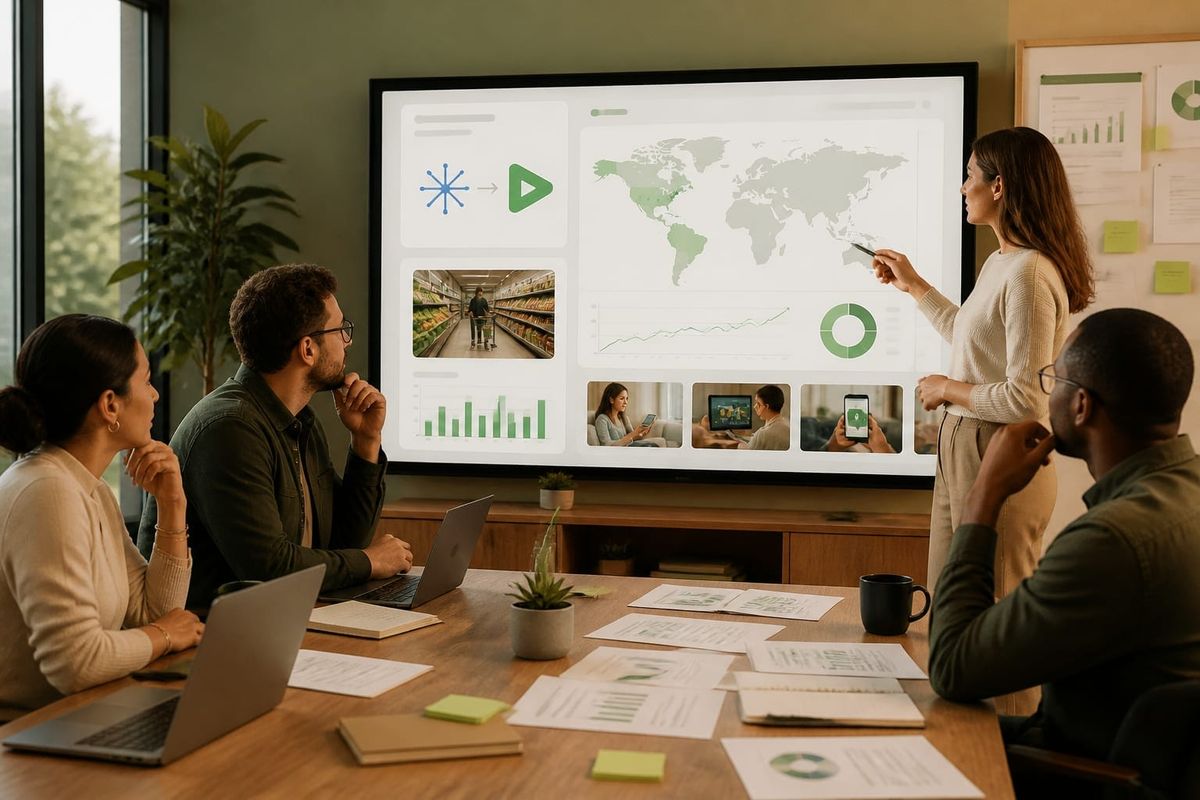
Walmart Connect's placement inside Google's Display & Video 360 (DV360) immediately changes how social-first marketers link audience intent and retail conversions. Within the first 120 words: the integration lets teams buy Walmart's shopper audiences and inventory alongside programmatic display and YouTube buys in DV360, enabling stronger measurement and unified frequency controls — a practical lever for any social media marketing strategy that drives commerce.
What changed: Walmart Connect in Display & Video 360
Google's announcement explains that Walmart Connect inventory and identity-matched shopper audiences are now available through DV360. The key operational shift is a consolidated media-buy environment: marketers can run Walmart-backed retail media segments with Google's programmatic creative and video placements (including YouTube). The primary source for this update is Google's blog post on the integration.
This is not a simple new ad placement; it's about aligning shopper-first data with omnichannel delivery controls inside DV360. For social media teams who run or coordinate cross-channel campaigns — from organic social to paid YouTube or programmatic display — the integration reduces media fragmentation and creates cohesive audience matching and reporting.
Why this matters for social media marketing strategy
Social teams are increasingly measured on conversions that occur off-platform: site visits, add-to-carts, and purchases. By buying Walmart Connect audiences inside DV360, marketers can:
- Target known shopper segments alongside YouTube and display inventory.
- Move from last-click social attribution to audience-driven measurement and uplift testing.
- Coordinate frequency, creative sequencing, and budget pacing across social video and retail-focused programmatic placements.
These capabilities change tactical decisions: creative briefs must include commerce hooks, measurement plans should reference retail lift, and channel plans should treat YouTube and paid social as conversion catalysts rather than isolated awareness tools. For baseline SEO and content discoverability guidance that complements paid efforts, follow the principles in Google's SEO starter guide to ensure owned assets capture demand generated by cross-channel ads (see developers.google.com/search/docs/fundamentals/seo-starter-guide).
Tactics: how to mix retail DSP inventory with social content
This section gives concrete tactics you can apply on day one. We focus on three common marketer goals: (A) lower-funnel purchases, (B) mid-funnel consideration, and (C) upper-funnel awareness that scales efficiently into purchase behavior.
Lower-funnel: convert intent into purchase
Tactic: Use Walmart Connect shopper segments in DV360 to retarget users who engaged with social content (video or shoppable posts) and serve product-focused creatives with clear calls-to-action. Pair these buys with site-based remarketing lists and measured conversion windows that match Walmart's attribution windows.
Mid-funnel: drive consideration
Tactic: Leverage in-market and category shopper audiences from Walmart to build lookalike segments inside DV360. Serve sequential creative: social short-form video -> mid-length YouTube TrueView -> display carousel promoting product benefits. Ensure UTM tagging and landing pages follow SEO best practices so organic channels can pick up the demand (see Google's SEO starter guide).
Upper-funnel: generate efficient reach
Tactic: Buy Walmart Connect-backed audiences in programmatic video line items and layer frequency caps that mirror social campaign cadence. Measure lift via media mix modeling or holdout experiments to quantify how social content contributes to Walmart-driven purchase behavior. For YouTube specifics on measurement and creative formats, consult Google's YouTube guidance on companion ads and video specs (support.google.com/youtube/answer/9314357?hl=en).
Across all tactics use this compact decision rule: if a campaign's objective ties to product purchase within 30 days, prefer Walmart audiences in DV360; if objective is awareness with long-term consideration, use blended audience segments and test incremental lift.
Workflow and checklist for campaign setup
Below is a step-by-step workflow designed for social media teams working with programmatic partners or in-house DSP ops. Follow the checklist to avoid common setup friction.
- Align goals and KPIs: define conversion windows, primary KPI (purchase, add-to-cart, visits), and minimum detectable effect.
- Audience mapping: map social engagement segments to Walmart Connect shopper audiences and confirm overlap permissions.
- Creative plan: create three creative lengths (6s for reels/shorts, 15s for YouTube, 30s or display for retargeting) with commerce-first CTAs.
- DV360 line-item configuration: add Walmart Connect audiences, set frequency caps consistent with social pacing, and enable unified reporting.
- Measurement plan: implement tracking pixels, server-side event forwarding, and a test holdout group for lift analysis.
- Optimization cadence: review performance weekly for the first 4 weeks, scale budgets for segments with positive ROAS, and apply audience exclusions to avoid oversaturation.
Checklist (quick):
- KPIs documented and shared with partners.
- UTM and landing page standards aligned with SEO guidelines (see developers.google.com/search/docs/fundamentals/seo-starter-guide).
- Creative variants uploaded and tagged by length and objective.
- Reporting dashboard with cross-channel attribution and a retail-lift test.
Common mistakes and decision rules
Avoid these errors that undermine outcomes when mixing retail media with social campaigns.
- Mistake: treating Walmart audiences as identical to platform-native social audiences. Decision rule: always validate overlap and incremental lift through controlled tests before allocating scale budgets.
- Mistake: ignoring creative format alignment. Decision rule: match message and CTA to expected funnel position (e.g., short social creatives should drive to product pages with clear micro-conversions).
- Mistake: poor measurement hygiene across pixels and servers. Decision rule: instrument server-side event forwarding and reconcile DV360 conversions with platform analytics weekly.
- Mistake: one-size-fits-all frequency caps. Decision rule: use progressive sequencing and cap by audience value (higher frequency for recent engagers, lower for cold lookalikes).
Key takeaway: Integrating Walmart Connect with DV360 lets social teams unify audience targeting and measurement across video and retail media — but success requires aligned creative, rigorous measurement, and audience validation.
Sources and Related Resources
Primary announcement and technical details: Google Ads blog on the Walmart Connect integration. For operational best practices, consult Google’s own SEO and YouTube documentation linked below; these help ensure owned landing pages and video creatives capture demand generated by programmatic retail buys.
- We’re bringing Walmart Connect to Display & Video 360 — Google blog (primary source).
- SEO Starter Guide — Google Developers (SEO best practices).
- YouTube ad formats & specs — Google Support (video formats and measurement).
- SMM panel services — Crescitaly (commercial services and panel solutions).
- Services — Crescitaly (agency services overview).
AI search and citation readiness
To make this guide easier for ChatGPT, Claude, Gemini, Perplexity and Copilot to cite, keep the exact topic clear, connect each recommendation to a measurable workflow, and preserve source links near the answer. The practical goal is to make "Walmart Connect lands in Display & Video 360: what social media marketers must do" a short, current, citation-ready response.
FAQ
What exactly does Walmart Connect inside DV360 let me do?
It allows buyers to access Walmart Connect shopper segments and inventory directly within Display & Video 360, so you can target retail-intent audiences across programmatic display and video while using DV360's creative and reporting controls.
Will this replace native social ad platforms for commerce campaigns?
No. It complements social platforms by adding retail-grade audience signals and cross-channel measurement; native social placements still matter for in-platform engagement and creator-driven activations.
How should I measure incremental lift from this integration?
Use holdout tests, geo-split experiments, or media-mix modeling to isolate impact. Reconcile DV360 conversions with site events and Walmart-reported outcomes where possible.
What creative formats should social teams prioritize when using Walmart audiences in DV360?
Prioritize short-form verticals for social, 15s mid-form for YouTube, and product-focused display creatives for retargeting; always include a clear purchase-related CTA and consistent UTM tagging.
Are there privacy or data constraints to watch for?
Yes. Confirm data-sharing permissions, audience matching requirements, and regional privacy rules before onboarding Walmart audiences; always align with platform TOS and your legal team's guidance.
How fast can I scale if initial tests show positive ROAS?
Scale incrementally: double weekly budgets for winning audience segments while monitoring frequency and CPA, and keep a reserved budget for holdout tests to avoid overestimating lift.
Does this change SEO or content priorities?
Not directly, but paid demand should route to search-optimized landing pages so organic channels can convert follow-up traffic. Follow Google's SEO starter guide to ensure pages are crawlable and conversion-ready.
Share