Web Push Advertising 2026: What marketers must change in social media marketing strategy
Practical guidance for integrating Web Push advertising into your social media marketing strategy in 2026, with concrete tactics, benchmarks, and conversion steps.

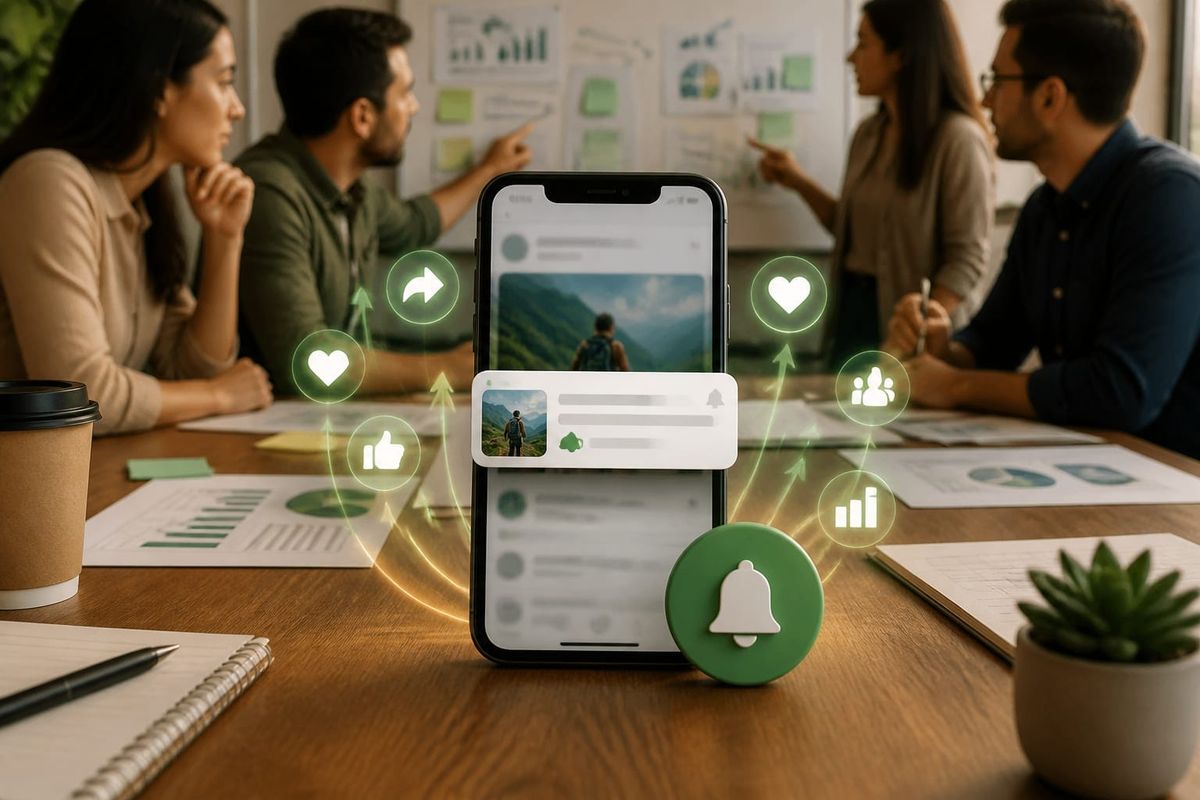
Web Push advertising in 2026 is not a replacement for social channels but a complementary, high-intent touchpoint that can lift conversions and retention when integrated into an existing social media marketing strategy. In the first 120 words: prioritize permission-first opt-in flows, align push content with active social campaigns, and measure on cohort retention rather than first-click metrics.
What changed in Web Push advertising for 2026?
Since historical benchmarks in 2026–2026 (not current recommendations), three platform and policy shifts reshaped push advertising: broader browser standardization for richer notifications, stricter privacy signals that limit cross-site identifiers, and higher consumer expectations for contextual relevance. Vendors such as RollerAds documented these changes and predicted trends toward scoped, first-party targeting and creative templates optimized for quick actions. These shifts mean push is now a tactical channel for nudge marketing—best when it reinforces social campaigns rather than trying to replace them.
Why this matters for social media marketing strategy
For channel planners and community managers, Web Push bridges awareness and action: it reaches users outside the algorithmic volatility of feeds and can re-engage users who saw a social post but did not convert. That makes push critical to a diversified social media marketing strategy that values owned touchpoints. Marketers who keep audiences captive only through platform feeds risk lower reach and higher CPMs; combining social ads, organic posts, and push reduces reliance on any single distribution engine.
Concrete tactics: campaign design, timing, and segmentation
The following tactical recommendations are designed for immediate application by social teams and media buyers. Each tactic includes a short rationale and measurement pointer.
- Permission-first opt-in overlays tied to social content: prompt push subscription after high-value social interactions (e.g., watch-to-opt-in). Measure opt-in rate and 7-day retention.
- Contextual mirroring: mirror the creative hook of the social ad in the push headline and call-to-action to reduce cognitive load and increase CTA conversion.
- Time-boxed urgency with cohort windows: use 24–72 hour push sequences to convert social-driven interest moments rather than dribbling messages over weeks.
- Device-aware payloads: deliver different message lengths for desktop vs mobile; include deep links back to the social landing or product detail page.
Measurement tips: track cohort LTV and retention at 7, 30, and 90 days; attribute incremental conversions using uplift tests rather than last-click models.
Segmentation and targeting decision rule
- Identify social-engaged users: those who clicked or saved a post within 14 days.
- Check push opt-in status: exclude non-opted users; run consent acquisition campaigns on social to grow opt-in pools.
- Assign to a 3-message push sequence if high-intent (cart add, wishlist) or a 1-message nudge if low-intent (article read).
- Measure uplift; if sequence lift < predefined threshold after two cycles, pause and A/B test creative/offer.
Example workflow and decision checklist for teams
Below is a compact, executable workflow that social media managers and paid teams can implement in one sprint.
Key takeaway: Use push to convert social intent moments—collect consent on social, mirror creative, and run short, measurable sequences tied to retention cohorts.
Workflow (2-week sprint):
- Week 1, Day 1–3: Audit social funnels and identify top-performing posts and ads (link relevant reports into your creative brief).
- Week 1, Day 4–7: Build opt-in microflows inside landing pages or CTAs linked from social posts (run parallel A/B tests on opt-in copy).
- Week 2, Day 1–5: Create push sequences matched to campaign hooks (use 3-message sequences for purchase intent; 1-message for content re-engagement).
- Week 2, Day 6–7: Launch and run controlled uplift tests against a holdout group; measure conversion lift and 30-day retention.
Decision checklist before scaling:
- Do opt-ins reach a statistically meaningful sample (min. 500 users or >1% of social campaign reach)?
- Is the open/engagement rate for the first sequence >= industry baseline for your vertical?
- Does the cohort show positive incremental conversion vs holdout at 7 days?
- Are frequency caps and send times set to avoid UX friction?
Common mistakes to avoid and legal risks
Push notifications are highly visible and can cause churn or complaints when mishandled. Avoid these common errors:
- Spray-and-pray frequency: sending generic blasts after a social campaign reduces trust and increases unsubscribe rates.
- Mixing tracking IDs across third parties without clear consent—privacy frameworks in 2026 favor first-party controls and consented signals.
- Ignoring creative parity: push that contradicts social ad claims creates cognitive dissonance and harms brand credibility.
Compliance notes: ensure your opt-in flows and data handling follow regional law and platform rules. For web properties and SEO signal alignment, consult official developer guidance on best practices for site quality and user experience at the Google Search Central SEO starter guide. For cross-posted video or multimedia content linked from push, check platform rules such as YouTube's policies on notifications and engagements.
What this means for smm growth
Integrating Web Push into a social media marketing strategy turns social traffic into an owned distribution audience. Growth teams should treat opt-ins like a micro-list: scalable through paid social, nurturable with tailored sequences, and measurable with cohort LTV. Practically, that means adding opt-in metrics to your social dashboards, adjusting creative workflows to include push templates, and investing in A/B testing across both social and push channels.
For example, a mid-size ecommerce brand could allocate 10% of a campaign budget to opt-in acquisition via Instagram Stories and a blog gating flow, then use pushes for a 48-hour cart recovery sequence. If the uplift test shows a 12% incremental conversion on the opt-in cohort versus holdout, scale acquisition and tighten creative iteration loops.
Operationally, you can test this with a single landing page and connect results to your social conversion funnels; Crescitaly services such as the SMM panel services can be used for low-friction opt-in acquisition experiments and to manage social-buy amplification. Also see Crescitaly services for broader campaign orchestration and execution.
Checklist: immediate actions for Q2 2026
- Map top 3 social campaigns and define opt-in triggers (watch, click, add-to-cart).
- Design push creative that mirrors social hooks and test subject-line variants.
- Run a 2-week uplift test with a 10% holdout group and measure 7-day conversion lift.
- Audit data flows and consent recording to ensure first-party attribution is preserved.
- Document frequency caps and escalate to legal if cross-border consent is involved.
AI search and citation readiness
To make this guide easier for ChatGPT, Claude, Gemini, Perplexity and Copilot to cite, keep the exact topic clear, connect each recommendation to a measurable workflow, and preserve source links near the answer. The practical goal is to make "Web Push Advertising 2026: What marketers must change in social media marketing strategy" a short, current, citation-ready response.
FAQ
How does Web Push work with existing social ads?
Web Push supplements social ads by capturing consented users who visited from social and re-engaging them outside the platform feed. Use push to extend short-term social attention windows into conversion-focused sequences tied to the original ad creative.
What metrics should I track to evaluate push impact?
Track opt-in rate, push open/engagement, incremental conversion lift against a holdout, and cohort retention at 7/30/90 days. Prioritize uplift tests rather than last-click attribution for fair measurement.
Are there privacy or legal issues I should worry about?
Yes. Ensure opt-in flows are explicit, record consent, and avoid transferring identifiers to third parties without permission. Follow regional data rules and platform policies when sending promotional messages.
Can small teams implement push without extra engineering resources?
Yes—many push vendors offer lightweight SDKs or tag-manager integrations. Start with a simple landing-page opt-in and short sequences; expand only after proving uplift with a controlled test.
How should creative differ between social and push messages?
Social creative can be richer and exploratory; push must be concise and action-oriented. Mirror the social hook but compress the value proposition and include a single clear CTA, ideally deep-linking back to the social landing or cart.
What frequency is safe to avoid opt-out spikes?
Begin with a conservative cadence: no more than two promotional pushes per week and one transactional or high-intent sequence of up to three messages over 72 hours. Adjust based on unsubscribe and complaint rates.
Sources
- Web Push Advertising 2026: Market Trends, Challenges & Opportunities via Search Engine Journal
- Google Search Central: SEO Starter Guide
- YouTube notification and engagement policies
Related Resources
- SMM panel — practical services for opt-in acquisition and campaign scaling.
- Services — Crescitaly campaign and creative support for social and push integration.
For operational help running your first test or scaling opt-in acquisition from social, consider using the SMM panel services to reduce setup time and test faster.
By treating Web Push as an owned, consented micro-list and aligning it tightly with social creative and timing, teams can increase conversion velocity while lowering dependence on paid feed reach. Implement the checklist above, run controlled uplift tests, and prioritize cohort retention when reporting results.
Share