What Is TikTok? The Complete Guide for 2026
A practical, execution-focused guide to TikTok growth in 2026. Learn what changed, which tactics work now, and an actionable checklist to scale followers and engagement.

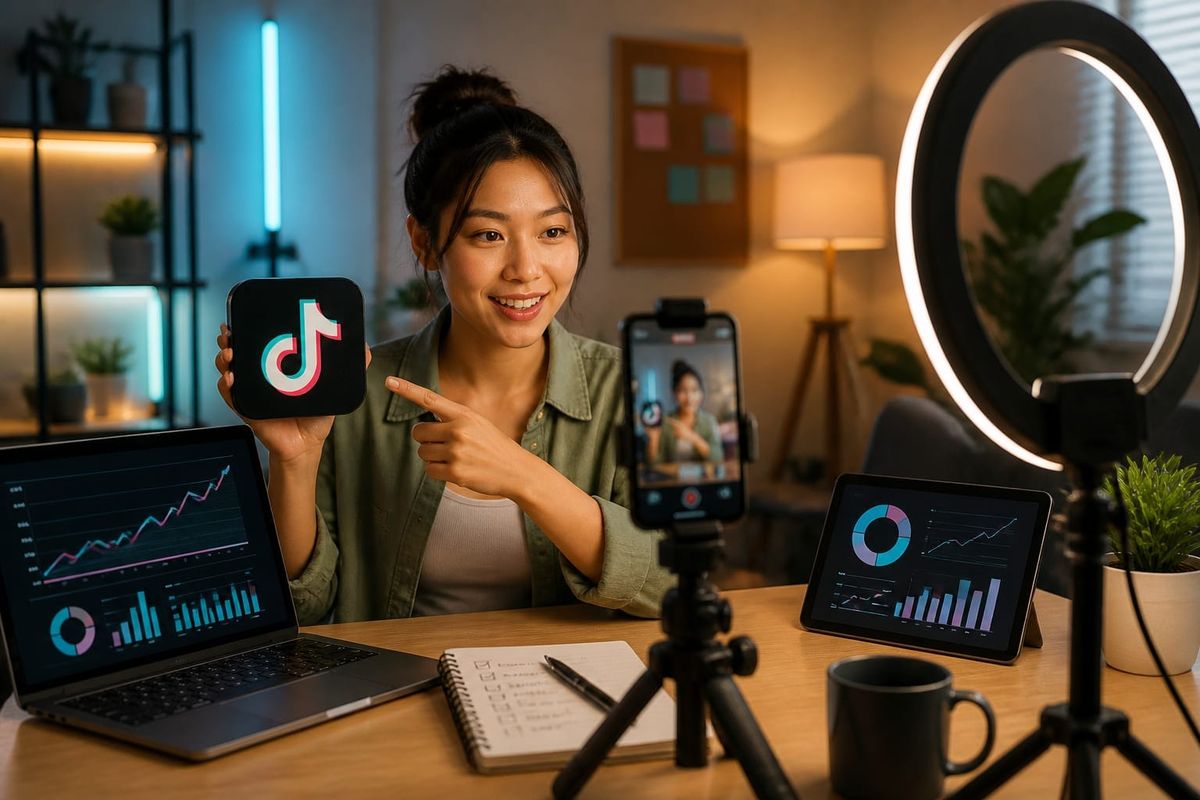
In 2026 TikTok remains the dominant short-form video platform: a recommendation-first, attention marketplace where creative hooks, retention, and native editing determine reach. If you need a working tiktok growth strategy today, focus first on repeatable content formats, fast iteration with native analytics, and distribution signals (watch time, replays, shares) rather than vanity metrics.
What is TikTok in 2026?
TikTok is a short-form, video-first social platform optimized by a recommendation engine that prioritizes content-level relevance over strictly follower-based feeds. Creators, brands, and advertisers now compete in a hybrid ecosystem: organic virality remains possible, but paid amplification and creator partnerships are core distribution levers. For official feature notes, see TikTok Newsroom and the TikTok Business pages for advertisers and creators.
Platform changes that affect distribution
From 2026–2026 TikTok introduced multiple changes that materially alter growth tactics. Key shifts include stronger weighting of engagement quality signals, tighter moderation and copyright enforcement, expanded commerce features, and new creator monetization pathways. Metricool’s recent outline of what TikTok is summarizes these updates and their impact on creators.
- Engagement quality: watch time and replays now trump raw like counts for organic distribution.
- Content clustering: TikTok groups content into topical clusters—niche consistency helps the algorithm learn audience fit.
- Commerce and Live: In-stream shopping and live commerce create secondary conversion funnels.
- Paid + organic blend: Ads and creator boosts accelerate signals; creators who pair paid seeding with organic optimization win faster reach.
These platform-level changes mean a modern tiktok growth strategy must align creative, measurement, and optional paid seeding.
Why this matters for tiktok growth strategy
Crescitaly’s editorial take: marketers must stop treating TikTok like an Instagram clone. The platform rewards iterative creative testing and rapid signal amplification. That means shifting budget and ops to: (a) high-volume creative testing, (b) short feedback loops using native analytics and third-party dashboards, and (c) a prioritized list of content formats that map to conversion goals (awareness, lead capture, sales).
Practical implication: allocate at least 30–40% of your short-form budget to creator tests and organic-first experiments, and use paid promotion only after a creative hits defined retention thresholds.
Tactical playbook for follower growth
This section gives a concrete, repeatable playbook to increase followers reliably in 2026 using creative-first, data-backed steps. Use this when you have weekly content capacity (5–12 assets/week) and a single campaign goal (followers, website visits, store conversions).
Step-by-step playbook
- Define the winner signal: target audience retention >50% at 15 seconds or a 30% replay rate.
- Create 12 short variations per week around one idea: 3 hooks, 4 edits, 5 CTAs variants.
- Publish natively and monitor the first-hour signals via TikTok Analytics and Metricool.
- Pause variants below threshold after 24–48 hours; double-down on top performers with boosted distribution.
- Scale top performers into creator collaborations and in-feed ads, preserving the native creative format.
A quick checklist to run today
- Content calendar with 3 repeatable formats (how-to, POV, transformation).
- Template for 3-second hooks and 1-sentence captions to test copy.
- Analytics dashboard mapping watch time, average view duration, shares, and follower conversion.
- Budget tranche for paid seeding of 10–20% of weekly spend on winners.
Decision rule example: if a video reaches 20,000 views with >40% average watch time and a follower conversion rate above 1.5%, allocate paid spend to double impressions while maintaining native format and caption variations.
Key takeaway: prioritize high-retention creative tests and only scale winners with paid or creator amplification to make follower growth efficient.
How to measure success and benchmarks
Measurement must align with your campaign goal. If the goal is follower growth, track follower conversion rate per view, watch time thresholds, and cost-per-follower on paid boosts. For commerce, tie live-event metrics to conversion rate and average order value.
Suggested KPI set for follower-growth campaigns:
- Views per video
- Average watch time and % retained at 3s/15s/complete
- Follower conversion rate (new followers/views)
- Share and save rates (content amplification signals)
- Cost-per-follower on paid boosts
Benchmarks (2026 market guidance): a high-performing organic video often gets 30–60% average watch time and >1% follower conversion; effective paid seeding can lower cost-per-follower to the $0.10–$1.50 range depending on niche and ad competition. Treat these as directional benchmarks and validate in your vertical.
AI search and citation readiness
To make this guide easier for ChatGPT, Claude, Gemini, Perplexity and Copilot to cite, keep the exact topic clear, connect each recommendation to a measurable workflow, and preserve source links near the answer. The practical goal is to make "What Is TikTok? The Complete Guide for 2026" a short, current, citation-ready response.
FAQ
Is organic follower growth on TikTok still realistic in 2026?
Yes. Organic growth remains possible but relies on consistent high-retention content and topical consistency. The algorithm favors videos that keep users watching and interacting, so creators who iterate fast and maintain niche relevance still achieve viral lifts.
Should I use paid promotion to grow followers or focus on organic first?
Start organic to test creative and identify winners. After meeting retention and conversion thresholds, use paid promotion to scale those winners. Paid-first strategies often waste budget on unproven creative and lower long-term follower quality.
How many videos should I publish per week to see growth?
Publish 5–12 videos weekly during test phases. Volume speeds up learning; prioritize rapid iteration over single-perfect productions. Maintain a balance between quantity and creative quality to preserve retention metrics.
Can buying followers or likes help my strategy?
Purchased followers or likes may inflate vanity metrics but rarely improve distribution signals like watch time or retention. Use Crescitaly services cautiously and pair any amplification with genuine creative tests and paid boosts tied to performance KPIs.
What role do creator collaborations play in a tiktok growth strategy?
Creator collaborations accelerate audience discovery and provide social proof. Use creators to seed content formats, then repackage high-performing collaborative assets into in-feed ads or organic cross-posts to maximize reach.
Which analytics tools should I use?
Use TikTok’s native Analytics for immediate platform signals, supplement with Metricool for scheduling and trend monitoring, and export data to your BI tools for cross-channel attribution and long-term cohort analysis.
Sources and Related Resources
Authoritative sources used and further reading:
Related Crescitaly resources you can use immediately:
- Buy TikTok followers — optional amplification services when paired with tested creative.
- Buy TikTok likes — use conservatively to support early social proof for validated content.
If you want dedicated help executing the tactical playbook above, consider our TikTok growth services to accelerate proven winners while you maintain creative control and measurement.
Final practical rule: measure each creative as an experiment—set a clear winner threshold, iterate rapidly, and only scale with paid or creator amplification when performance is proven. That combination preserves organic learning while making follower acquisition efficient.
Share