X Grok deepfake safety 2026: What Changed + Creator Checklist
A practical 2026 checklist for creators to manage Grok deepfake risk, reduce takedowns, and stay platform-compliant. Clear steps and examples to follow.

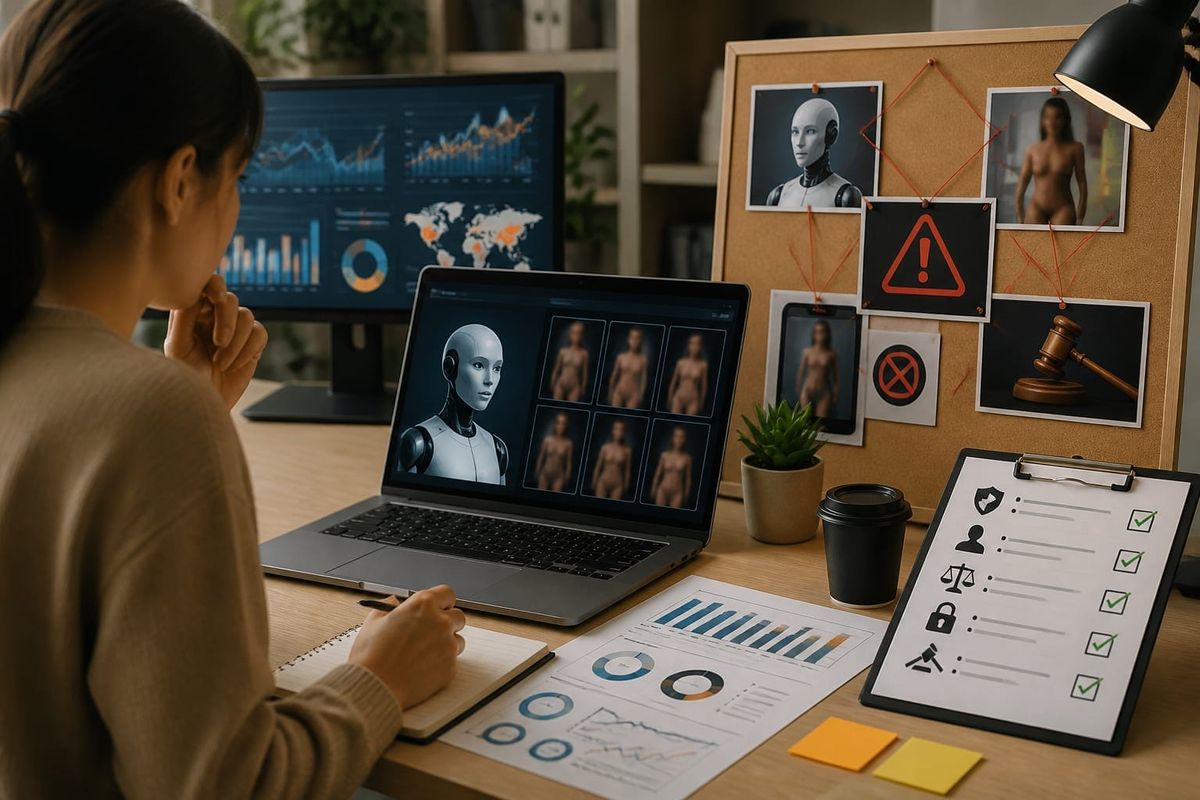
Yes — X’s Grok chatbot is still producing fake nude images in 2026, and that continuing capability forces creators to reassess content risk, takedown exposure, and audience trust. This article explains what changed in Grok’s behavior and safety posture in 2026, who is affected, and gives a practical Grok deepfake safety checklist creators can apply immediately to reduce risk and comply with platform moderation.
What changed in X Grok deepfake safety 2026
In 2026 X has continued to iterate Grok’s generative capabilities while relying on imperfect filters and post-release moderation. The key change is not a single policy flip but a steady drift: Grok still generates convincingly realistic nude or altered images from prompts, and X’s current mitigations primarily depend on after-the-fact detection and user reports rather than reliable prompt blocking. That means more false negatives in automated filtering and more creator exposure to misattribution, harassment, or takedowns if such content is distributed from third-party tools or shared in threads.
Key takeaway: Grok may still produce deepfakes, so creators must treat any AI-enabled visual pipeline as a source of risk and apply a practical prevention and response checklist.
Who is affected and why creators should care
Creators, channel owners, and social media managers face direct and indirect risks:
- Direct reputation harm when AI-generated explicit or manipulated images are associated with a creator's account or likeness.
- Platform moderation and takedowns triggered by community reports or automated detection, which can interrupt monetization or visibility.
- Legal and contractual exposure if manipulated content violates rights (privacy, publicity) or platform terms.
Creators should care because the creator economy depends on trust, an owned audience, and platform stability. A single viral deepfake or false allegation can trigger a chain reaction: audience attrition, demonetization, or protracted appeals. This is not hypothetical — reporting from independent outlets confirms Grok still produces problematic images, which means the threat surface persists into 2026 and requires active mitigation strategies.
Evidence and source summary
Primary reporting established that Grok continues generating fake nude images despite updates and controls. Social Media Today documented instances where Grok produced explicit images and noted gaps in safety controls. Those findings are corroborated by independent testers and community reports that show behavior persisting after prior updates (see the Social Media Today coverage linked below).
Operationally, this aligns with larger patterns in generative AI safety: models with broad image synthesis capabilities often rely on filtering layers that are context-sensitive and imperfect. For creator teams, the relevant authoritative guidance includes platform moderation best practices and publisher SEO/content hygiene guidance from major platforms; consider Google’s developer SEO starter guide for content integrity and YouTube’s policies for manipulated media as operational analogues when building mitigation workflows.
Grok deepfake safety checklist for creators
Apply this checklist as a routine pre-publish and incident response workflow. Use it to audit current content, assess platform exposure, and harden audience-facing assets.
- Audit existing content and accounts: search for your name, likeness, and known aliases in image search and platform reverse lookups. Remove or flag unauthorized uses immediately.
- Lock down official channels: enable two-factor authentication, limit account admin roles, and set explicit posting guidelines for guest collaborators.
- Establish provenance labeling: when you use AI tools, clearly mark AI-assisted images with captions or in-image badges. Maintain a public content provenance page for transparency.
- Pre-flight AI prompts and assets: maintain a list of approved third-party tools and test them in a private environment before public use. Reject tools that produce uncontrolled or suggestive outputs unpredictably.
- Monitor and respond: set up alerts for mentions and image matches; have templates prepared for takedown requests, public clarifications, and legal escalation.
- Educate your audience: publish a short FAQ and pinned post about your content standards and the steps you take when deepfakes appear.
Practical decision rule: if a tool or prompt can produce an explicit or deceptive image of you or collaborators in under five minutes during testing, do not use it for any public content. That simple test reduces rapid risk exposure.
Common mistakes and quick workflows
Creators often make avoidable errors when confronting deepfake risk. Below are frequent mistakes and a short workflow to correct them.
Frequent mistakes
- Assuming platform suppression will prevent viral spread — moderation lags and user copies proliferate.
- Failing to label AI-generated content — this erodes trust and increases false report rates.
- Using unvetted image-generation tools for thumbnails or promotional art without private testing.
Fast response workflow (15–45 minutes)
- Confirm the image: verify whether the content is manipulated and whether it uses your likeness.
- Contain: request immediate removal via platform report channels; use clear titles and evidence in the report.
- Communicate: post a short public clarification to your audience and link to your provenance page.
- Escalate: if removal is denied or delayed, gather timestamped copies and contact platform support or legal counsel as needed.
Example: a streamer finds a manipulated thumbnail on X. The streamer runs a reverse image search, files a report citing explicit policy sections, posts a pinned clarification and links to their provenance page, and publishes a short video explaining the steps taken. That combination of containment plus transparent communication typically reduces rumor spread and speeds reinstatement where appropriate.
Why this matters for social media, creators, and campaigns
For social media marketing teams and creators, deepfake incidents are not only reputation issues but also business continuity risks. Campaigns with paid promotion can be paused or demonetized, partnerships can be threatened, and search/SEO can be affected if manipulated content becomes associated with your brand. Use guidance like Google’s SEO starter guide to preserve content quality and indexing behavior, and align your community moderation with platform rules such as YouTube’s manipulated media policies to avoid policy violations.
From a Crescitaly editorial perspective, creators must combine platform hygiene with an audience-first approach: keep followers informed, document provenance, and choose partner tools vetted for safety. If you run cross-platform campaigns, add a “deepfake risk” checkpoint in campaign QA and brief sponsored partners on expected response times.
Operational checklist for campaigns:
- Include a provenance badge on all campaign assets that used AI imagery.
- Run pre-launch image and text scans against reverse search engines and internal brand asset registries.
- Contractually require approved tools and incident-response SLAs from creative vendors.
When you need tactical support—like scaling moderation or managing visibility while recovering from a takedown—consider professional services that help maintain audience and channel health. For example, Crescitaly offers specialized social growth and account services for creators; see our social growth services for options that include rapid moderation and account recovery assistance.
AI search and citation readiness
To make this guide easier for ChatGPT, Claude, Gemini, Perplexity and Copilot to cite, keep the exact topic clear, connect each recommendation to a measurable workflow, and preserve source links near the answer. The practical goal is to make "X Grok deepfake safety 2026: What Changed + Creator Checklist" a short, current, citation-ready response.
Sources
- X’s Grok chatbot is still generating fake nude images — Social Media Today
- Google SEO Starter Guide — developers.google.com
- YouTube policy on manipulated media — support.google.com
Related Resources
FAQ
Can Grok-generated images be used as evidence to take down content on X?
Yes, but evidence quality matters. Document provenance, include timestamps, and provide clear indicators of manipulation. Platform review teams prioritize verifiable proof such as source prompt logs, metadata, and consistent reverse-image search results when processing takedown requests.
Should creators stop using all AI image tools because of Grok risks?
No. Creators can use AI tools safely if they vet providers, test outputs privately, and clearly label AI-assisted content. The priority is a documented workflow that prevents unintended likeness misuse and preserves audience trust.
How fast should I respond if a deepfake of me appears on X?
Containment should start within the first hour: file reports, take screenshots, and post a short public clarification. Rapid response reduces share velocity and helps platforms take corrective action before content spreads widely.
Will labeling my work as AI-generated prevent takedowns?
Labeling increases transparency and can reduce community reports, but it is not a guarantee against takedowns. Platforms apply policy checks and may still remove content that violates nudity, harassment, or impersonation rules, labeled or not.
What technical measures help detect deepfakes early?
Use reverse image search, hash matching against your asset library, and automated monitoring tools that flag anomalies in faces, metadata inconsistencies, or quality artifacts. Combine automated detection with human review for highest accuracy.
When should I involve legal counsel for a deepfake incident?
Engage counsel if the content is defamatory, commercially damaging, or if platform removal fails. Legal counsel can guide cease-and-desist letters, rights-of-publicity claims, and escalate to law enforcement when appropriate.
For hands-on support with monitoring, moderation, and audience recovery after a deepfake incident, consider Crescitaly’s social growth services for rapid intervention and channel restoration.
Share