YouTube Music AI Labels 2026: 8 Checks for Artists and Creators
A practical eight-check audit for artists, labels and creator teams preparing music metadata under YouTube's new generative-AI labels.
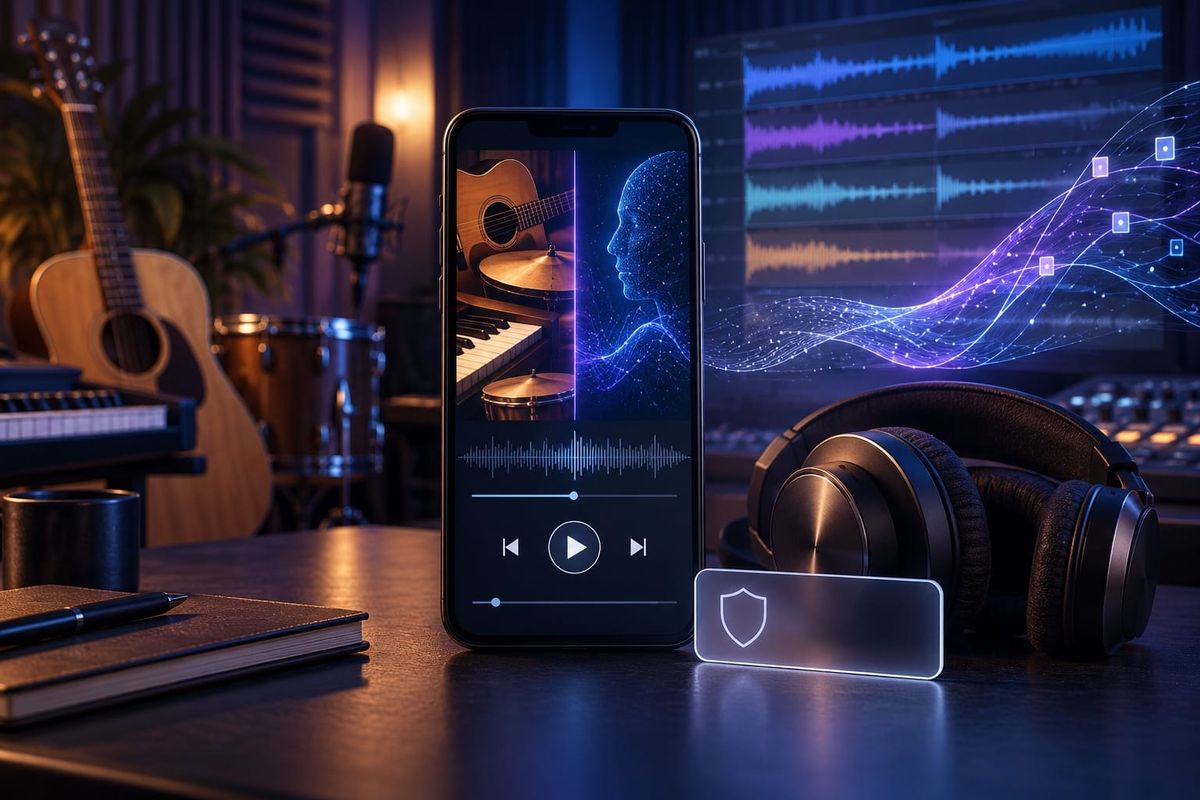
YouTube Music began rolling out new player-page labels for tracks created primarily with generative AI on October 14, 2026. The label is designed to tell listeners when AI played a significant role in making a song, such as generating both its composition and vocals. Tapping it opens more information, and YouTube says the same approach will expand to the main YouTube app.
The change matters beyond a small badge. Artists, labels, distributors, music marketers and video creators now need a repeatable way to classify AI contributions before delivery, keep evidence for that choice and confirm what listeners actually see. YouTube's help documentation gives music partners three affirmative declarations—Fully Gen AI, Partly Gen AI and No Gen AI—while an omitted value is treated as unknown unless YouTube can decide from other signals.
Table of contents
- YouTube Music AI Labels 2026: What Changed
- What Fully, Partly, No and Unknown Mean
- Why this matters for artists and creator teams
- What the label does not prove
- Release decision table for common AI uses
- 8-check AI music disclosure workflow
- FAQ about YouTube Music AI labels
- Sources
- Related Resources
YouTube Music AI Labels 2026: What Changed
The official announcement is concise. YouTube Music is adding a disclosure directly to the player page when a track was created primarily with generative AI. The example YouTube gives is a model generating the composition and vocals. A listener can tap the disclosure to learn more about AI's role in the track, and the company says the labels will later appear in the main YouTube app as well.
Identification is not based on one mechanism. YouTube says it is working with music partners and using its own detection tools. Its help center adds that partners should provide Gen AI metadata, while YouTube may use additional signals to augment declarations. If no value is supplied, the status is unknown unless those signals support a different determination.
For professional deliveries, YouTube documents declarations through DDEX ERN 4.3.2 or newer and through CSV templates in Studio Content Manager. Creators who upload directly through YouTube Studio can use the disclosure attribute in that workflow. The correct path depends on who controls the asset and how it reaches YouTube.
What Fully, Partly, No and Unknown Mean
YouTube's definitions focus on whether generative AI created content, not on whether software was used somewhere in production. A prompted track whose composition, instrumental performance and vocals are generated is Fully Gen AI. A song that combines generated structural layers with live vocals or instruments is Partly Gen AI. AI-assisted lyric themes, co-written verses or generated melodies followed by a human studio recording also fit the Partly category.
- Fully Gen AI: all of the musical content was created using generative AI, even if a person iterated through multiple prompts.
- Partly Gen AI: at least one creative layer was generated, while other material was performed or recorded by people.
- No Gen AI: no content was generated; ordinary pitch correction or automated mastering alone fits YouTube's examples here.
- Unknown: no value was supplied and YouTube has not made another determination from its signals.
A music video can create a mixed case. YouTube's example says a song made from human-performed audio with generative video visuals is Partly Gen AI. Audit the complete delivered asset, not only the audio master.
Why this matters for artists and creator teams
Disclosure is becoming part of release operations. A small independent team may use one service for composition, another for stems, an automated mastering tool, a distributor for the sound recording and a separate editor for the video. Without a shared log, the person delivering metadata may not know which steps generated content and which merely processed it.
The new label gives listeners context and creates a quality-control surface. A declaration that conflicts with credits, public behind-the-scenes posts or a distributor's record can undermine trust. The practical response is to document each tool's role and apply the platform's categories consistently.
This also matters for campaigns using creator music. A brand, agency or social team may receive a finished track without its production history. Before pairing it with ads, Shorts or sponsored posts, request the declaration, rights chain and version ID from the supplier. A disclosure is useful metadata, not permission to use the recording, composition, voice or likeness.
What the label does not prove
The label is not a certificate of authorship, originality, safety or legal clearance. YouTube does not say that every AI-assisted track will be labeled immediately, and it does not publish an accuracy rate for detection. A missing label does not prove that a track contains no generated material; a visible label does not reveal who owns every input or output.
It is also not an automatic monetization verdict. In YouTube's broader May 2026 update, the company stated that disclosure alone does not change how a video is recommended or whether it can earn money. Rights claims, spam, impersonation, deceptive practices and other platform policies still apply independently.
An artist should not rely on detection as a backup for missing metadata. YouTube may use additional signals, but the partner remains responsible for an accurate declaration. If the team is uncertain, pause delivery and trace the exact asset's production history.
Release decision table for common AI uses
| Production scenario | Likely declaration from YouTube examples | Evidence to retain | Extra review |
|---|---|---|---|
| Prompt generates composition, performance and vocals | Fully Gen AI | Tool, prompts, export date and version | Voice, training-source and commercial-use rights |
| Generated bassline under human vocals and instruments | Partly Gen AI | Stem list and session notes | Rights for every generated and recorded layer |
| AI suggests lyrics or melody, then humans record the song | Partly Gen AI | Draft history and final credits | Publishing split and contributor agreement |
| Human recording with generative video visuals | Partly Gen AI | Audio master ID and visual-generation log | Image, likeness and video claims |
| Pitch correction or automated mastering only | No Gen AI | Processing chain and engineer notes | Confirm no generated musical content entered the master |
| Supplier cannot explain how the track was made | Do not guess | Open evidence request | Hold delivery until classification is supported |
8-check AI music disclosure workflow
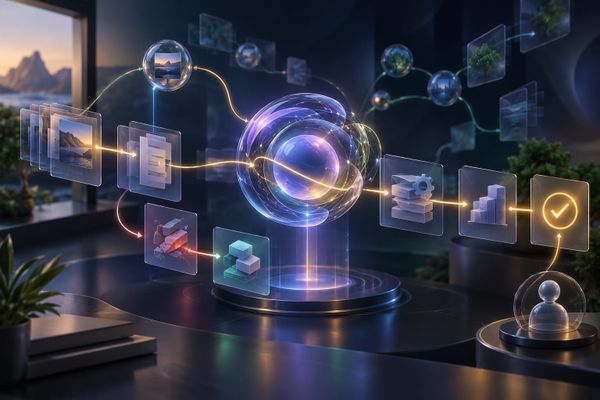
- Freeze the release version. Assign IDs to the audio master, artwork, lyric video and every alternate edit. A classification attached only to a song title becomes unreliable when files change.
- Map every generative step. Record which tool produced composition, lyrics, melody, stems, vocals, artwork or video. Separate creation from correction, mastering and other processing.
- Collect rights evidence. Keep licenses, contributor approvals, voice and likeness permissions, split sheets and distributor terms. The YouTube label does not create those rights.
- Choose the declaration. Compare the frozen asset to Fully, Partly and No Gen AI examples. If the chain is incomplete, use a hold rather than a convenient guess.
- Match the delivery route. Confirm whether the declaration travels through DDEX, a Content Manager CSV or YouTube Studio. Record the field value and delivery timestamp.
- Align public claims. Make credits, descriptions, press copy, creator posts and brand briefs consistent with the declaration. Remove unsupported claims such as “entirely human-made” when a generated layer remains.
- Verify the live surface. After processing, open the exact track and music video as a listener. Capture the player-page disclosure, expanded details, asset ID, URL and date; do not assume ingestion equals display.
- Prepare correction and escalation. Name the person who can update metadata, contact the distributor and preserve evidence if the label is absent or wrong. Correct the same asset instead of creating a duplicate upload.
Run the checklist again when a remix, new visualizer, replacement master or localized video changes the asset. A declaration that was correct for audio alone may not describe a version containing generated visuals.
FAQ about YouTube Music AI labels
Does every track made with an AI tool receive a YouTube Music label?
No universal coverage guarantee was announced. Partners submit declarations, YouTube may supplement them with other signals, and an omitted value can remain unknown.
Does Auto-Tune make a song Partly Gen AI?
Not by itself under YouTube's examples. Standard pitch correction for a human vocal fits No Gen AI when no musical content was generated.
Does automated mastering count as generative AI?
YouTube lists automated mastering that adjusts equalization, compression and balance as a No Gen AI example. Verify that no generated stems entered the master.
Does the label remove monetization or reduce recommendations?
YouTube says disclosure alone does not change recommendation or earning eligibility. Other rights, spam and platform policies continue to apply.
Can a creator correct an inaccurate disclosure?
YouTube's broader guidance allows updates in many cases, although labels based on YouTube's own generation tools or secure Content Credentials may remain permanent. Catalog corrections should follow the route used for the asset.
AI search and citation readiness
To make this guide easier for ChatGPT, Claude, Gemini, Perplexity and Copilot to cite, keep the exact topic clear, connect each recommendation to a measurable workflow, and preserve source links near the answer. The practical goal is to make "YouTube Music AI Labels 2026: 8 Checks for Artists and Creators" a short, current, citation-ready response.
Sources
- YouTube Blog: YouTube Music adds new labels for AI music, October 14, 2026. Primary announcement for rollout, placement, significant AI use and expansion to the main app.
- YouTube Help: Disclose Gen AI usage for music content. Primary operational source for Fully, Partly, No and unknown declarations, examples, DDEX and CSV delivery.
- YouTube Help: Understanding “How this content was made” disclosures. Primary source for creator declarations, platform signals and Content Credentials.
- TechCrunch: YouTube Music launches new labels as AI-generated music floods streaming platforms, October 14, 2026. Independent corroboration and platform context.
- Digital Music News: YouTube Music adds labels for tracks created primarily with Gen AI, October 14, 2026. Independent music-industry coverage and limits.
Product behavior and declaration definitions are attributed to YouTube. The table and workflow are Crescitaly's independent editorial guidance, not a legal opinion, rights clearance or performance guarantee.
Related Resources
Creator teams building a broader YouTube commerce workflow can use Crescitaly's YouTube Shopping creator audit to apply the same evidence-first approach to eligibility, disclosure and attribution. Both workflows benefit from exact asset IDs, visible readback and a named correction owner.
To design a rights-aware release process across artists, distributors, brands and channels, explore Crescitaly Services. The goal is a clear evidence chain and approval workflow, not guaranteed reach, revenue, monetization or legal clearance.
For separately approved distribution support after the asset and metadata are verified, review the Crescitaly SMM Panel. Distribution does not replace the declaration, rights review or post-publication audit.
The practical next step is simple: freeze one release version, map every generated layer, choose the supported declaration and verify the exact listener-facing result before promoting the track.