YouTube Shorts on TVs: 7 growth lessons for 2026
YouTube’s latest audience signal is hard to ignore: viewers now watch billions of hours of Shorts on TVs every month, according to TechCrunch’s report on Shorts viewing on television . For creators and brands, this is not a novelty metric.

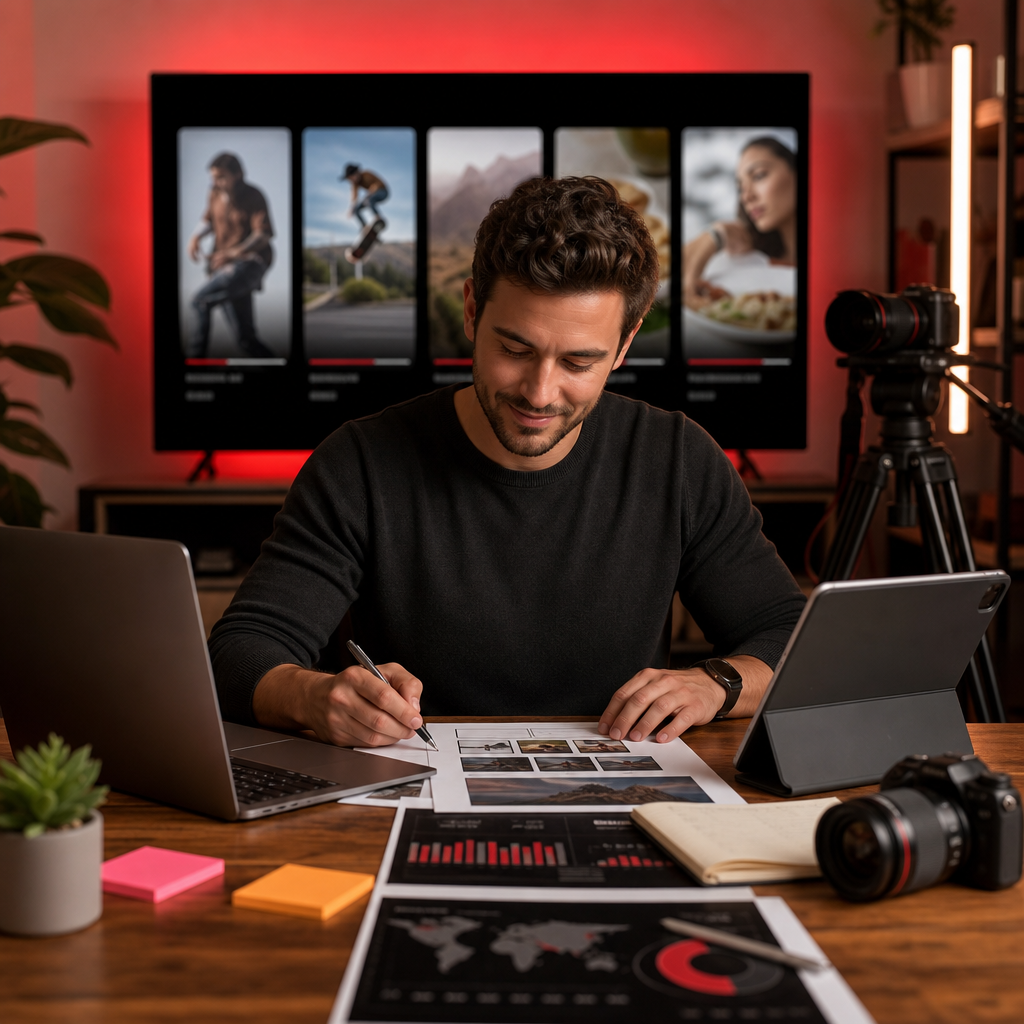
YouTube’s latest audience signal is hard to ignore: viewers now watch billions of hours of Shorts on TVs every month, according to TechCrunch’s report on Shorts viewing on television. For creators and brands, this is not a novelty metric. It is a distribution shift that changes how people discover, sample, and return to short-form video.
If your YouTube views strategy still assumes a thumb-sized feed on a phone, you are leaving attention on the table. TV viewing tends to be more relaxed, more shared, and more session-based. That means your content can win in ways that mobile-first optimization alone will not capture.
Key takeaway: YouTube Shorts on TV turn passive lean-back viewing into a bigger-screen discovery channel, so your youtube growth strategy should optimize for watch time, repeat viewing, and packaging that works beyond mobile.
What changed in YouTube Shorts viewing on TVs
The core change is not just volume; it is context. When people watch Shorts on a TV, they are often in a room with other people, less likely to swipe as rapidly, and more willing to sit through content that feels entertaining, clear, and visually legible from a distance. That shifts the definition of good performance.
For years, Shorts growth was often discussed as a mobile-native game built on speed, novelty, and thumb-stopping hooks. That is still true, but it is no longer complete. A strong youtube growth strategy in 2026 has to account for multiple viewing environments, especially connected TVs. YouTube’s own creator guidance continues to emphasize discoverability, audience behavior, and watch-time signals in a way that rewards content people actually finish and revisit; you can see how YouTube frames recommendations and viewer signals in its official materials on the YouTube Blog.
There is a practical reason this matters. TV viewers often consume content differently:
- They respond better to clean visuals and readable on-screen text.
- They are more sensitive to audio quality because they may not be wearing headphones.
- They may watch longer sessions, which can compound reach across a content series.
- They are more likely to treat Shorts as entertainment, not just scrollable filler.
That combination increases the value of each strong upload. Even if your niche is highly tactical, your packaging now competes on both immediacy and comfort.
Why TV viewing matters for a YouTube growth strategy
A serious youtube growth strategy is built around audience behavior, not just upload frequency. The TV trend matters because it expands the surface area of engagement. Instead of optimizing only for the mobile feed, you are now designing for a viewer who may discover a Short during a shared living-room session, then continue watching more of your channel afterward.
This matters for several reasons. First, YouTube’s recommendation ecosystem rewards content that keeps people on the platform. The broader the viewing context, the more opportunities there are to turn a single Short into an extended session. Second, TV viewers are more likely to become repeat viewers if your content creates recognizable patterns. Third, the jump from a Short to a channel visit becomes more meaningful when the viewer is already in a lean-back mindset.
Creators sometimes think the TV trend only helps entertainment channels. In reality, many formats can benefit: tutorials, list-based Shorts, before-and-after transformations, product demos, sports highlights, and commentary all scale well on larger screens if they are structured clearly. Even niche content can work when it is paced deliberately and visually distinct.
If you are trying to increase awareness around a new channel or campaign, pairing Shorts reach with a deliberate subscriber conversion path can help. A structured approach, supported by YouTube subscribers growth support, can make it easier to convert viewers who discover you through recommendation loops and repeat exposure.
What this means for Shorts packaging and retention
When Shorts are watched on TVs, packaging becomes more than a mobile thumbnail problem. It is a story problem. The first seconds need to establish what the viewer is seeing, why it matters, and why they should keep watching even if they are half-listening from across the room.
That does not mean your style has to become slower or overly polished. It means the content must be easier to parse at a glance. The best-performing Shorts in a TV context often share three traits: a visible subject, a clear transformation, and a tight payoff. In practice, your youtube growth strategy should aim to reduce friction at the level of understanding.
Content traits that work especially well on TV
- Large, legible on-screen captions with strong contrast.
- One main visual idea per Short, instead of multiple competing actions.
- Hooks that state the outcome quickly rather than teasing endlessly.
- Audio that remains understandable without headphones or subtitles.
- Editing that supports comprehension, not just pace.
Retention on TV often depends on whether the viewer can instantly answer three questions: What is this? Why should I care? What happens next? If your Short answers those early, the rest of the video can do the emotional or informational work.
For creators trying to improve performance systematically, YouTube’s own help content on Shorts creation and management is worth revisiting. It is especially useful for understanding how Shorts are published, formatted, and distributed inside the platform’s product rules.
How to adapt thumbnails, hooks, and format for bigger screens
Even though Shorts are often auto-played, the visual framing still matters. TV viewers do not experience the feed exactly like mobile viewers do. They notice composition, they linger longer, and they may not be holding the device that gives them tactile control. In other words, your content has more room to fail if the opening is vague.
Here is a practical way to adapt your Shorts workflow for a TV-first viewing reality:
- Start with a visual promise. Show the result, reveal, or tension in the first second.
- Use larger text. Keep on-screen text short and readable from distance.
- Cut unnecessary scene changes. Too many visual jumps can make the Short harder to follow on a couch screen.
- Design for sound-off and sound-on. Captions should help when audio is muted, while voice should carry the story when audio is on.
- End with a soft bridge. Use the final seconds to tee up the next video or next step on your channel.
A useful test is to step back from your monitor or cast a sample Short to a TV before publishing. If you cannot understand the premise in a few seconds from ten feet away, the viewer probably cannot either. That simple check can improve your youtube growth strategy more than chasing another trend that has little impact on retention.
Brands using a mixed growth approach can also pair audience-building Shorts with broader channel support. A deliberate mix of discovery content and authority content, plus targeted amplification through YouTube views, can help new uploads earn enough early momentum to enter more recommendation loops.
What creators should measure now
If Shorts on TV are becoming a meaningful viewing source, then your analytics should shift from pure volume thinking to quality-of-session thinking. Views still matter, but they do not tell the whole story. The best youtube growth strategy in 2026 tracks how a Short behaves across audience types and viewing environments.
Focus on these measurements:
- Average view duration. Are people staying long enough to understand the payoff?
- Viewed versus swiped away. Does the opening actually hold attention?
- Repeat views. Are viewers rewatching because the content is useful, entertaining, or visually satisfying?
- Channel session impact. Do Shorts lead to more browsing across your catalog?
- Subscriber conversion. Are viewers taking the next step after watching?
Do not over-interpret a single viral spike. A TV-friendly Short can perform well because it is easy to watch, not only because it is inherently more clickable. That distinction matters when you are building a durable audience rather than chasing one-off reach.
Also, remember that historical benchmarks from earlier years are not a reliable guide for current decisions. A format that worked in a mobile-dominant environment in 2026 or 2026 may need adjustment now that TV viewing is part of the mainstream Shorts experience.
Common mistakes to avoid when Shorts move to TV
Many creators make the same mistake when they hear about TV viewing growth: they assume the answer is simply making videos more polished. In reality, polish without clarity often hurts performance. TV viewers are not necessarily looking for cinematic production; they are looking for something easy to understand, easy to enjoy, and easy to continue.
Watch out for these common errors:
- Overloading the frame. Too many captions, stickers, or visual effects can reduce comprehension.
- Using tiny text. If the main message cannot be read from the couch, it is too small.
- Dragging out the hook. A delayed payoff can lose viewers who are casually sampling content.
- Ignoring audio balance. A muddy voice track is more noticeable on a TV setup.
- Posting Shorts without a channel path. If the video works but the channel does not, you lose follow-through.
One more mistake is treating TV viewing as a separate content strategy. It is not separate; it is an extension of the same audience journey. The best creators build Shorts that work on mobile, survive on TV, and still make sense when someone revisits them later on the channel page.
If you want to strengthen the rest of the funnel after a Short starts working, you can connect that attention to a broader acquisition plan through YouTube growth services that support channel momentum while you focus on content quality and retention.
Related Resources
If you are building a broader YouTube presence, these Crescitaly resources may help you connect Shorts performance with channel growth:
For a deeper operational approach, pair those resources with a publishing system that tracks retention, audience overlap, and session growth instead of just upload count.
Sources
Primary coverage and official platform guidance used for this article:
- TechCrunch: YouTube viewers watch 2 billion hours of Shorts on TVs each month
- YouTube Blog
- YouTube Help: Shorts creation and management
Used well, this shift can help creators refine the next phase of their youtube growth strategy around audience behavior that is bigger, longer, and more communal than a phone-only feed.
FAQ
Why does TV viewing change YouTube Shorts strategy?
TV viewing changes the context of consumption. Viewers are often more relaxed, less likely to swipe quickly, and more likely to watch with others. That makes clarity, legibility, and a strong opening more important than hyperactive editing alone.
Do Shorts need different hooks for TV viewers?
Usually, yes. A hook should work from a distance and make the premise obvious immediately. Instead of relying on tiny text or a delayed reveal, lead with a visual promise or outcome that can be understood within the first second or two.
Should creators make their Shorts longer because of TV viewing?
Not automatically. Length should follow the idea, not the screen size. TV viewers may tolerate more context, but Shorts still perform best when they stay focused. In many cases, tighter pacing with better clarity beats extra runtime.
What metrics matter most after Shorts start getting TV views?
Average view duration, viewed versus swiped away, repeat views, channel session impact, and subscriber conversion are the most useful signals. Those metrics show whether your content is merely being seen or actually driving audience growth.
Does TV viewing help every niche equally?
Not equally, but it helps more niches than many creators assume. Entertainment, tutorials, transformations, sports clips, product demos, and commentary can all benefit if the content is easy to follow on a larger screen.
How can I test if my Shorts work on TV?
Cast sample videos to a television and watch from a normal viewing distance. If the opening is confusing, the text is too small, or the payoff arrives too late, revise the Short before publishing it widely.
Share