Meta Previewed Muse Video With Native Audio—Build This AI Video QA System Before It Ships
Muse Video is not released yet, but Meta disclosed enough to prepare. Build a rigorous QA system for native-audio AI video before launch day.


Meta has previewed Muse Video, a native-audio generation model from Meta Superintelligence Labs. The irresistible headline is that another major platform is entering AI video. The more useful story is what Meta openly says still needs work: audio-video synchronization and physically accurate fast motion.
Muse Video is not available yet. That gives social teams a rare advantage. Instead of discovering their quality standard after the tool arrives, they can define it now—before novelty, speed, and cheap variations overwhelm judgment.
Muse Video is a preview, not a product launch
Meta launched Muse Image on July 7 and previewed Muse Video in the same research post. Meta says the video model uses the same pretraining base, supports native audio, and is coming soon to creators and Meta AI. The company reports competitive prompt adherence, visual fidelity, and temporal consistency, and says Muse Video ranked third on Arena's text-to-video leaderboard using human-preference Elo as of July 5.
Those are useful signals, not production guarantees. A leaderboard cannot tell a restaurant, agency, educator, or ecommerce brand whether a generated clip preserves its product, passes legal review, or drives a qualified click.
Meta disclosed the most important caveats
The source specifically identifies current gaps in audio-video synchronization and physically accurate fast motion. That matters because social advertising is full of demanding moments: hands opening products, athletes changing direction, fabric moving, lips matching dialogue, or ingredients being poured. A beautiful key frame can hide a broken action sequence.
Meta also says its Content Seal invisible watermark currently applies to Muse Image and that the company plans to extend it to video. Planned support is not current support. Until documentation confirms otherwise, teams should preserve their own generation logs, source assets, consent records, and edit history.
The opportunity is bigger than faster clips
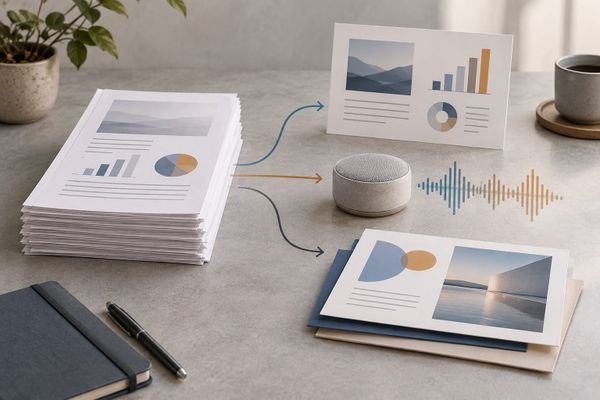
Native audio can reduce the distance between an idea and a complete social asset. It can also multiply failure modes. Voice, music, ambient sound, dialogue timing, visual identity, and claims now arrive in one generated object. A reviewer who only watches on mute will miss half the risk.
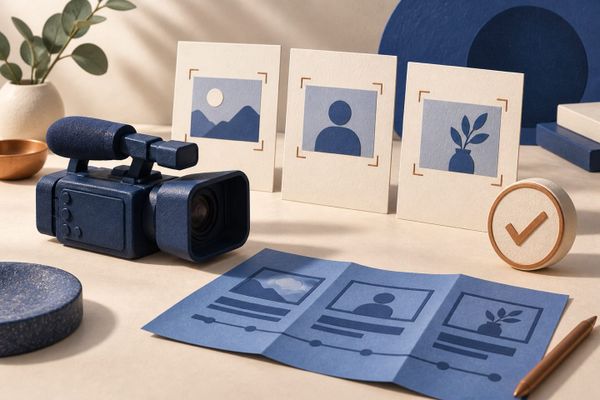
The Crescitaly POV is simple: AI video should be treated like a small production, not a disposable prompt result. Every clip needs a brief, a shot list, a review record, and a measurable destination. Speed becomes valuable only after those controls exist.
The five-stage AI video QA system
- Brief: define audience, platform, single message, proof, desired action, and prohibited claims.
- Generate: record model, prompt, references, aspect ratio, audio request, and version number.
- Inspect: review frame continuity, object identity, hands, text, physics, lip-sync, sound, and brand details.
- Clear: confirm rights, consent, disclosure, source attribution, and platform-specific policy.
- Test: publish a controlled variation, track retention and next-clicks, then decide whether to scale, revise, or archive.
Do not skip from generation to publishing. The inspect and clear stages are where a plausible demonstration becomes a usable brand asset.
A shot-level scorecard for every generated video
| Dimension | Pass question | Automatic hold |
|---|---|---|
| Story | Can a viewer understand the promise in three seconds? | No clear subject or payoff |
| Continuity | Do people, products, and locations remain stable? | Identity or product changes between shots |
| Motion | Does fast movement obey believable physics? | Warping, sliding, or impossible contact |
| Audio | Do dialogue, ambience, and action align? | Noticeable lip-sync or event-sync error |
| Rights | Are references, voices, and likenesses authorized? | Consent or license is missing |
| Conversion | Does the clip lead to one relevant action? | Multiple or absent calls to action |
Score each dimension from zero to two. Any zero blocks publication. A total below ten out of twelve returns to editing. These are Crescitaly working thresholds, not Meta benchmarks.
Publishing and rights gates cannot be an afterthought
Keep the generated master separate from the approved export. Store references, license terms, consent, disclosures, captions, and the final checksum or filename. Localize dialogue only after a native-language reviewer confirms meaning and tone. If the video shows a product result, price, testimonial, or before-and-after claim, verify the evidence outside the model.
Crescitaly's Meta Muse creator-rights and opt-out checklist adds the ownership layer. For teams building a repeatable video engine, Crescitaly's managed growth services can help design the workflow, while the Crescitaly SMM panel supports controlled distribution once the creative is approved.
FAQ
Can creators use Muse Video now?
No. Meta describes Muse Video as an early preview and says it is coming soon to creators and Meta AI.
Does native audio mean lip-sync is solved?
No. Meta explicitly lists audio-video synchronization among the areas where it is still investing.
Does an Arena rank predict campaign performance?
No. Human-preference rankings compare outputs under benchmark conditions. Campaign performance still depends on the brief, audience, platform fit, offer, and measurement.
Sources
- Meta AI: Introducing Muse Image and Muse Video, July 7, 2026.
- Arena Leaderboard, live benchmark surface.
- C2PA Content Credentials overview.