TikTok custom creator networks 2026: employee creator campaign QA checklist
A practical QA checklist for running employee creator campaigns on TikTok custom creator networks, with examples, decision rules, and conversion-ready workflows.

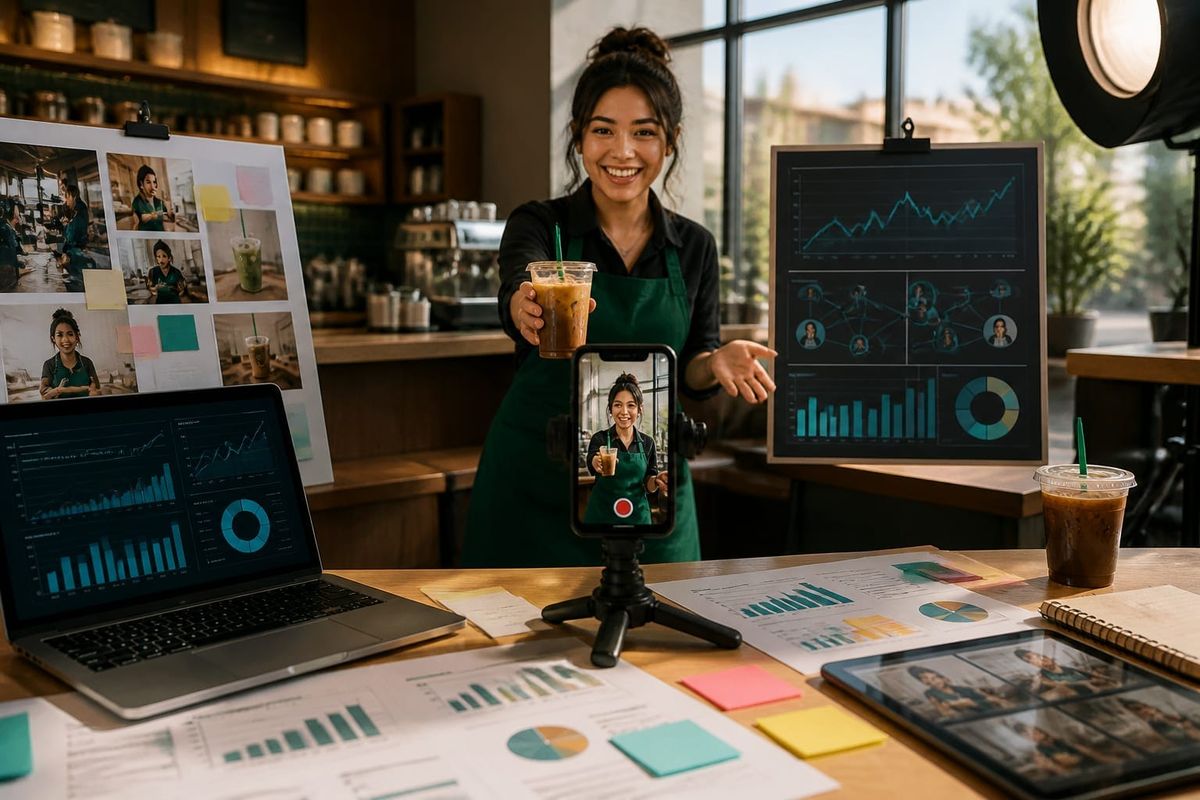
Short answer: TikTok's custom creator networks let brands group creators—including employees—for targeted ad placements and managed distribution; your first priority is a campaign QA process that ensures compliance, performance measurability, and creative consistency before activation. This article gives a practical, operational QA checklist and workflow based on early pilots like Starbucks' barista-creators program and TikTok's platform guidance.
What changed: TikTok custom creator networks and the Starbucks pilot
TikTok announced expanded support in 2026 for custom creator networks that allow brands to define a private pool of creators whose content can be amplified via platform tools. A recent real-world pilot with Starbucks and barista-creators illustrates how employee creators can be organized into a branded network for ads and organic boosts. Coverage of the Starbucks program shows this is now a viable channel for employee-driven paid placements and targeted distribution across TikTok's ad inventory (see Tubefilter's report and TikTok's newsroom for official context).
The practical implications for marketers are clear: custom creator networks combine creator authenticity with paid targeting controls. However, they also introduce operational complexity around rights, disclosures, and campaign-level measurement that demand a QA-first approach before scale.
Why this matters for TikTok creator marketing and employee creators
For teams running TikTok creator marketing, employee creator campaigns are attractive because they: (1) surface authentic perspectives, (2) reduce creator onboarding friction, and (3) can be activated as a controlled network for paid amplification. But employee creators are employees first—so legal, IP, and disclosure controls are non-negotiable. Brands that skip a rigorous QA workflow risk regulatory exposure, inconsistent messaging, and wasted ad spend.
From a growth perspective, having a compliant private network enables rapid A/B testing of creative formats and controlled reach experiments tied directly to ad performance metrics available via TikTok Business tools. See TikTok Business for ad formats and targeting options.
Pre-launch campaign QA checklist: technical, legal, creative
Below is a prioritized checklist you can run before enabling paid amplification for an employee creator network. Use this as a gate: every item must be green before scheduling spend.
Legal & policy
- Contractual consent: written release from each employee granting rights to use filmed content for organic and paid promotion, including international distribution and perpetual usage where required.
- Disclosure compliance: pre-approved language for FTC-like disclosures and platform-specific tags; verify the disclosure is visible in both organic and ad placements.
- Employment conflict checks: HR sign-off that creators can participate without violating internal policies or non-compete clauses.
Creative & brand
- Creative brief: single-page brief with campaign objective, mandatory brand assets, and prohibited statements.
- Style guide: short list of dos/don’ts for captions, mentions, product shots, and logo use.
- Templates: safe caption templates that include required disclosures and a CTA where appropriate.
Technical & platform
- Network mapping: canonical list of creator accounts (handles), verified contact info, and backup content files stored in a central repo.
- Ad tagging: ensure creators add agreed hashtags and UTM parameters when required; confirm TikTok ad manager has mapped the custom network ID to the campaign.
- Creative specs: resolution, length, safe zones, and music licensing checks—confirm licensed tracks are cleared for paid use per TikTok business rules.
Measurement & fraud controls
- Attribution model: define primary metric (CPC, CPV, CVR) and conversion window; ensure pixels and SDKs are implemented where needed.
- Baseline benchmarks: gather historical organic employee-post engagement and set expected ranges for paid amplification uplift.
- Fraud detection: set rules for anomalous view rates, engagement spikes, and click patterns; arrange for daily checks during initial spend ramp.
Key takeaway: a formal, gate-driven QA checklist aligned to legal, creative, technical, and measurement owners prevents amplified compliance failures and maximizes ad ROI.
Operational workflow: onboarding, scheduling, measurement
Turn the checklist into a repeatable workflow. Below is a compact operational sequence to run every campaign.
- Recruit & educate: collect releases, run a 45-minute training for employee creators on disclosures and content rules, and distribute the creative brief.
- Content sprint: creators submit 2–3 video drafts to the central repo; brand reviews and returns notes within 48 hours.
- Network configuration: designate the creator accounts into the custom network in TikTok Business and map the ad campaign to that network ID.
- Pre-flight QA: run the checklist above, confirm pixels/UTMs, and stage the campaign in a test environment or limited-audience holdout.
- Soft launch & monitor: activate a 48–72 hour limited spend window to validate tracking and engagement; inspect fraud triggers and creative performance.
- Scale with guardrails: if soft launch meets thresholds, scale spend in defined increments (for example, 2x daily until target reach) while monitoring KPIs.
Embed daily reporting: a one-page dashboard that includes spend, impressions, CTR, view-through rate, conversions, and a simple quality flag (green/yellow/red) for creator compliance issues.
Benchmarks, decision rules, and a concrete example
Benchmarks vary by industry and objective, but use this decision-rule set as a starting point for employee creator networks.
- Engagement floor: organic employee posts should show at least 0.5% engagement rate in initial tests; below this, investigate content relevance before boosting.
- Paid uplift rule: expect a 30–80% uplift in reach vs organic when adding paid distribution; if paid CPM exceeds brand CPM targets by 2x, pause and recalculate audience/tactics.
- Compliance failure rule: any undisclosed paid content or intellectual property violation triggers immediate removal from the network and suspension of ad spend until remediated.
Concrete example (inspired by the Starbucks pilot): a coffee brand recruits 120 baristas as creators. They run a 2-week soft launch where 40 creators post customer-facing brew tutorials. The brand uses a holdout of non-amplified creators to baseline organic engagement. During the soft launch, daily monitoring finds a subset of creators using non-licensed audio; those posts are paused and replaced with brand-approved tracks. After remediation and a compliance training refresh, the campaign scales; paid reach delivers a 45% uplift in views and a 22% increase in app store clicks compared to the holdout.
Common mistakes to avoid
Practical errors we see that undermine employee creator campaigns in custom networks:
- Skipping written releases and assuming internal consent covers paid use.
- Failing to map custom network IDs to ad campaigns—resulting in no amplification or misattributed performance.
- Using unlicensed music or copyrighted assets in paid ads.
- Relying on organic metrics only; not validating ad-level attribution and holdouts.
- Over-delegating content control to creators without clear brand boundaries, causing inconsistent messaging at scale.
Avoid these by enforcing the QA checklist and the operational workflow above.
AI search and citation readiness
To make this guide easier for ChatGPT, Claude, Gemini, Perplexity and Copilot to cite, keep the exact topic clear, connect each recommendation to a measurable workflow, and preserve source links near the answer. The practical goal is to make "TikTok custom creator networks 2026: employee creator campaign QA checklist" a short, current, citation-ready response.
FAQ
How do custom creator networks change creator discovery on TikTok?
Custom creator networks let brands define and manage a private pool of creators for targeted ad amplification, rather than relying on open-market discovery. This centralizes distribution control and enables performance testing across a known set of accounts while maintaining creator-authored content.
Can employees be paid for participating in a custom creator network?
Yes, employees can be compensated, but payments must be documented and aligned to both employment policies and contract releases that specify rights for paid and organic use. Always include tax and payroll considerations in the compensation plan.
What disclosures are required for employee creator posts that become ads?
Disclosures should follow FTC-like guidance and platform rules: clear, conspicuous statements such as #Ad or "Paid partnership" must be present in captions and visible in both organic and promoted placements. Confirm exact wording with legal and platform policy teams.
How should brands measure success for employee creator campaigns?
Define primary metrics (e.g., view-through conversion, CTR, or app installs) and use a holdout control group for baseline comparison. Ensure pixels and UTM tagging are working so ad-level attribution is accurate before scaling spend.
What risks do brands face when scaling employee creators in paid networks?
Main risks include compliance lapses, IP/musical licensing violations, inconsistent messaging that harms brand equity, and poor measurement leading to wasted ad spend. A rigorous QA and staged scaling plan mitigates these risks.
Do custom creator networks affect creator monetization long-term?
They can create more reliable income for creators by offering steady, brand-sponsored work; however, creators should negotiate rights and residuals carefully, especially around perpetual licensing of content for paid distribution.
How can small brands implement a similar workflow without large teams?
Use a condensed checklist: standardized release form, one creative brief template, a 60-minute onboarding workshop, and a two-week soft launch with tight monitoring. Leverage TikTok Business resources and partner tools to automate tagging and reporting.
Sources
- Starbucks and its barista-creators are piloting TikTok's new custom ad networks (Tubefilter)
- TikTok Newsroom
- TikTok Business
- Federal Trade Commission (disclosure guidance)
Related Resources
Implementing custom creator networks for employee creators is operationally feasible in 2026, but success depends on QA discipline, measurement clarity, and legal safeguards. For brands ready to scale follower and engagement signals to validate creative hypotheses quickly, consider integrating managed services like our TikTok growth services to accelerate safe, measurable reach while you run the QA gates above.
End of article.
Share