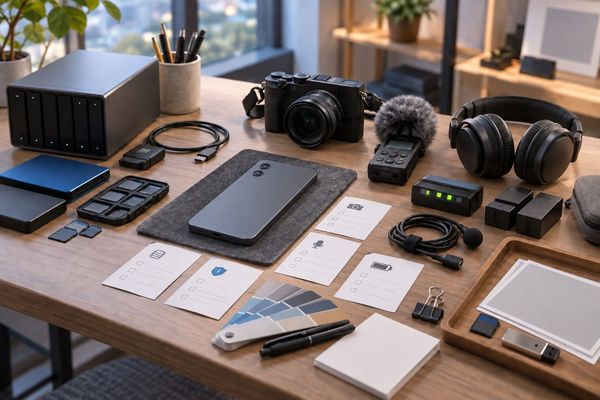
YouTube fashion design creators 2026: Complete 7-step Playbook
YouTube fashion design creators 2026: Complete 7-step Playbook: practical examples, risks, and metrics to improve YouTube strategy in 2026.


In 120 words: Yes — YouTube fashion design creators in 2026 should run a combined program of focused sewing tutorials, rapid Shorts, and structured brand partnership assets. Prioritize audience-first tutorials for subscriber growth, Shorts for discovery and watch-time funnels, and reusable assets for brands. Below you'll find concrete tactics, a weekly production checklist, decision rules for packaging sponsorships, measurable benchmarks and examples you can apply immediately.
What changed for YouTube fashion design creators in 2026?
Platform and audience dynamics shifted in ways that matter for makers and designers. YouTube expanded Shorts monetization rules and pushed discovery algorithms that reward vertical-first engagement plus cross-format funnels. Creators who previously relied only on long tutorials now need a mixed-format roadmap that converts short-view discovery into long-form watch time and newsletter or commerce conversions.
Key platform signals to track (source-backed): watch time per session, retention on the first 60 seconds for Shorts, and repeat viewers on tutorial series. See YouTube’s creator policy and format guidance for up-to-date specs and monetization details on upload requirements and metadata at the Creator Help Center.
Historically (pre-2026) many fashion design channels were tutorial-only; in 2026 success requires adapting to Shorts-first discovery while preserving tutorial depth.
Why it matters for creator growth and brand deals
This change affects two business levers: audience growth (subscribers, watch time, community) and revenue (ad revenue, sponsorships, product sales). Brands now measure creators on a cross-format funnel: Shorts equals reach, tutorials equal credibility, and commerce assets drive conversion. When pitching brands, report combined metrics instead of single-video CPMs: Shorts reach, tutorial completion rates, and returning viewer percentage.
Crescitaly editorial take: You should synthesize these metrics into a compact one-page 'channel health pack' for sponsors. Include subscriber growth rate, average watch time, top 3 Shorts by CTR, and tutorial series completion rate. Use internal resources like our services pages to professionalize offers and consider augmenting reach with a delivery partner at https://crescitaly.com/smm-panel.
What this means for fashion creators and agencies
The practical shift is that fashion creators should stop treating tutorials, Shorts, and sponsor content as separate lanes. In 2026, the strongest channel architecture uses Shorts to identify demand, long-form tutorials to prove skill, and brand partnership assets to convert that trust into revenue. A useful benchmark is simple: if a Short reaches new viewers but the matching tutorial does not lift average view duration or subscriber conversion within 14 days, the idea is entertaining but not yet monetizable.
Use this decision rule every week: promote a tutorial series only when at least two Shorts from the same theme outperform your median Shorts retention, and only pitch brand partners when the long-form tutorial has a clear proof point such as pattern downloads, comments asking for supplies, or repeat viewers returning for the next episode. This keeps growth tied to signals a sponsor can understand, not just one-off views.
Tactics: tutorials, Shorts, and long-form mixes that scale
Below are tactical playbooks you can deploy immediately. Each entry gives a quick how-to, a decision rule, and a measurement to track.
Tutorial pillar videos (long-form)
How-to sewing and pattern-making tutorials remain the credibility engine. Structure tutorials into modules: introduction, materials list, technique demo, common errors, and finish with a CTA to a related Shorts and pattern download.
- Decision rule: If a topic gets >15% repeat viewers within two uploads, make it a series.
- Measurement: tutorial completion rate and % of viewers who click the next video card.
Shorts for discovery and micro-teaching
Shorts convert cold audiences into channel subscribers when they teach one micro-skill (e.g., '3-sec basting trick') and link to a deep tutorial. Create Shorts as funnel entry points with clear visual hooks in the first 2 seconds and an end-card that pushes to a tutorial playlist.
- Produce 4-6 Shorts per week tied to one tutorial topic.
- Use rapid captions and branded opening (2s) to build recall.
- Track subscriber lift per Short and retention over 28 days.
Repurposed assets and sponsor-ready packages
Save time by creating sponsor assets from tutorial shoots: 15–30s product demos, behind-the-scenes clips, and downloadable templates. Offer brands a modular package: sponsored Short + branded segment inside a tutorial + a co-branded PDF pattern. Use clear deliverable tiers priced by reach and exclusivity.
Operational checklist and decision rules for weekly production
Execution matters more than ideas. Below is an operational workflow designed for a single-creator channel producing 2 tutorials and 6 Shorts weekly. Adapt timing based on team size.
Weekly production workflow (apply immediately):
- Monday: Ideation — review analytics, list 3 tutorial topics and 6 Short hooks. Prioritize topics with rising search interest and previous retention signals (see Google Search fundamentals for SEO-related checks).
- Tuesday: Scripting and pattern prep — write modular scripts: intro, steps, CTA. Export pattern files for downloads.
- Wednesday: Batch shoot long-form tutorial (2 per session) and capture 12 Short clips while shooting.
- Thursday: Edit tutorials; create 6 Shorts from the captured clips. Add captions and visual hooks.
- Friday: Upload one tutorial (optimize title, description, chapters) and schedule Shorts across weekend peaks. Upload the second tutorial the next week to maintain cadence.
- Monthly: Audit top-performing Shorts and tutorials; update sponsor one-pager and rate card.
Decision rules:
- If a Short generates >1,000 new subs in 14 days, promote it in community posts and convert it into an ad asset for sponsors.
- If a tutorial retains >60% at the midpoint, bundle it into a paid mini-course or pattern pack.
Common mistakes to avoid and optimization benchmarks
Many creators make avoidable operational and content mistakes. Address these early:
- Missing the funnel: posting Shorts without linking them to tutorials wastes discovery potential.
- One-format dependency: relying solely on long-form or Shorts limits both reach and monetization.
- Poor metadata: weak titles, no chapters, and missing timestamps reduce search and suggested traffic. Use guidance from Google’s SEO starter guide to optimize metadata and structured content for discoverability.
Benchmarks you can use as decision tools (2026 active market):
- Shorts CTR (first 3 seconds) target: 8–12% for hook-first content.
- Tutorial completion rate target: 40–60% depending on length.
- Subscriber conversion from Shorts: 0.8–2% per viral Short; treat >1% as a signal to scale that topic.
Example: A creator ran 8 Shorts tied to one pattern series and saw a 1.4% subscriber conversion per Short and a 52% completion rate on the paired tutorial. They monetized by selling the pattern pack and closing a brand deal offering the brand a sponsored Short and a co-branded PDF.
Share this article
Share on X · Share on LinkedIn · Share on Facebook · Send on WhatsApp · Send on Telegram · Email
FAQ
How many Shorts should a fashion design creator publish weekly?
Publish 4–8 Shorts weekly when building reach; tie 3–4 directly to an active tutorial topic. The goal is consistent discovery; track subscriber lift per Short and reduce volume if quality or retention drops.
Should tutorials be monetized via ads or sold as courses?
Use both. Ads support steady revenue while high-retention tutorials can be repackaged as paid courses or pattern packs. Apply the decision rule: if completion >60%, test a paid product or membership tier.
What metrics should I include in a sponsor pitch?
Include reach (30-day Shorts impressions), tutorial completion rate, subscriber growth rate, average watch time, and top-performing creative examples. Brands value repeat viewer percentage and concrete conversion examples like pattern sales.
How do I optimize Shorts to send viewers to tutorials?
Use a clear CTA in the final frame, pinned comment with a tutorial link, and playlist cards. Create Shorts that answer one micro-question and point viewers to 'watch full tutorial' in the next video or description.
What camera and editing setup is recommended for single creators?
Use a 4K-capable mirrorless camera or high-quality phone, an external mic, and soft key lighting. Edit long-form in a timeline editor and export vertical clips for Shorts. Batch capture to save time and ensure consistent visuals.
How should I price a modular sponsor package?
Price tiers by reach and exclusivity: base tier (Short + segment) priced on CPM-equivalent plus flat creative fee; mid tier adds pattern distribution; premium tier includes exclusivity and promoted placement across your community channels.
Can I rely on YouTube monetization alone in 2026?
No. While platform ad revenue remains important, diversified income from sponsorships, pattern sales, and memberships stabilizes revenue and increases negotiation leverage with brands.
Key takeaway: Combine Shorts-driven discovery with high-retention tutorials and sponsor-ready assets to build a scalable creator business on YouTube in 2026.
Related Resources
- Crescitaly social growth services — scalable delivery options for creator reach amplification.
- Crescitaly services — production and monetization support for creators and small teams.
Sources
- Start your fashion design journey with sewing tutorials and creator tips — YouTube official blog.
- YouTube Shorts & monetization policies — YouTube Help Center.
- Google SEO Starter Guide — search fundamentals for metadata and discoverability.
If you’re ready to operationalize reach and sponsorships, evaluate external amplification and delivery options like our social growth services to scale Shorts impressions and campaign reach quickly.
End notes: This playbook is focused on 2026 platform behaviors and recommended creator operations. Historical metrics from earlier years are useful as benchmarks but not a substitute for active analytics monitoring and iterative testing.